
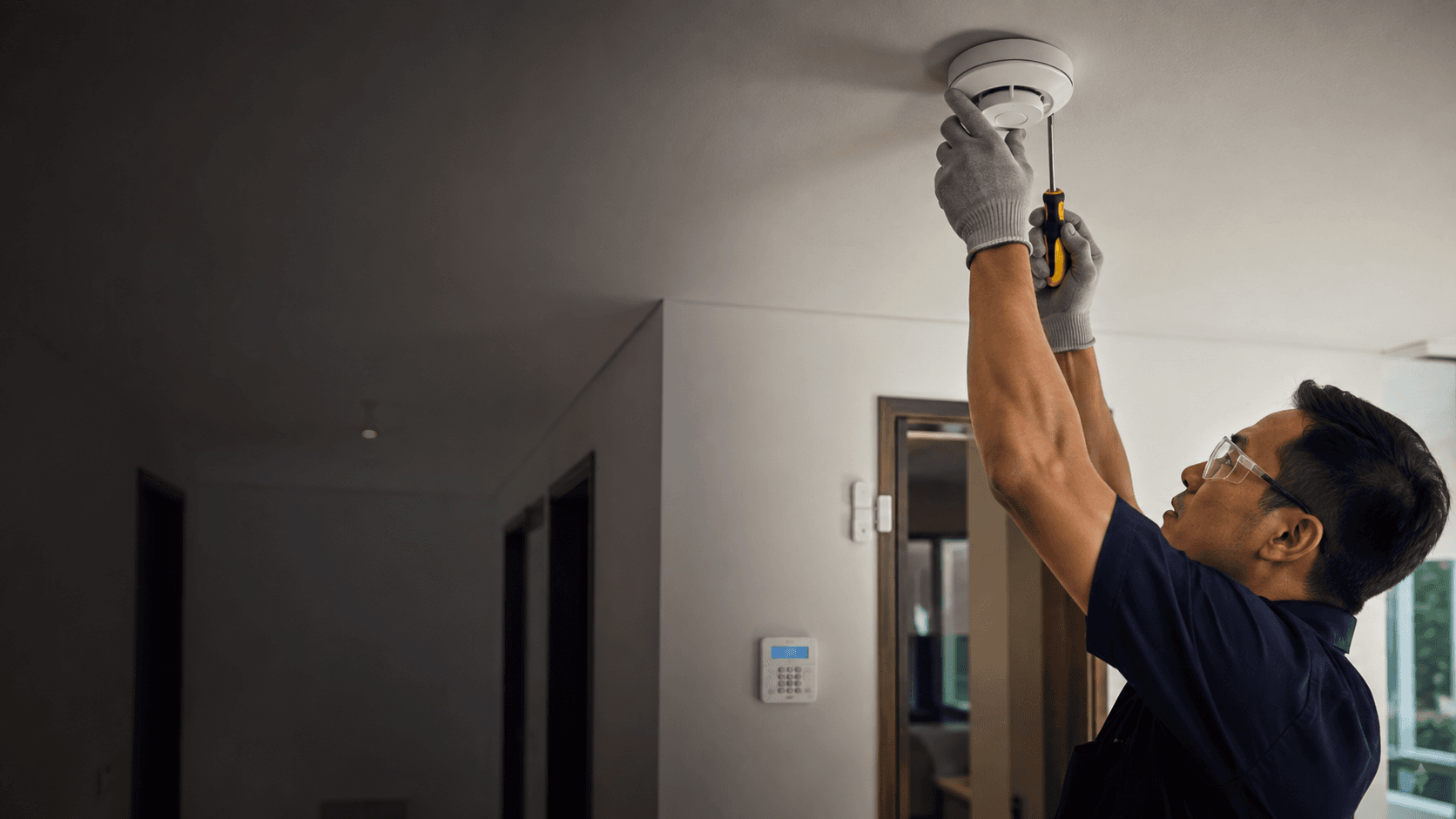
What House Alarm System Installation Involves
House alarm system installation begins with a site survey to map entry points, room layouts, and wiring paths before any equipment is mounted. The process then moves through a system proposal, physical installation, and a handover where the owner learns how to operate the system. Eyonic follows this sequence for CCTV work in Sarawak, and the same logic applies to alarm systems because both depend on correct placement and clear user training.
A typical house alarm system installation covers door and window contacts, motion detectors, a keypad or control panel, and a siren. Wireless systems reduce the need for wall chases, while hardwired setups require more invasive work but avoid battery replacement across many sensors. The choice between these two approaches shapes the installation time, the visible cabling, and the long-term maintenance routine.
How to Approach a House Alarm System Installation Project
- Define the protected zones by listing every ground-floor entry, high-risk window, and interior corridor that needs sensor coverage.
- Check the property's lighting, wall construction, and network coverage because these conditions determine where wireless sensors and cameras will work reliably.
- Compare a self-installed wireless kit against a professionally installed system using the quoted equipment cost, the monitoring contract terms, and the installer's site-survey commitment.
- Confirm the handover process includes a walkthrough of arming modes, false-alarm prevention, and emergency contacts before the installer leaves.
Choosing the Right House Alarm System Installation
The right house alarm system installation depends on the property type, the owner's technical comfort, and whether professional monitoring is part of the plan. A rented apartment may suit a wireless system that moves with the tenant, while a landed house with multiple entry points often benefits from a professionally installed setup with sensors wired to a central panel.
Professional installation services such as ADT and Vivint include expert setup, wiring, and in-home support, according to SafeHome.org's review of professionally installed systems. SimpliSafe offers a contract-free alternative that owners can install themselves, which suits renters or those who want to avoid long-term commitments. The trade-off is that self-installation shifts the responsibility for correct sensor placement and network configuration onto the owner.
What to Check Before Confirming an Installation
Property age and construction material matter more than most buyers expect. Older homes may have wiring that interferes with wireless signals, while concrete walls can block the radio frequency used by battery-powered sensors. Eyonic recommends checking actual lighting conditions before confirming placement for ColorVu-style cameras, and the same principle applies to motion detectors that need a clear, unobstructed view of the protected area.
The monitoring decision also changes the installation scope. A locally monitored system sounds a siren but does not contact anyone outside the property. A professionally monitored house alarm system installation adds a communication path, usually over cellular or broadband, that alerts a response centre when an alarm triggers. That difference affects the equipment list, the monthly cost, and the installation's reliance on a stable internet connection.
What Is House Alarm System Installation?
House alarm system installation is the physical process of mounting sensors, connecting them to a control panel, and configuring the system to detect intrusion or environmental hazards. It is not the same as buying a security camera or a smart doorbell, because an alarm system forms a coordinated network where each sensor's signal must reach the panel reliably.
The installation phase sits between equipment selection and daily operation. A site survey identifies the weak points, the proposal sets the scope and budget, and the installation turns that plan into working hardware. The handover then teaches the owner how to arm and disarm the system, change codes, and respond to alerts. Skipping any of these stages increases the chance of false alarms or missed detections.
Professional Versus Self-Installation Trade-Offs
Professional installation suits properties with complex layouts, multiple entry points, or owners who want the installer to handle wiring and configuration. The service typically costs more upfront but includes expert setup and ongoing support, as noted in reviews of ADT and Vivint. Self-installation suits simpler properties where the owner can follow the manual and test each sensor before relying on the system.
The hidden cost of self-installation is troubleshooting time. A sensor that falls out of range, a keypad that fails to pair, or a siren that does not sound during a test all become the owner's problem. Professional installers carry the equipment to test signal strength and placement during the visit, which reduces the likelihood of these issues appearing later.
Practical Considerations for House Alarm System Installation
A house alarm system installation should account for the daily routines of the people who live or work in the building. Pets trigger motion detectors if the sensors cannot distinguish animal movement from human movement, so the installer must either adjust the detector's sensitivity or place it above the pet's activity zone. Similarly, a sensor facing a window with passing traffic may cause repeated false alarms.
The Kuching Immigration Office project completed by Eyonic focused on arrival flow, staff areas, visitor movement, and dependable daily operation. That project shows how a security installation must match the actual movement patterns of the building rather than follow a generic template. A house with children coming home from school at different times needs a different arming schedule than an office with fixed working hours.
Alarm System Costs and Budget Planning
The budget for a house alarm system installation varies widely based on the number of sensors, the type of monitoring, and whether the installer charges for the site survey separately. Eyonic lists a Hikvision alarm system package at RM 1599, which provides a reference point for a basic residential setup in the Malaysian market. Larger commercial projects run higher, with the Kuching Immigration Office work estimated between RM 12,000 and RM 28,000.
Equipment cost is only part of the total. Professional monitoring adds a recurring monthly fee, and cellular backup requires a SIM card or data plan if the broadband connection fails. Battery replacement for wireless sensors also becomes an annual or biennial expense that owners should include in their maintenance budget.
Placement and Environmental Constraints
Sensor placement determines whether a house alarm system installation actually protects the property. Door and window contacts must align correctly when the door closes, motion detectors need a clear line of sight across the room, and the siren should be audible from every sleeping area. The installer should test each sensor during the handover rather than assuming the placement works.
Lighting conditions affect camera-based systems more than traditional alarm sensors. Eyonic's review of Hikvision ColorVu cameras notes that actual lighting conditions should be checked before confirming placement, because a camera that performs well in daylight may struggle at night if no supplementary lighting exists. The same logic applies to outdoor sensors exposed to direct sun, rain, or reflective surfaces.
Making an Informed Choice About House Alarm System Installation
The decision to proceed with a house alarm system installation comes down to the property's risk profile, the owner's budget, and the willingness to maintain the system after installation. A professionally installed and monitored system offers the lowest hands-on effort but carries a monthly cost. A self-installed wireless system keeps the upfront price lower but requires the owner to verify that every sensor works correctly.
Property owners should request a site survey before committing to a specific system. The survey reveals the actual entry points, the wall construction, and any environmental factors that affect sensor choice. Eyonic's installation process includes this survey stage, and it is the point where an installer can recommend the right balance of sensors, cameras, and monitoring for the specific building.
Questions to Ask Before Booking an Installation
Ask the installer how many sensors the property needs rather than accepting a fixed package. A four-bedroom house with a attached garage needs more coverage than a two-bedroom apartment, and the sensor count should reflect the actual entry points. Ask whether the quoted price includes the site survey, all mounting hardware, and the handover training, because these items sometimes appear as separate charges.
Ask about the monitoring path and what happens when the internet connection drops. A system that relies solely on broadband will not alert the monitoring centre during an outage unless it has cellular backup. Ask about the false-alarm policy, because some monitoring contracts charge a fee after repeated false alarms, and the installer should explain how to avoid triggering them.
The Final Decision Framework
A house alarm system installation adds value when the sensors are placed correctly, the monitoring path is reliable, and the owner understands how to use the system daily. The installation itself is a one-time event, but the system's effectiveness depends on ongoing maintenance, battery checks, and occasional sensor repositioning as the property changes.
For properties in Sarawak, Eyonic offers planning, supply, and installation services for homes, offices, shops, and industrial sites. The company's completed projects include the Kuching Immigration Office and KTA Sarawak Sdn Bhd, both of which required practical setups tailored to staff movement and daily operation. Sharing the property type and required system with a local installer provides the next practical step toward a working alarm setup.