
What Placing Smoke Detectors Involves
Placing smoke detectors is a fire-safety decision that affects how quickly occupants hear an alarm. The National Fire Protection Association recommends smoke alarms in every sleeping room, outside each separate sleeping area, and on every level of the home, including the basement. Following these placement rules matters because smoke rises and spreads through a building in ways that can delay detection when units sit in the wrong spot.
The core task of placing smoke detectors comes down to three questions: which rooms need coverage, how high the unit should mount, and which spots create false alarms. Answering those questions before installation prevents the common mistake of mounting a detector where cooking steam or bathroom humidity triggers nuisance alerts.
Where Placing Smoke Detectors Works Best
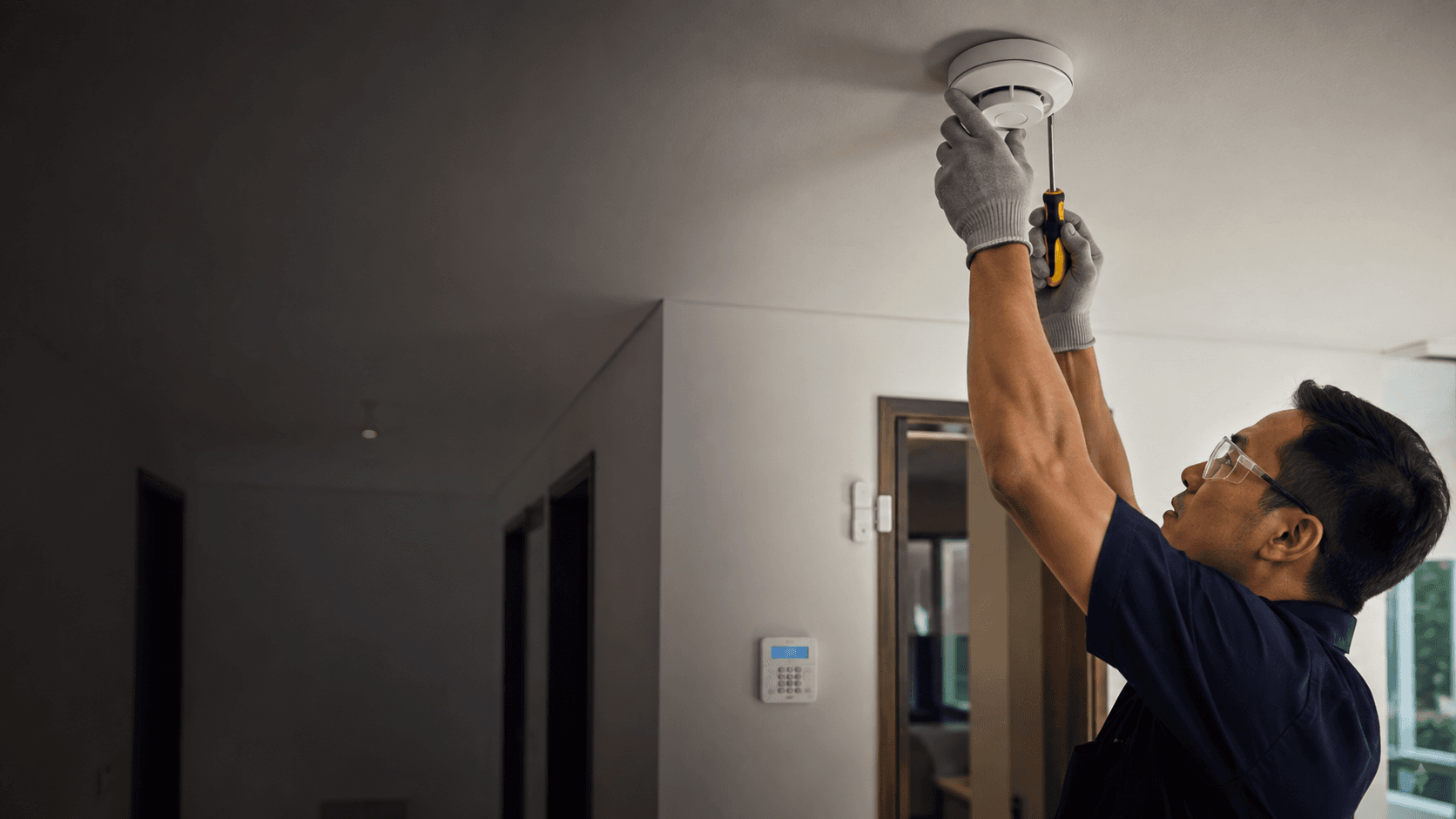
Ceiling mounting is the preferred option for placing smoke detectors because smoke rises directly toward the unit. When ceiling mounting is not practical, a wall mount works when the top of the detector sits within 12 inches of the ceiling. Smoke detectors should not mount within 36 inches of a bathroom door or within 20 feet of cooking appliances, since steam and smoke from normal activity can set off frequent false alarms.
The rooms that matter most for placing smoke detectors are bedrooms and hallways near sleeping areas. A detector inside each bedroom catches smoke from a fire that starts while someone sleeps. A unit in the hallway outside bedrooms provides an additional layer for the same sleeping zone. Stairwells also deserve coverage because smoke travels upward through open stairs and can reach upper floors before occupants notice a problem.
Practical Considerations for Placing Smoke Detectors
Air movement changes how well a detector performs. Placing smoke detectors near windows, doors, or air supply vents lets moving air push smoke away from the sensing chamber, which delays the alarm. The same problem occurs in corners where the wall and ceiling meet, because that pocket of still air sits outside the normal smoke path. Mounting at least 4 inches away from the wall-ceiling intersection keeps the unit in the airflow where smoke actually travels.
Sloped ceilings require a different approach to placing smoke detectors. On a peaked ceiling, the detector should mount within 3 feet of the peak but not in the very top of the point, measured horizontally. The dead-air space at the peak itself can hold smoke away from the sensor. For tray ceilings with a flat center section, treat that flat area as the ceiling and apply the standard mounting rules.
A practical sequence for placing smoke detectors in a typical home follows a clear order:
- Count the levels and identify every sleeping room plus the hallway outside each sleeping area.
- Choose ceiling mounting where possible, keeping the unit at least 4 inches from any wall.
- Mark spots at least 36 inches from bathroom doors and 20 feet from cooking appliances.
- Confirm each location avoids direct airflow from vents, windows, and ceiling fans.
- Test each detector after mounting to confirm the alarm sounds from the installed position.
Avoiding Problem Spots When Placing Smoke Detectors
Some locations seem logical but create reliability problems. Placing smoke detectors in bathrooms exposes the unit to humidity that can cause corrosion and false alarms. Garages produce exhaust fumes and temperature swings that also trigger nuisance alerts. Attics that get very hot or very cold can drain batteries faster and reduce sensor accuracy over time.
Unfinished spaces need the same coverage as finished rooms. Placing smoke detectors in a basement matters because fires often start in utility areas where wiring or heating equipment sits. The basement detector should mount on the ceiling near the bottom of the stairs so smoke rising from a lower-level fire reaches the unit before spreading to the living areas above.
How Placing Smoke Detectors Fits a Security Plan
Smoke detection works alongside other safety systems rather than replacing them. Eyonic Sdn Bhd, a security system supplier in Sarawak, Malaysia, handles planning and installation for CCTV and ELV systems, and their installation process follows a site survey, system proposal, installation, and handover sequence. That same survey-first approach applies to placing smoke detectors because the building layout determines where units provide real coverage.
For commercial spaces, placing smoke detectors follows the same physics but with more complex layouts. Offices need detectors in conference rooms, corridors, and utility rooms, not just open work areas. The Kuching Immigration Office project completed by Eyonic focused on arrival flow, staff areas, and visitor movement, which shows how a public building's traffic patterns shape where safety devices matter most. A detector in a rarely used storage room does less good than one near an exit route that people actually use.
Making an Informed Choice About Placing Smoke Detectors
The evidence from fire-safety authorities consistently points to the same placement rules. Every level of the building needs at least one detector. Every sleeping room needs its own unit. The hallway outside sleeping areas needs coverage. Mounting height and distance from walls follow the smoke-rise principle, and avoiding kitchens, bathrooms, and airflow sources prevents the false alarms that lead people to disable detectors.
Placing smoke detectors correctly is not a one-time task. Batteries need replacement, and units should test monthly to confirm the sensor still works. When a detector sits in the right spot but fails to sound, the placement does not matter. The combination of correct location and regular maintenance gives the early warning that makes the difference between a small fire and a dangerous one.