
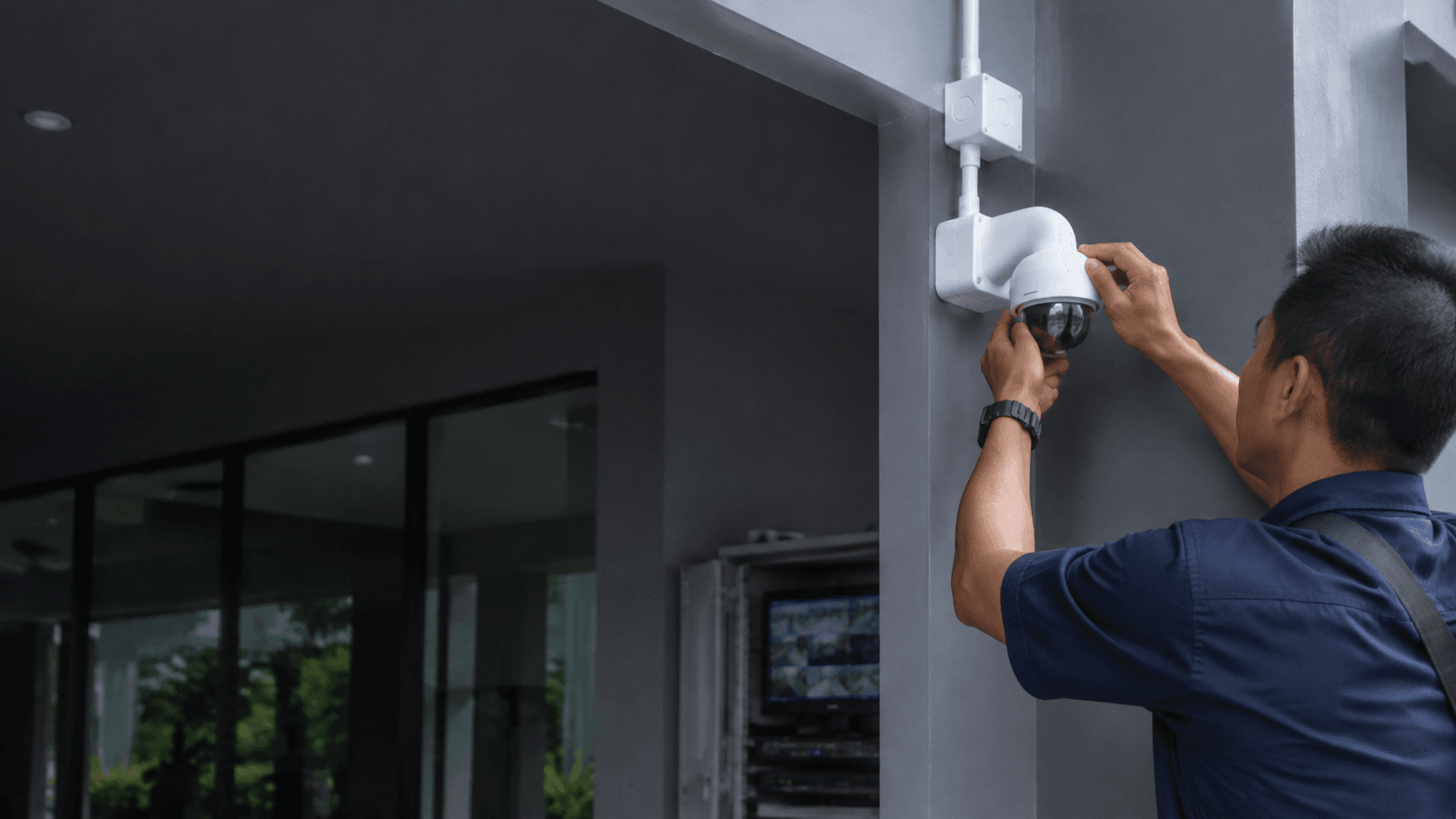
The exact phrase matters less than the outcome: a live or recorded view that opens on a phone from somewhere else. Eyonic Sdn Bhd plans, supplies and installs monitoring systems with camera placement, recording and remote viewing for homes, offices, shops and industrial sites, so the remote cctv camera question usually becomes a question about the recorder, the network and the handover.
Remote CCTV Camera Viewing Explained in Plain Terms
A remote cctv camera is not a special camera. It is an ordinary camera on a system whose recorder or camera can be reached from outside the property. The camera captures the scene, the recorder or memory card stores the footage, and the network carries that footage to a phone, tablet or computer.
Three parts must all work at the same time. The camera must see the area that matters. The recorder must be recording. The connection must be live at the moment someone opens the app. If any one of those fails, the phone shows nothing useful even though the hardware is fine.
That is why remote viewing is best treated as a handover item rather than a feature on a box. Eyonic lists remote viewing alongside camera placement and NVR setup as part of its CCTV work, which reflects how the three depend on each other.
How a Remote CCTV Camera Feed Reaches a Phone
The feed travels in one direction: camera to recorder to network to phone. Each hop has its own failure mode, and knowing the hops makes troubleshooting far faster than guessing at the app.
Cameras connect to a recorder over cable or wireless link. The recorder writes footage to its own storage. The recorder then connects to the router at the premises. When someone opens the viewing app away from the property, the app requests the stream and the recorder sends it back out through the same internet connection.
Two practical consequences follow. First, the upload side of the premises connection carries the stream, so a weak upload makes a good camera look bad on a phone. Second, the recorder must stay powered and online. A recorder that loses power overnight takes the remote view with it, even though the cameras themselves are untouched.
Eyonic's Hikvision CCTV Package at RM 1,599 covers camera supply and setup, basic recording configuration and mobile viewing handover. Those three items map directly onto the three hops above, which is why the handover step is where remote viewing is confirmed rather than assumed.
What the app does and does not need
Most modern viewing apps pair a device to an account or a unique identifier, then stream through the manufacturer's service. That approach usually avoids manual router configuration. Older or more locked-down setups may need port forwarding or a dynamic DNS address instead, which adds moving parts and more ways for a connection to break.
Eyonic's published material does not specify which app or client is used at handover, so the exact pairing method should be confirmed on site rather than assumed from a general guide. What can be stated plainly is that handover exists as a step, and that is the point where the phone view is tested.
Remote CCTV Camera Setup Steps Eyonic Follows
Eyonic's CCTV installation process runs through four stages, and remote viewing is settled inside the last of them.
- Site survey, where the property is reviewed before any commitment to positions or equipment.
- System proposal, where the recommended setup is put forward for agreement.
- Installation, where cameras, recorder and cabling are fitted and configured.
- Handover, where recording and mobile viewing are checked with the people who will use them.
The order matters because each stage removes a category of risk. A survey catches the placement problems that no amount of app configuration can fix. A proposal settles scope before hardware is ordered. Installation puts the physical work in one pass. Handover proves the remote view works while someone is still on site to correct it.
For a remote cctv camera setup, the handover test is the one that counts. Opening the app at the property on the same network proves very little. The meaningful test is opening it from outside the premises network, because that is the condition the system was bought for.
What to Check Before Confirming Camera Placement
Placement decides whether the footage is worth viewing remotely. A perfectly working remote connection to a camera aimed at a blank wall solves nothing.
Eyonic recommends checking actual lighting conditions before confirming placement for ColorVu-style cameras. Manufacturer claims about low-light performance describe the camera, not the doorway, corridor or yard it will watch. A site visit shows what the camera will actually see after dark, including glare from nearby lights and deep shadow where a face would appear.
Coverage should follow the reason for the system. The Kuching Immigration Office project focused on arrival flow, staff areas, visitor movement and dependable daily operation, which shows how placement follows the movement pattern of a site rather than a generic camera-per-corner rule. A shop entrance, a warehouse loading bay and a home gate each need different framing.
Two further checks belong before placement is locked in. The recorder needs a position with power and a stable network link, since it is the device the phone actually talks to. And the areas that must be identifiable should be distinguished from areas that only need to be seen, because that distinction affects how many cameras a layout genuinely needs.
Remote CCTV Camera Limits and Common Connection Problems
Remote viewing fails for a small number of recurring reasons, and most of them are visible before anyone opens an app.
The most common is a recorder that is offline. Power interruptions, a switched-off plug or a loose network cable all produce the same result: the app opens, the camera list appears, and nothing loads. Checking the recorder's status light is faster than reinstalling an app.
The second is an internet problem at the premises. If the connection is down, slow, or heavily used by other traffic, the remote stream degrades or stalls. This is a property-side constraint, not a camera fault, and it is worth understanding before choosing how many cameras need remote viewing at once.
The third is a change after handover. A new router, a changed broadband plan, a renamed network or a reset device can all break a working remote view. Systems that pair through a manufacturer service usually survive these changes better than setups that depend on manual router rules.
There are also limits that no configuration removes. Remote viewing depends on the premises having power and an internet connection. A site with neither needs a different approach, and that should be identified at survey stage rather than discovered afterwards. Eyonic's published material does not state whether remote viewing carries a subscription or recurring cost, so that question belongs in the proposal conversation rather than in an assumption either way.
Planning in Malaysia
Malaysian premises add a few practical considerations to the general picture. Power stability varies between areas, so the recorder's supply and any protection around it deserve attention. Broadband upload speeds differ by plan and by neighbourhood, and upload is the direction that carries a remote stream.
Mobile coverage matters too, because the phone viewing the feed is usually on a mobile network rather than the premises connection. A location with weak mobile data will struggle to display a remote view even when the camera system itself is healthy.
For multi-site owners, the useful question is not how many cameras exist but how many need to be watched remotely at the same time. That number drives both the network requirement and the recorder choice far more than the total camera count does.
Eyonic works across Sarawak from a base in Kuching, with completed projects including the Kuching Immigration Office and KTA Sarawak Sdn Bhd. The KTA Sarawak project covered staff movement, visitor handling, tidy cabling and clearer daily site control, which is the same pattern of concerns that shapes remote viewing planning: what needs to be seen, by whom, and from where.
Budget expectations can be set against published figures. The Hikvision CCTV Package is listed at RM 1,599, and larger project work has been documented in the RM 8,000 to RM 18,000 range for an office setup and RM 12,000 to RM 28,000 for a public office. Those ranges reflect scope differences rather than remote viewing specifically, and any figure for a particular property depends on the survey.
Share the location, property type and required system with Eyonic on WhatsApp at +60 11-5111 7959 to move from general planning to a specific recommendation.