
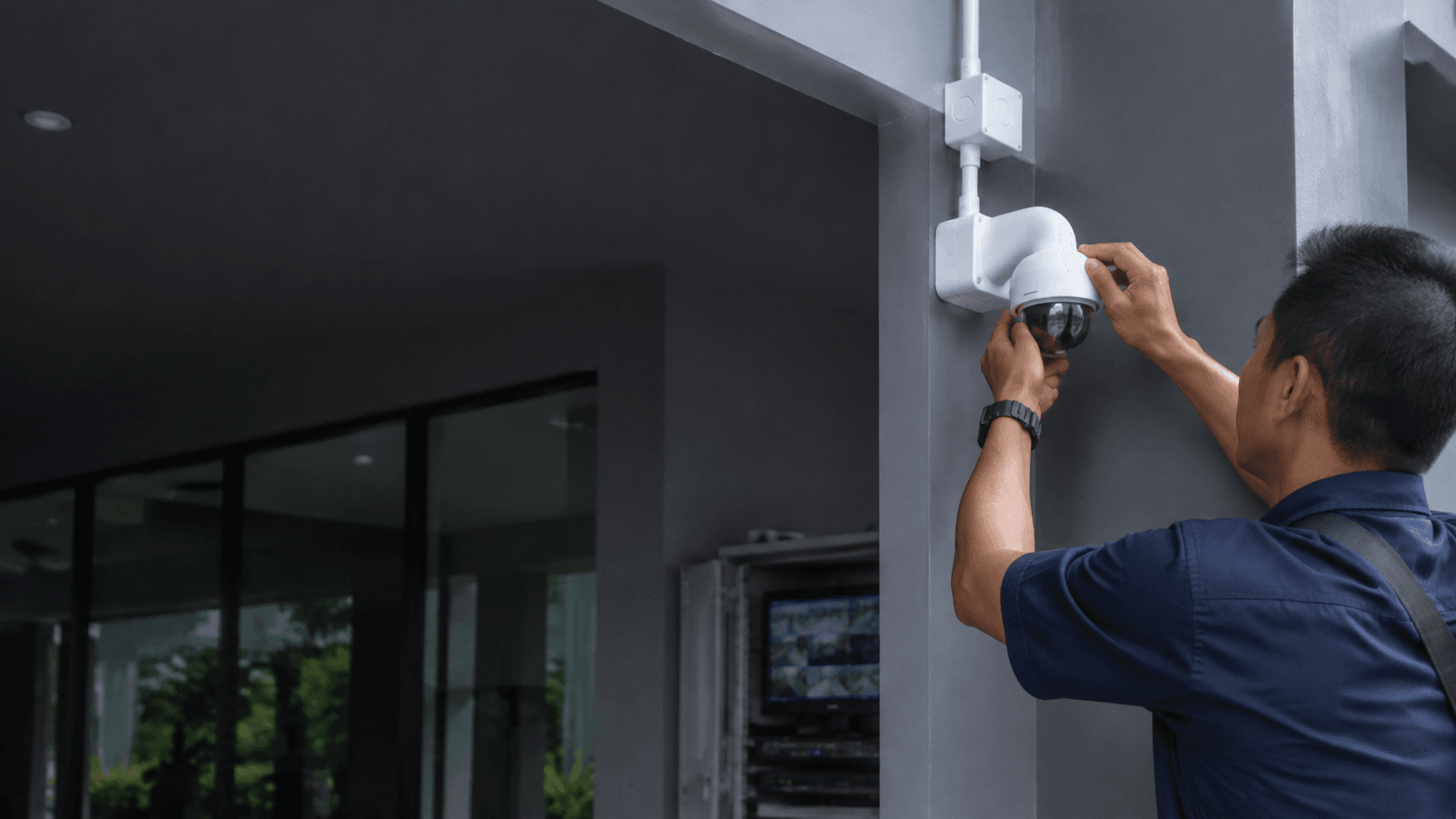
The shortlist below is built around how a house is actually used, not around a model ranking. Eyonic Sdn Bhd plans, supplies and installs monitoring systems with camera placement, recording and remote viewing for homes, offices, shops and industrial sites, and the same sequence applies whether the property is a single-storey terrace in Kuching or a larger family home.
Cost is the first filter for most buyers. A packaged route removes the guesswork of mixing brands, and Eyonic lists a Hikvision CCTV Package at RM 1,599 covering camera supply and setup, basic recording configuration, and mobile viewing handover. That figure is a package price, not a per-camera price, and it is the only CCTV pricing supported here.
Best House Cameras. What Matters Before Buying
The useful question is not which camera is best in isolation. It is which camera suits a specific position on a specific wall, and whether the recording route behind it can be reached and maintained.
Four things decide most outcomes:
- Site survey — the installer walks the property and records where coverage is needed, where power and cabling can run, and where light falls at night.
- System proposal — the survey findings become a camera and recorder plan matched to the property rather than a generic kit.
- Installation — cameras, cabling and the recorder are fitted and configured.
- Handover — recording and remote viewing are demonstrated so the owner can operate the system without assistance.
That sequence is Eyonic's stated CCTV installation process, and it exists because placement decisions made on a screen rarely survive contact with a real wall. A position that looks ideal on a floor plan can sit under a roof overhang that blocks the view, or face a neighbour's window.
Indoor and outdoor cameras compared
| Consideration | Indoor house cameras | Outdoor house cameras |
|---|---|---|
| Typical placement area | Living areas, entry halls, stairways, rooms with valuables | Gates, car porches, perimeter walls, back doors |
| Lighting dependency | Usually lower, because interior lighting can be controlled | Higher, because night light varies by street, porch lamp and weather |
| Recording route | Feeds back to the recorder over the installed cabling | Feeds back to the recorder over the installed cabling |
The lighting row is the one that changes most decisions. An outdoor position that is bright at 7pm can be almost dark at 2am once a porch light is switched off, and that difference affects what the camera can actually record.
House Cameras for Different Parts of a Home
Coverage is usually planned in zones rather than as a single wide view. A gate camera answers a different question from a camera covering a car porch, and a camera inside the house answers a third.
Entry points carry the most weight. A gate or front door position shows who approaches and when, which is the detail most owners want first. A car porch position covers vehicles and the path between the car and the door. Perimeter positions along a side wall or back lane cover routes that a front camera cannot see. Indoor positions cover rooms where valuables are kept or where movement should be visible.
Overlapping views matter more than camera count. Two cameras with a small overlap leave no blind gap at the corner between them, while three cameras aimed at the same open area simply repeat the same footage. A survey exists to find those gaps before drilling begins.
Eyonic's work for the Kuching Immigration Office followed the same logic at a larger scale, focused on arrival flow, staff areas, visitor movement and dependable daily operation. The principle transfers to a house: cover the routes people actually take, not the walls that are easiest to reach.
What Eyonic Checks During a Site Survey
A site survey is the step that decides whether the finished system works. It is also the step most often skipped when cameras are bought individually and fitted afterwards.
The survey records where coverage is needed, where cabling and power can be routed, and what the lighting actually does after dark. It also checks practical constraints that affect the final plan, such as roof overhangs, wall material, and whether a cable run can reach the recorder position without exposed wiring.
Eyonic's stated service scope covers camera placement, NVR setup and remote viewing alongside the survey, which means the placement decision and the recording decision are made together rather than in sequence. That matters because a camera position that cannot reach the recorder is not a usable position.
For homes in Sarawak, the survey is also where the owner's daily routine gets translated into coverage. A household that leaves early and returns late needs different emphasis from one with someone present through the day.
Camera Placement and Lighting Conditions
Lighting is the single most common reason a camera underperforms after installation. Eyonic recommends checking actual lighting conditions before confirming placement for ColorVu-style cameras, because the technology's benefit depends on the light that is genuinely present at that position at night.
A position lit by a street lamp behaves differently from one lit only by a porch bulb, and a position with no light at all behaves differently again. Confirming this during the survey, at night where possible, prevents a camera being fixed to a wall that cannot support the result the owner expects.
Placement also has to respect the boundary of the property. A camera aimed to cover a gate can end up covering a neighbour's entrance, and adjusting the angle during the survey is simpler than adjusting it after installation.
Placement checks worth confirming before installation
- Confirm the view covers the intended route, not just the intended wall.
- Confirm the position has enough light at night for the camera type chosen.
- Confirm the cable run reaches the recorder without exposed wiring.
- Confirm the angle stays within the property boundary.
How a CCTV Package Is Delivered
A packaged route suits buyers who want one point of responsibility for supply, installation and configuration. Eyonic's Hikvision CCTV Package at RM 1,599 covers camera supply and setup, basic recording configuration, and mobile viewing handover.
The trade-off is flexibility. A package is built around a defined scope, so a property needing unusually wide coverage or a long cable run may need the plan adjusted after the survey rather than chosen from a list. That adjustment is exactly what the survey and proposal stage is for.
Buying individual cameras is the alternative. It can suit a small property where one or two positions are needed and the owner is comfortable handling configuration. The constraint is that placement, recording and remote viewing then become separate problems to solve, and a poorly chosen position is only discovered after the camera is mounted.
Eyonic also supplies alarm systems and autogate packages at the same RM 1,599 package level, which allows a house to be planned as one system rather than as unrelated devices added over time.
Common Questions About
Is a package or individual cameras the better fit? A package suits a property that needs several positions covered and one party accountable for the result. Individual cameras suit a small, simple requirement where the owner is willing to handle setup.
What drives the cost? The supported package price is RM 1,599 for the Hikvision CCTV Package. Beyond that, cost depends on the property, the number of positions and the cable runs, which the survey establishes.
Why does placement need a survey? Because lighting, cable routes and property boundaries cannot be judged reliably from a floor plan, and each one changes where a camera should sit.
What happens at handover? Recording and remote viewing are demonstrated so the owner can operate the system. Eyonic's process ends with handover rather than at installation.
Share your location, property type and required system with Eyonic on WhatsApp at +60 11-5111 7959 for the next practical step.