
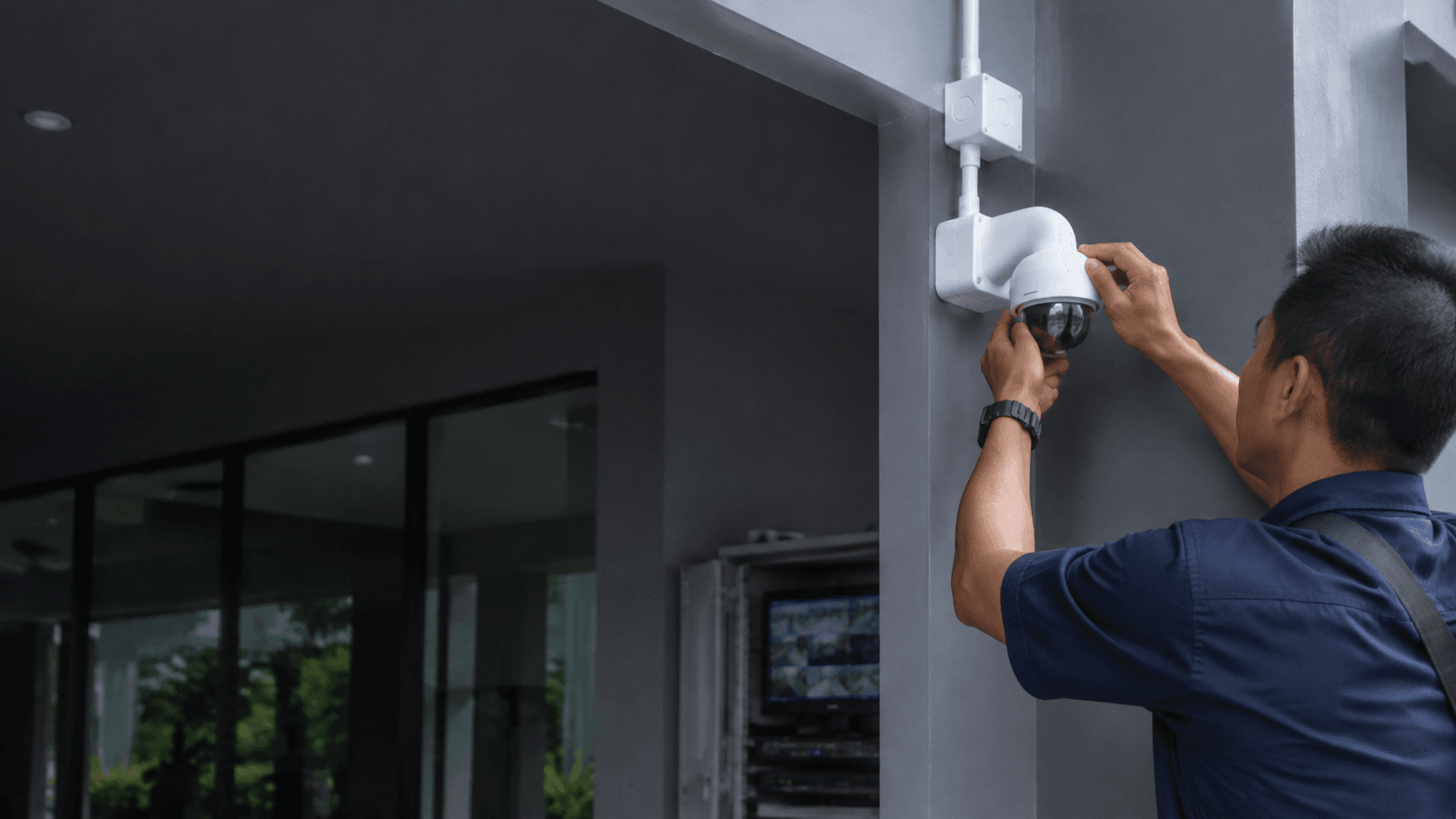
The term covers a small camera built into an everyday object or a compact housing, paired with a microphone that captures room sound alongside video. Buyers in Malaysia usually arrive at this category after comparing standard CCTV and finding that a visible dome or bullet camera does not suit the room, the counter, or the tenancy agreement.
What separates a workable wireless hidden camera with audio setup from a disappointing one is rarely the camera itself. It is whether the placement point has enough light, whether power or battery access is realistic, whether the local network carries the stream, and whether the people being recorded can lawfully be recorded in that space.
Wireless Hidden Camera With Audio: What The Term Covers
A wireless hidden camera with audio is a camera whose housing is designed to blend into a room, transmitting video and sound without a signal cable running back to a recorder. The "wireless" part normally refers to the video link, not the power. Many units still need a plug or a periodic battery charge, and that distinction decides where the camera can realistically sit.
Three sub-types appear repeatedly in this category:
- Object-style cameras built into clocks, chargers, smoke detector shells, or similar household items.
- Mini module cameras that are small bare units, often placed inside an existing enclosure or behind a shelf edge.
- Nanny-cam style units that look like ordinary small indoor cameras but are positioned discreetly rather than mounted openly.
Audio capture is the part buyers underestimate. A microphone picks up the whole room, including traffic noise, air-conditioning hum, and conversations that were never the point of the installation. That has practical consequences for where the unit is placed and how recordings are stored.
Where A Wireless Hidden Camera With Audio Fits In A Malaysian Property
Covert cameras suit specific rooms better than others. In Sarawak and across Malaysia, the common requests Eyonic sees are retail counters, small office reception areas, stockrooms, and residential entry points where a visible camera would either be moved, covered, or objected to.
A shop counter is a strong fit. The camera sits at counter height, the lighting is usually consistent during trading hours, and the audio captures what is said at the point of sale. A stockroom is a weaker fit because lighting is often switched off when the room is empty, which removes the video the camera was installed to capture.
Eyonic's work for the Kuching Immigration Office centred on arrival flow, staff areas, visitor movement, and dependable daily operation. That project used conventional monitoring rather than covert units, but the underlying lesson applies to any indoor camera decision: the room's actual daily pattern matters more than the camera specification. A space that is busy at fixed hours behaves very differently from one used irregularly.
Residential use raises a different constraint. A hidden camera in a shared home records family members and visitors who have not consented, and Malaysian law on audio recording of individuals in private settings is not something this page can state with confidence. Anyone considering a covert unit in a home should confirm the legal position before installation rather than after.
Wireless Hidden Camera With Audio Placement And Lighting Checks
Placement decides whether the footage is usable. A camera aimed at a bright window will silhouette whoever stands in front of it. A camera placed low will capture legs and counter edges rather than faces. A camera behind glass will pick up reflections of the room instead of the room.
Eyonic's own guidance on ColorVu-style cameras is to check the actual lighting conditions at the placement point before confirming the position. That check matters more for covert units, because a hidden camera cannot be repositioned as easily as a surface-mounted one without drawing attention to the change.
Sound behaves the same way. A microphone inside a closed cabinet sounds muffled. A microphone next to an air-conditioning vent records the vent. A microphone placed on a hard surface picks up every chair scrape in the room. The practical test is to stand at the intended camera position during normal working hours and listen to what the room actually sounds like.
Power, Recording, And Audio Capture Basics
Every covert installation resolves three questions: where the power comes from, where the recording is stored, and how the audio is handled.
- Confirm the intended room and the purpose of the recording, because a camera installed for stock monitoring and one installed for staff conduct are different jobs.
- Check the lighting at the exact placement point during the hours the room is actually used, not during a site visit at midday.
- Confirm power access, whether that means a nearby outlet, a route for a low-voltage cable, or a battery unit that will need scheduled charging.
- Confirm how audio is captured and where it is stored, including whether the recording sits on a local card, a network recorder, or a cloud service.
- Confirm remote viewing works on the property's actual network, since weak Wi-Fi at the camera position is the most common reason a wireless unit underperforms.
- Confirm who may lawfully be recorded in that space, and whether signage or a written notice is required for staff or visitors.
Storage choice carries a trade-off. Local storage keeps footage on site and avoids a recurring subscription, but the device holding the card is itself discoverable. Cloud storage survives the device being removed, but depends on the network staying up and on a service the owner keeps paying for.
Eyonic's standard CCTV installation process runs through site survey, system proposal, installation, and handover. A covert camera job benefits from the same sequence, because the survey is where lighting, power, and network limits get identified before anything is fixed in place.
Wireless Hidden Camera With Audio Compared With Standard CCTV
Standard CCTV is the better choice for most commercial premises. Cameras are visible, which deters some behaviour before it happens, and the installation is straightforward to maintain, expand, and hand over to staff.
A wireless hidden camera with audio is the better choice when visibility is the problem. If a camera would be moved, covered, or objected to, a covert unit keeps recording. If the audio at a specific point matters more than wide-area coverage, a hidden unit with a microphone captures what a ceiling-mounted camera cannot.
The trade-offs run the other way too. Covert units generally cover a narrower area, are harder to service without disturbing the placement, and raise questions that visible cameras do not. A visible camera in a shop is unremarkable. A hidden camera in a staff area is a decision that affects how the team regards the employer.
Cost is not the deciding factor. Eyonic's published packages sit at RM 1,599 for a Hikvision CCTV package, RM 1,599 for a Hikvision alarm system, and RM 1,599 for an autogate package, each covering supply, setup, and handover. Larger project work has run in the RM 8,000 to RM 18,000 range for an office setup and RM 12,000 to RM 28,000 for a public office. Those figures describe conventional security work, not covert camera supply, and no verified pricing exists for a hidden camera installation.
Wireless Hidden Camera With Audio Questions Before Installation
Does a hidden camera need Wi-Fi to record? Not always. Some units record to a local card without any network connection, which removes the Wi-Fi dependency but also removes live remote viewing. Units that stream to a phone need a stable signal at the camera position.
Can audio be turned off? On many units the microphone can be disabled in settings. Where the legal position on recording conversations is unclear, disabling audio and keeping video only is the more conservative choice.
How long can a battery unit run? Battery life depends on recording mode, motion triggers, and signal strength, and no verified figure applies across models. A unit that records continuously will drain far faster than one that records on motion.
What does a site survey actually check? Lighting at the placement point, power access, network strength, the field of view the position allows, and how the recording will be stored and reviewed. Eric Yong, founder of Eyonic Security Systems, has worked in technical installation of digital security solutions for commercial businesses in Sarawak for more than ten years, and the survey is where most installation problems are caught.
Is a hidden camera legal in Malaysia? This page cannot state a verified legal position on covert audio recording in homes, shops, or workplaces. Anyone proceeding should confirm the current requirements before installation.
Share the location, property type, and required system with Eyonic on WhatsApp at +60 11-5111 7959 for the next practical step.