
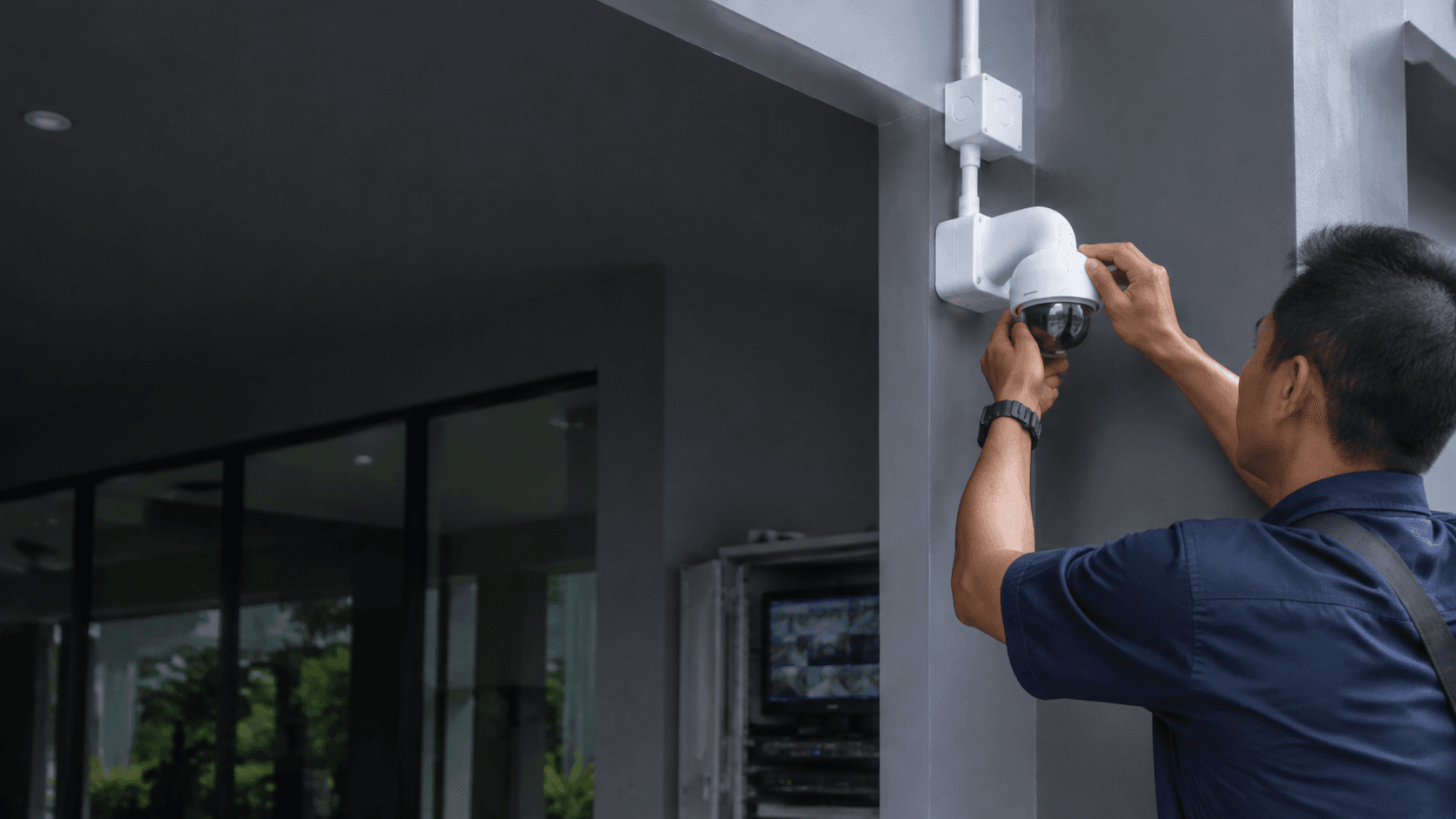
Security Systems Installation Services: What Matters Before You Choose
bundle planning, physical setup, and testing into one engagement rather than leaving equipment as a standalone purchase. A professional installer first inspects the property, then proposes a system matched to the observed conditions, installs the hardware, and finally hands over working equipment with guidance on daily use.
Eyonic Sdn Bhd, a security system supplier in Sarawak, Malaysia, follows this four-stage sequence for CCTV work: site survey, system proposal, installation, and handover. The same practical logic extends to alarm systems, autogates, keyphone intercoms, and Starlink internet installations offered by the company.
The value of a structured process shows up most clearly in camera placement. Eyonic recommends checking actual lighting conditions before confirming placement for Hikvision ColorVu-style cameras, because a camera that performs well in a showroom can fail at night if the real environment differs from expectations.
Choosing the Right Security Systems Installation
Selecting a provider for comes down to matching the installer's process to the property type and the specific risk being addressed. A home, an office, a shop, and an industrial site each place different demands on camera angles, recording capacity, and access control.
The decision sequence below reflects how a professional installer typically qualifies a project before any equipment is mounted:
- Define the property type and the areas that need coverage, such as entry points, staff zones, or visitor paths.
- Schedule a site survey so the installer can verify lighting, sightlines, cabling routes, and structural constraints in person.
- Review a written system proposal that names the equipment, the placement plan, and the expected budget before work begins.
- Confirm installation details including cable management, recorder location, and remote viewing access for the people who will use the system daily.
- Complete a handover that covers how to operate the system, check recordings, and request future support.
Eyonic's completed projects illustrate how this sequence adapts to different settings. The Kuching Immigration Office project focused on arrival flow, staff areas, visitor movement, and dependable daily operation, with an approximate budget of RM 12,000 to RM 28,000. A separate project for KTA Sarawak Sdn Bhd, an engineering consultancy, supported staff movement, visitor handling, tidy cabling, and clearer daily site control at an approximate budget of RM 8,000 to RM 18,000.
Practical Considerations for Security Systems Installation
Budget, equipment choice, and site conditions interact in ways that a quote alone cannot capture. Eyonic lists a Hikvision CCTV package at RM 1,599, a Hikvision alarm system at RM 1,599, and an autogate package at RM 1,599, but larger projects scale well beyond those entry points. The Kuching Immigration Office and KTA Sarawak projects show that real-world budgets for offices and public buildings range from RM 8,000 to RM 28,000 depending on scope.
Lighting deserves attention before cameras are mounted. ColorVu-style cameras from Hikvision deliver colour footage in low light, but only when the actual conditions at the installation site support that performance. Eyonic's review guidance is explicit: check real lighting conditions before confirming placement, rather than assuming the camera will perform identically in every location.
Access control adds another layer of choice. Smart lock door access suits controlled convenience when user permissions and backup entry are planned properly. For business use, Eyonic usually checks whether a standalone smart lock or an access-control panel is more appropriate, because the two options serve different numbers of users and different audit requirements.
The table below compares the main system types that fall under in Sarawak:
| System Type | Typical Use Case | Key Planning Consideration |
|---|---|---|
| CCTV | Homes, offices, shops, industrial sites | Lighting conditions, camera placement, recording and remote viewing needs |
| Alarm system | Intrusion detection for homes and businesses | Sensor placement, entry points, monitoring expectations |
| Autogate | Vehicle entry control for residential and commercial properties | Gate type, motor capacity, safety sensors |
| Keyphone intercom | Visitor screening at entry points | Wiring, unit placement, integration with door release |
| Smart lock access | Controlled entry for staff or residents | Door condition, user roles, backup entry method |
Making an Informed Choice About Security Systems Installation
The strongest signal of a suitable provider is a documented process that includes a site survey before any commitment. A provider that can point to completed projects with named clients, such as Eyonic's work for the Kuching Immigration Office, demonstrates that the have been tested in real operating environments rather than only in marketing materials.
Eric Yong, founder of Eyonic Security Systems, has more than 10 years of experience in technical installation of digital security solutions for commercial businesses in Sarawak. That depth matters because installation errors surface only after the system is live, when a poorly placed camera or an unsecured cable route becomes a daily frustration.
For anyone comparing , the practical next step is to share the location, property type, and required system with a provider and request a site survey. Eyonic accepts such enquiries on WhatsApp at +60 11-5111 7959, which allows the conversation to begin with the specific conditions of the property rather than a generic price list.