
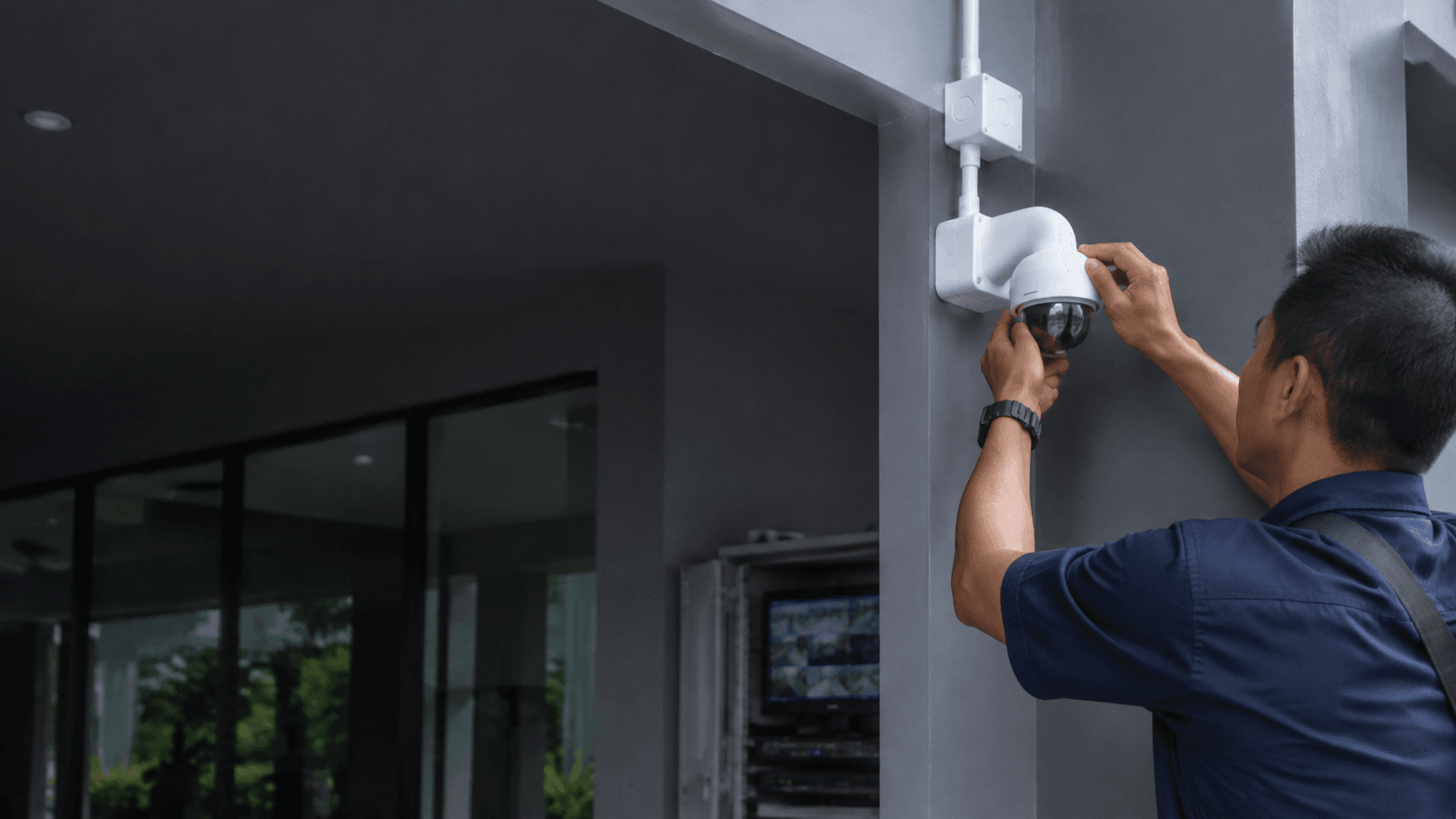
The label matters less than what the recorded file shows at the gate, the counter or the shop floor after dark. Resolution sets the ceiling on detail; lighting, lens choice, camera height and recording settings decide how much of that ceiling is reached in daily use.
Hd Surveillance Camera. What the Term Actually Covers
High definition describes a resolution tier rather than a single product. In practice the term spans 720p, 1080p, 2K, 4K and higher, and a camera sold under this label can sit at any point in that range. Two cameras with the same headline resolution can behave very differently once installed, because sensor size, lens width and the amount of light reaching the sensor all shape the final image.
For a buyer in Malaysia, the useful question is not which tier sounds highest. It is which tier holds identifying detail at the specific distance and lighting the camera will actually face. A wide-angle camera covering an entire shop floor spreads its pixels thinly, so a face at the far end may occupy very few pixels even at a high resolution. A narrower view of the same area concentrates detail where it matters.
Eyonic plans, supplies and installs monitoring systems with camera placement, recording and remote viewing for homes, offices, shops and industrial sites. That scope means the resolution decision sits inside a wider design conversation rather than standing alone as a specification.
Why Resolution Alone Does Not Decide Footage Quality
Four factors usually decide whether footage is usable, and resolution is only one of them.
- Available light at the scene, including whether the area is lit at night or relies on the camera's own illumination.
- Distance from camera to subject, which determines how many pixels fall on a face or a number plate.
- Lens field of view, where a wider view trades detail for coverage.
- Recording settings, including frame rate and how long footage is retained before it overwrites.
Night performance is where quoted specifications and real footage diverge most often. A camera that produces a clean daytime image can return a soft or noisy night image if the scene is darker than expected. Eyonic recommends checking actual lighting conditions before confirming placement for ColorVu-style cameras, precisely because the installed result depends on the light present at that spot rather than on the product description.
Recording settings carry a similar trade-off. Higher frame rates and higher resolutions consume storage faster, which shortens the retention window. A system that keeps two weeks of footage at a lower setting may serve an investigation better than one that keeps four days at maximum quality. The right balance depends on how far back a site needs to look.
What to Check Before Confirming Camera Placement
Placement is the decision that is hardest to reverse once cabling is run and holes are drilled. The checks below are the ones Eyonic applies before positions are fixed.
- Walk the site at the hours that matter, including after dark, and note where light falls and where it does not.
- Identify the specific points that need detail, such as an entry door, a cash counter, a gate or a loading area.
- Measure the distance from each proposed camera position to those points, since distance drives pixel density on the subject.
- Check for obstructions that appear over time, including growing foliage, parked vehicles, signage and shelving.
- Confirm where the recorder, power and cabling can run without creating trip hazards or exposed runs.
- Agree who will review footage and on which device, so remote viewing is set up for the people who will use it.
A camera aimed at a bright doorway from a dark interior will expose for one and lose the other. A camera mounted too high captures the tops of heads rather than faces. These are placement problems, not resolution problems, and no specification upgrade fixes them after installation.
How an hd surveillance camera Fits a Working System
A camera on its own records nothing beyond its local storage, if it has any. In most installed systems the camera connects to a recorder, and the recorder is what makes footage reviewable, searchable and retainable. Eyonic's installation scope covers NVR setup and remote viewing alongside camera placement, which reflects how the parts depend on each other.
The practical sequence Eyonic follows for a CCTV installation is:
- Site survey.
- System proposal.
- Installation.
- Handover.
The survey establishes what needs to be seen and under what conditions. The proposal translates that into camera positions, recorder capacity and storage. Installation runs the cabling and mounts the hardware. Handover covers recording configuration and mobile viewing, so the people responsible for the site can actually retrieve footage when they need it.
Remote viewing deserves attention at handover rather than later. A system that only one person can access, on a phone that may leave the company, creates a practical gap. Agreeing which devices and accounts will hold access is part of a clean handover.
A Local Installation Example in Kuching
Eyonic completed a project for the Kuching Immigration Office, focused on arrival flow, staff areas, visitor movement and dependable daily operation. That brief is typical of public-facing premises: the value sits in covering movement through the building reliably, day after day, rather than in any single dramatic camera position.
Arrival flow, staff areas and visitor movement each imply different coverage priorities. An arrival area needs enough detail to identify who entered and when. Staff areas need coverage that supports daily operations without creating blind spots at entrances. Visitor movement needs continuity between camera views, so a person can be followed through the building rather than disappearing between frames.
Dependable daily operation is the constraint that shapes the rest. A public office cannot rely on a system that needs frequent attention, so recording configuration and storage capacity have to be sized for continuous use. The approximate budget for this type of work is RM 12,000 to RM 28,000, which reflects a multi-area installation rather than a single camera.
A second Eyonic project, for KTA Sarawak Sdn Bhd, covered a practical office setup in Kuching supporting staff movement, visitor handling, tidy cabling and clearer daily site control. The approximate budget for that type of work is RM 8,000 to RM 18,000. Both examples show the same pattern: the camera count and positions follow from what the site needs to see, and the budget follows from that scope.
Costs, Handover and the Next Practical Step
Eyonic's published package pricing starts at RM 1,599 for a Hikvision CCTV Package, which includes camera supply and setup, basic recording configuration and mobile viewing handover. That figure describes a defined starting scope rather than a per-camera price, and larger sites with more coverage points sit above it, as the Kuching project budgets indicate.
Handover is where a system either becomes usable or quietly stops being used. Recording configuration, mobile viewing and a clear explanation of how to retrieve footage all belong in that step. Without them, a well-installed hd surveillance camera system can end up reviewed only in emergencies, by someone who has to work out the interface under pressure.
Eric Yong founded Eyonic Security Systems and has worked in the industry for more than 10 years, with experience in technical installation of digital security solutions for commercial businesses in Sarawak. That background is relevant to the placement decisions described above, because the difference between usable and unusable footage is usually settled on site rather than in a product listing.
For a site in Sarawak, the practical starting point is a survey that establishes what needs to be seen, at what distance and under what lighting, before any camera model is chosen. Share the location, property type and required system with Eyonic on WhatsApp at +60 11-5111 7959 to arrange that step.