
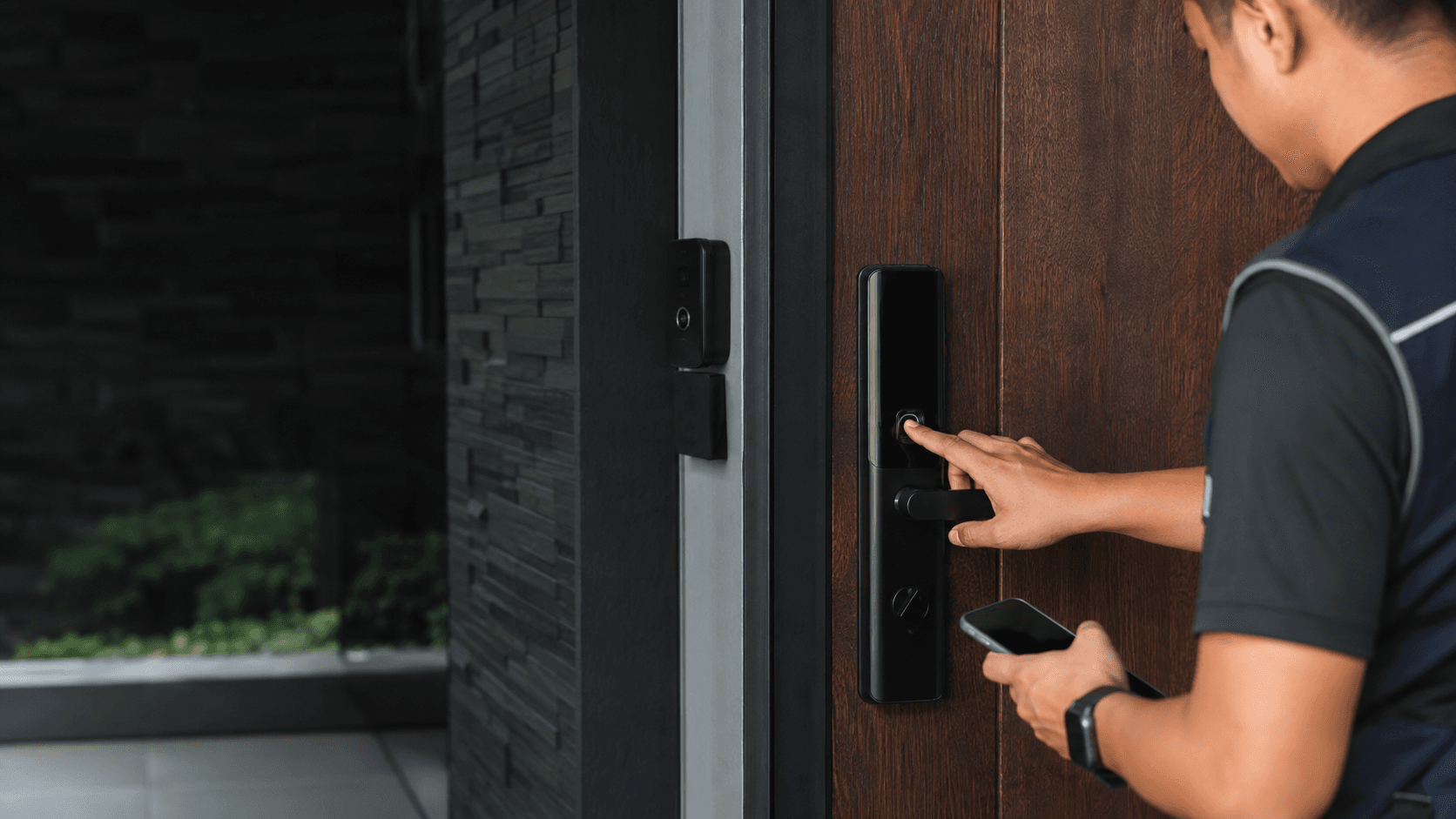
Eyonic's own product review guidance states that smart locks work best when the door condition, user roles and backup method are reviewed before installation. That single sentence explains why two households can buy the same unit and get very different results.
Malaysian main doors are not uniform. A solid timber door, a metal gate, a hollow-core flush door and a fire-rated apartment door each behave differently under the weight and alignment demands of a lock body. The lock is only part of the decision. The door, the people who need entry, and the fallback when electronics fail matter just as much.
Biometric Lock For Main Door. What Malaysian Homes Are Actually Choosing
Most Malaysian buyers arrive at this category through one of three routes: a new property handover, a renovation, or a frustration with lost keys and duplicated copies. The choice usually narrows to a standalone smart lock or a wider access-control setup.
Eyonic's smart lock door access review notes that for business use, the company usually checks whether a standalone smart lock or an access-control panel is more appropriate. That same fork applies to homes with domestic helpers, tenants, or frequent contractors.
A standalone biometric lock for main door use suits a single household with a stable set of users. An access-control approach suits a property where entry needs to be logged, scheduled, or revoked without changing the lock itself.
Fingerprint access and keyless entry on a main door
Fingerprint access reads a stored print and releases the lock. Keyless entry covers everything else that opens the door without a physical key: a PIN code, a card, a phone app, or a remote. Most units combine several of these, and the combination matters more than the headline feature.
The practical question is not whether fingerprint access works. It is what happens on the day it does not. Wet hands, a cut finger, a worn print, or a cold reader all produce the same outcome: the door stays shut until another method is used.
That is why backup entry is not an optional extra. It is the part of the system that decides whether a failed read is a minor inconvenience or a locked-out evening.
Door Condition, User Roles And Backup Entry Before Installation
These three checks decide whether a biometric lock for main door installation will hold up. Skipping any one of them tends to surface as a problem weeks later, not on the day of fitting.
- Door condition. Check the door material, thickness, existing cut-outs, frame alignment and whether the door closes squarely. A door that already sticks or sags will stress the lock mechanism.
- User roles. List everyone who needs entry and what each person should be able to do. A household member, a domestic helper, a tenant and a contractor should not share the same level of access.
- Backup method. Decide the fallback before installation. A mechanical key, a PIN code, or a second entry point should be confirmed and tested, not assumed.
User permissions are the part buyers underestimate. A lock that gives everyone the same access is convenient until someone leaves the household or a tenancy ends. Locks that support separate credentials let one person's access be removed without reissuing keys to everyone else.
Door condition is the part installers cannot fix with settings. If the existing door has been drilled for a previous lock, the new body may not align with the old cut-out. If the frame has swollen, the bolt may not seat cleanly. These are physical constraints, and they are better identified during a site survey than during fitting.
When a standalone lock is the wrong choice
A standalone biometric lock for main door use becomes a poor fit when the property needs an entry record, when access must follow a schedule, or when more than a handful of people cycle through the door. In those cases the lock is doing a job that belongs to an access-control panel.
Eyonic's review position is that this fork should be checked for business use. The same logic applies to a home with a steady stream of short-stay guests or a shop with staff shifts.
What A Biometric Lock For Main Door Costs In Malaysia
There is no verified Malaysia-specific price for a biometric lock unit or its installation in the available evidence. Any figure quoted without a confirmed model and site survey should be treated as provisional.
What is evidenced is Eyonic's package pricing for adjacent security systems. The Hikvision CCTV Package, the Hikvision Alarm System and the Autogate Package are each listed at RM 1,599. Those figures cover camera supply and setup, control panel and sensors, and motor recommendation respectively, and they show the general price band Eyonic works in for entry-level installed systems.
Budget planning should separate the lock unit from the installation work. A main door that needs modification, a new cut-out, or frame adjustment carries labour beyond a straight swap. A door that already has a compatible cut-out is a simpler job.
Buyers comparing quotes should ask what is included: the lock body, the handle set if required, any door modification, credential setup, and a test of the backup entry method. A quote that omits the last item leaves the most important failure case untested.
Installation And Handover Steps Eyonic Follows
Eyonic's documented installation process runs through four stages. The same sequence is described for CCTV installation services in Sarawak, and it applies to door access work because the same physical and user checks are involved.
- Site survey. The door, frame, existing hardware and power or wiring options are inspected on site.
- System proposal. The recommended lock or access approach is set out, along with what the installation covers.
- Installation. The lock is fitted, credentials are enrolled, and user permissions are configured.
- Handover. The system is tested with the people who will use it, including the backup entry method.
The handover stage is where user roles get confirmed in practice. Enrolling a fingerprint is quick. Confirming that the right people can enter, that the wrong people cannot, and that the backup method works is the part that protects the household afterwards.
Eyonic's project work gives a sense of how the company approaches access and movement. The Kuching Immigration Office project focused on arrival flow, staff areas, visitor movement and dependable daily operation. The KTA Sarawak Sdn Bhd project supported staff movement, visitor handling, tidy cabling and clearer daily site control. Both are office settings rather than homes, but the underlying questions about who moves through a door and how that movement is managed are the same ones a main door raises.
Eric Yong, founder of Eyonic Security Systems, has worked in the industry for more than 10 years and is experienced in technical installation of digital security solutions for commercial businesses in Sarawak.
Questions Malaysian Buyers Ask
Does a use need Wi Fi
Not for the lock to open. Fingerprint access and PIN entry work locally on the lock. Wi-Fi or a bridge matters when remote control, notifications, or app-based management are wanted. A lock can secure a door without any network connection at all.
What happens when the battery runs down
Battery behaviour varies by model, and no verified battery life figure is available for the units discussed here. The safe approach is to confirm the low-battery warning method and the backup entry route during handover, and to keep the mechanical key or secondary credential accessible outside the door.
Can a biometric lock be fitted to an existing main door
Often yes, but it depends on the door. Material, thickness, existing cut-outs and frame alignment all affect whether a lock body fits and whether the bolt seats correctly. A site survey answers this more reliably than a product listing.
Is a standalone lock enough for a home with helpers or tenants
It can be, if the lock supports separate credentials and those credentials can be removed individually. If entry needs to be logged or scheduled, an access-control approach is the better fit. Eyonic's review guidance flags this standalone-versus-panel check for business use, and the same question applies to a shared household.
What should be tested before the installer leaves
Every enrolled user should open the door with their own credential. The backup entry method should be tested with the door closed. Any access that should be denied should be confirmed as denied. These three checks catch most of the problems that would otherwise appear later.
For buyers still deciding, the useful next step is to gather the door details, the list of people who need entry, and the preferred backup method. Eyonic can be reached on WhatsApp at +60 11-5111 7959 with the location, property type and required system.