
- Confirm the decision and constraints.
- Compare the supported evidence.
- Verify material claims and choose the best-fit option.
When evaluating the , the decision starts with the property layout and the level of detail required. Eyonic, a security system supplier in Sarawak, plans, supplies, and installs monitoring systems for homes, offices, shops, and industrial sites, with camera placement, recording, and remote viewing included. Their installation process follows a clear order: site survey, system proposal, installation, and handover.
Best Cctv Camera For Home: What Matters Before You Choose
Before choosing a home CCTV camera, map the entry points, blind spots, and high-traffic areas that need coverage. Check the lighting at each proposed camera position, especially for ColorVu-style cameras that need adequate ambient light for colour night vision. Decide between local recording on an NVR and cloud-based storage based on internet reliability. Confirm whether the camera needs to identify faces, read number plates, or simply record activity. Review the cabling route and power source before committing to a wired or wireless unit.
Wired systems using Power over Ethernet (PoE) provide stable connections and continuous power, which suits homes where the router is far from the camera points. Wireless cameras are easier to install but depend on Wi-Fi strength and battery life. Eyonic's project work shows the range of real-world applications: the Kuching Immigration Office needed coverage of arrival flow, staff areas, and visitor movement, while an engineering consultancy required tidy cabling and clearer daily site control.
How to Choose the Right Home CCTV Camera
The right home CCTV camera depends on the property layout and the level of detail required. A 4K camera captures more detail than a 5MP model, but the difference only matters when the footage needs to identify a person or vehicle clearly. For general monitoring of a driveway or garden, a lower resolution with reliable night vision often delivers better value than a high-resolution camera that struggles in low light.
Camera resolution directly affects the price and the storage requirement. Higher resolution produces sharper images but consumes more storage space, so the recording capacity must match the camera's output. For most home entrances, a 5MP camera provides sufficient detail for identifying visitors without the storage burden of 4K.
Practical Installation Considerations
Lighting is the most overlooked factor when installing a home CCTV camera. Eyonic recommends checking actual lighting conditions before confirming placement for ColorVu-style cameras, which produce colour night vision but need adequate ambient light to perform well. A camera positioned under a bright porch light will deliver clearer footage than one facing a dark, unlit corner.
Storage planning follows the same logic. A camera recording continuously at high resolution fills a hard drive faster than one set to record only on motion detection. Homeowners should calculate the daily recording volume and match it to the NVR's capacity, keeping in mind that footage is only useful if it remains available when an incident occurs.
Wired vs Wireless Home CCTV Cameras
Wired cameras offer reliable power and data transmission but require cabling through walls or ceilings. Wireless cameras are simpler to position but depend on battery life and Wi-Fi coverage. Homes with thick walls or distant camera points may need a mesh network or a wired system to maintain a stable connection.
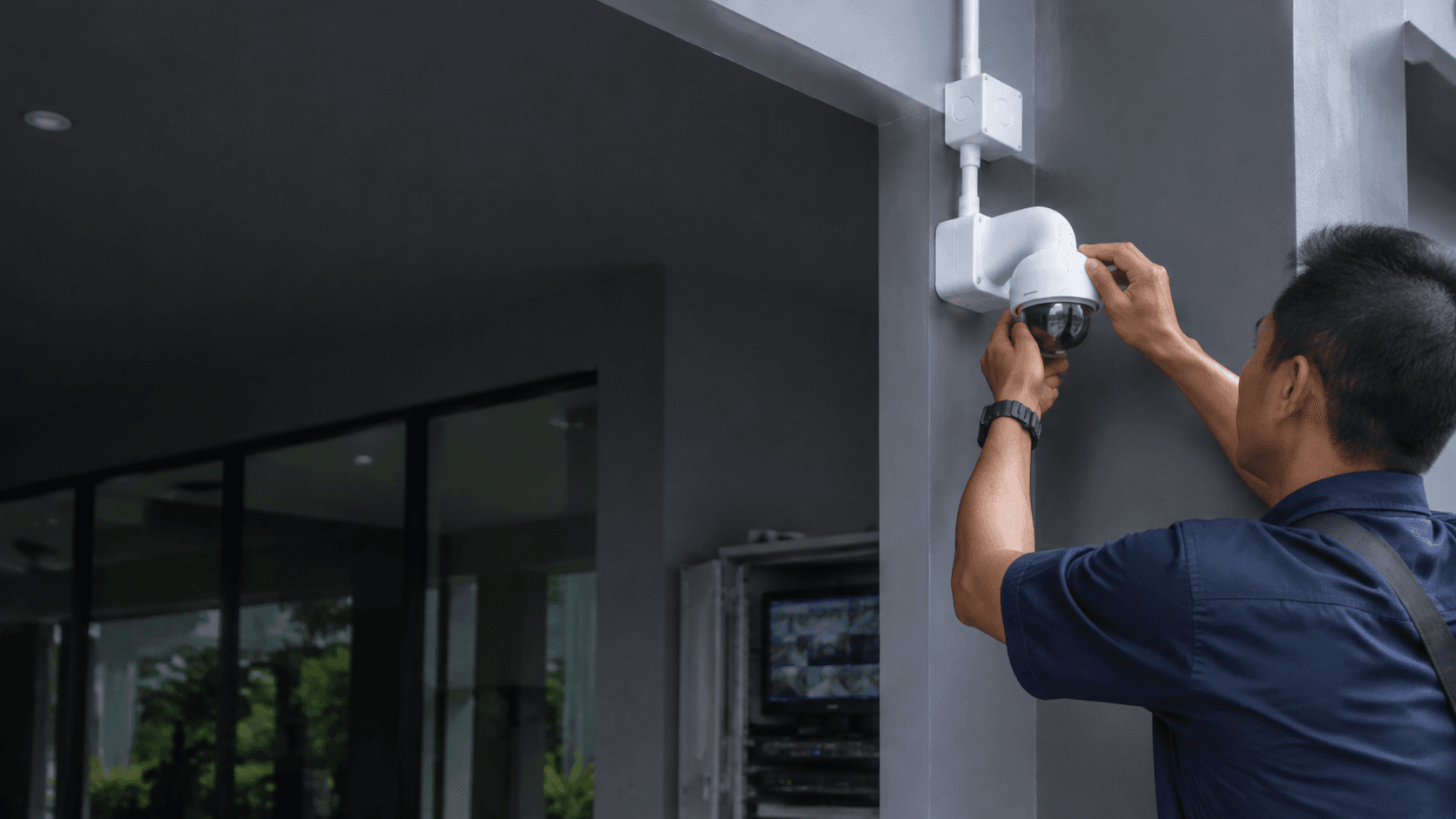
Installation quality determines whether a camera system performs as intended. A poorly angled camera may capture the wrong area, and loose cabling can cause intermittent failures. Eyonic's process includes a site survey before installation, which identifies the best positions and any obstacles that could affect the view or signal.
Making an Informed Choice
The is the one that matches the property's specific needs, not the most expensive or the most advertised model. A practical evaluation covers the coverage area, lighting conditions, storage capacity, and the reliability of the installation. Eyonic's completed projects demonstrate that a well-planned system handles real-world demands, from public office visitor flow to engineering consultancy site control.
For homes, the decision usually comes down to a few key questions. Does the camera need to identify faces at night? Is the internet connection stable enough for remote viewing? How long should the footage remain stored? Answering these questions before purchasing prevents the common mistake of buying a camera with impressive specifications that does not suit the actual installation site.