
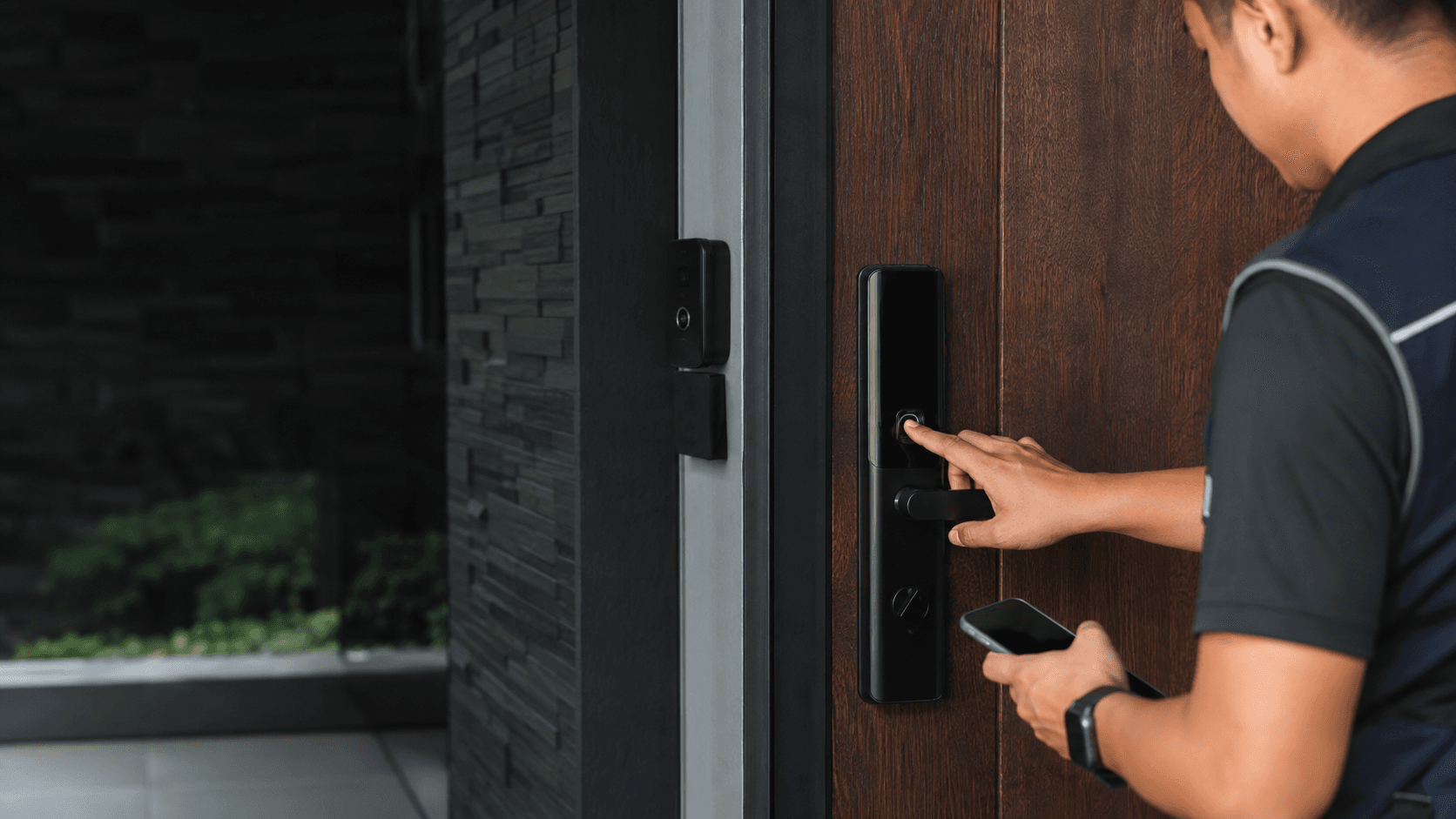
Ratings published elsewhere usually measure a lock against a test bench, not against a specific door in Sarawak. A lock that scores well on convenience can still fail on a metal gate frame, a misaligned strike plate, or a household where six people need entry and only one code exists. The useful comparison is between access methods and the conditions each one tolerates.
Top Rated Keyless Door Locks. What the Ratings Actually Measure
Most rating systems score a lock on four things: how many ways it grants entry, how it behaves when power or network fails, how it is installed, and how access is managed over time. Those four categories explain why two locks with similar scores can suit very different doors.
Access method carries the most weight in most comparisons because it decides daily behaviour. A keypad deadbolt suits a household where several people come and go and codes can be changed. Fingerprint access suits a smaller group with consistent users. App or remote access suits a landlord or shop owner who needs to grant entry without being present. A backup key covers the case where electronics stop responding.
Installation method is the second category. A retrofit lock reuses the existing deadbolt and cylinder, while a full replacement swaps the deadbolt assembly. Retrofit work is usually faster and leaves the door's existing hardware in place. Replacement gives more control over the bolt and strike but requires the door to accept the new body.
Power and connectivity form the third category. Battery life, and what happens at low battery, decide whether a lock is dependable in daily use. Network dependency matters where remote access is expected, because a lock that relies on Wi-Fi or a hub stops offering remote entry when that link drops.
Access management is the fourth. User permissions, code schedules and activity records separate a household lock from a lock used at a shop counter or an office entrance. A standalone smart lock handles a small number of users well. A larger site usually needs an access-control panel instead.
Rated Keyless Door Locks Compared by Access Method
Each access method trades convenience against a condition that must be verified first. The table below keeps the comparison at the level of method and check, without asserting model names or specifications.
| Access method | What it suits | What to verify first |
|---|---|---|
| Keypad code | Households and shops where several people need entry and codes change over time | How many separate codes the lock supports and how a lost code is removed |
| Fingerprint access | A small, consistent group of regular users | Whether every regular user can enrol reliably, including older users and wet or worn fingers |
| App or remote access | Owners and managers who grant entry while away from the door | Whether the lock needs a hub or Wi-Fi link, and what remains available when that link drops |
| Backup key | Any door where a dead battery or failed electronics would otherwise block entry | Where the key is stored and who can reach it outside working hours |
A lock that combines several methods is not automatically better. Each added method adds a component that can fail, and each one needs its own recovery path. The practical question is which method the door's main users will actually use every day.
Door Condition and User Roles Before Choosing a Lock
Door condition decides whether a keyless lock fits at all. Thickness, material, existing deadbolt type and alignment all affect the installation, and a door that does not close cleanly will keep a motorised bolt from extending properly.
User roles decide the access design. A family home needs a small number of permanent users and a way to add a temporary code for a visitor or a contractor. A shop needs staff codes that can be removed when someone leaves. An office with a reception counter needs a record of who entered and when. Eyonic's smart lock door access review notes that smart locks work best when door condition, user roles and backup method are reviewed before installation, and that business use often requires checking whether a standalone smart lock or an access-control panel is the better fit.
Property type changes the constraint. A rented unit may limit what can be changed on the door, and a shop lot with a metal grille and a glass entrance door may need two different solutions rather than one lock covering both. Where a site already runs CCTV, alarm and intercom systems, the lock should be planned alongside them rather than added afterwards.
Backup Entry and Battery Behaviour When Access Fails
Every electronic lock has a failure path, and the rating that matters most is how quickly that path restores entry. A backup key, an external power point for a temporary charge, or a mechanical override all serve the same purpose: getting through the door when the electronics do not respond.
Battery behaviour is the other half. A lock that warns early gives time to replace cells during working hours. A lock that fails without warning turns a routine entry into a lockout, and that risk rises on a door with heavy daily traffic. Where a lock depends on a network or hub for remote access, the same planning applies: the door should still open by code or key when the link is down.
For a business entrance, the backup method should be documented and held by more than one person. For a home, it should be reachable without breaking in. The Kuching Immigration Office project that Eyonic completed focused on arrival flow, staff areas, visitor movement and dependable daily operation, which is the same set of concerns a busy entrance lock has to answer.
Installation and Handover Checks for Malaysian Homes and Shops
Installation quality decides whether a well-rated lock performs well. The checks below are the ones worth completing before a keyless lock is confirmed for a door.
- Measure door thickness and check that the door closes and latches without lifting or dragging.
- Identify the existing deadbolt type and confirm whether a retrofit lock or a full replacement is required.
- List who needs entry, at what times, and whether any user needs temporary or one-off access.
- Agree the backup entry method and where the backup key or override is kept.
- Confirm power expectations, including how low battery is signalled and who replaces the cells.
- Check whether remote access depends on Wi-Fi, a hub or a mobile app, and what still works without it.
- Test every access method at handover, including a deliberate low-battery or offline scenario.
Eyonic's installation process follows site survey, system proposal, installation and handover, and the same sequence applies to door access work. A survey confirms the door and frame conditions on site. The proposal sets out which access methods and user roles the system will cover. Installation fits the hardware, and handover tests each method with the people who will use it.
Handover is where most problems surface early. Testing a code, a fingerprint and a backup key in front of the users catches enrolment issues, misread fingers and a stiff bolt before the door becomes the only way in or out of a premises.
What to Confirm Before Buying a Keyless Lock
The final decision rests on four confirmations: the door accepts the hardware, the access methods match the people who use the door, the backup path works without power or network, and someone is responsible for batteries and user changes after handover.
Where a site needs more than a handful of users, scheduled access or a record of entries, a standalone smart lock may not be the right instrument. Eyonic supplies and installs security and ELV systems across Sarawak, including CCTV, alarm, autogate, keyphone intercom and smart lock door access, so a lock decision can be checked against the rest of the site's systems rather than made in isolation. Package pricing for related systems starts at RM 1,599 for the Hikvision CCTV package, the Hikvision alarm system and the autogate package.
Share your location, property type and required system with Eyonic on WhatsApp at +60 11-5111 7959 for the next practical step.