
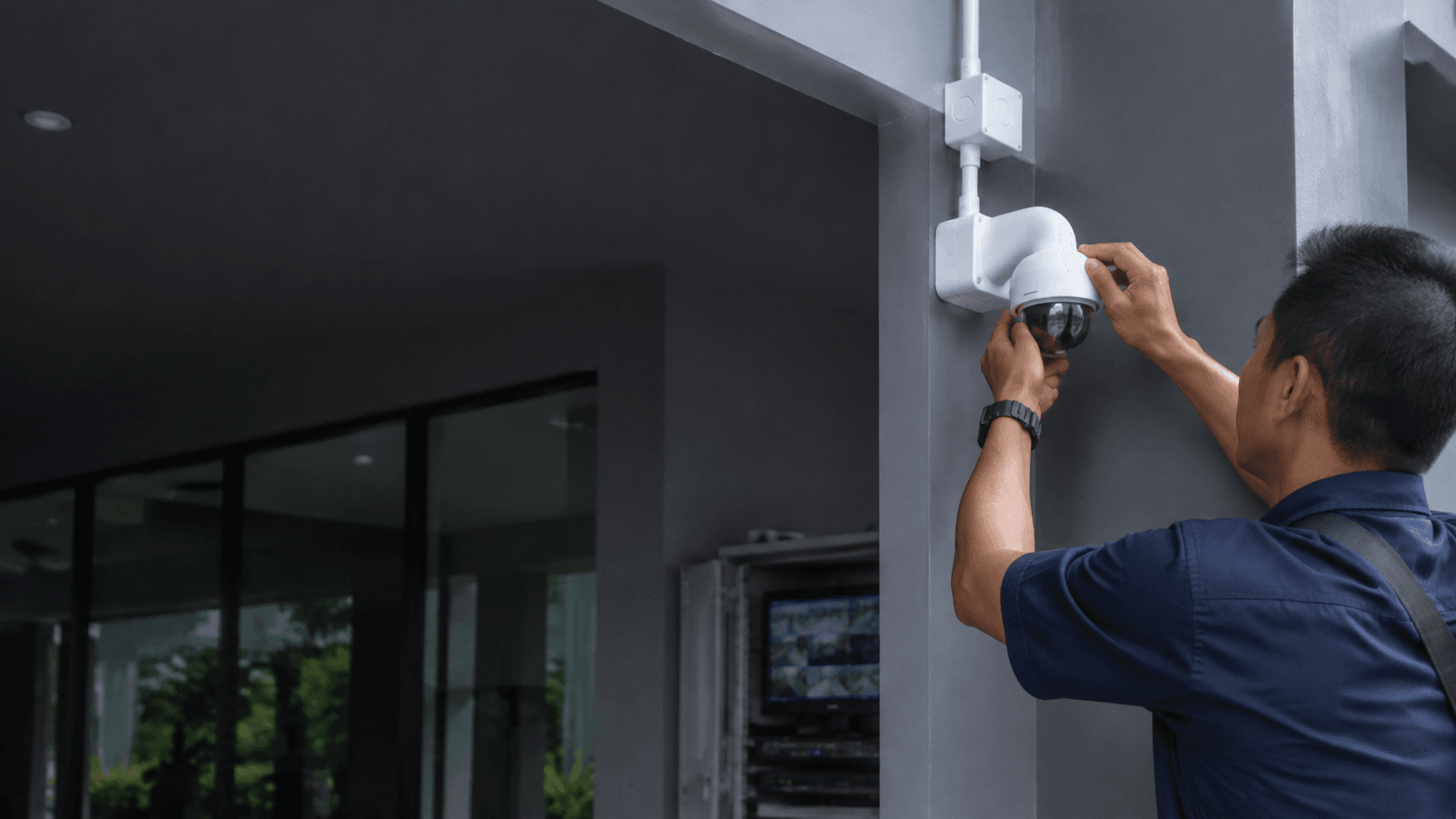
The exact-match query nvr cctv system describes a specific architecture rather than a single box. The recorder is the hub; the cameras are network devices; the cable between them carries both data and power in most modern builds. That combination is what separates an NVR setup from older analog recording, and it is the reason channel count, storage and camera compatibility matter more than brand badges.
Nvr Cctv System. What Matters Before Choosing
Four decisions shape almost every NVR project: how many cameras the site needs, whether the recorder can power them over Ethernet, how many days of footage must be retained, and how the footage will be viewed remotely. Get those four right and the rest is detail. Get them wrong and the system either runs out of channels, runs out of storage, or cannot be expanded without replacing the recorder.
- Count the camera positions the site actually needs, including entrances, cash or asset areas, and any blind spots along a perimeter.
- Confirm the recorder's channel count leaves room for at least one or two future cameras.
- Check whether the recorder supplies Power over Ethernet, which removes separate power runs to each camera.
- Estimate storage from resolution, frame rate and retention days rather than guessing a hard drive size.
- Verify the cameras and recorder speak the same protocol, commonly ONVIF, before purchase.
- Plan the remote viewing method and confirm the site's internet upload speed supports it.
Eyonic's own installation process follows a comparable sequence: site survey, system proposal, installation, and handover. The survey stage exists because camera placement depends on the building, not on a catalogue.
What Is an NVR CCTV System?
An NVR CCTV system is a network video recorder paired with IP cameras. Each camera encodes video and sends it across the network as data; the recorder receives those streams, writes them to a hard drive, and serves them back for live viewing or playback. Because the video arrives already digital, the recorder does not need to convert an analog signal, which is the core mechanical difference from a DVR.
That architecture produces three practical consequences. First, a single Ethernet cable can carry both video and power to a PoE camera, which simplifies cabling. Second, camera resolution is limited by the camera and the recorder's decoding capacity rather than by a video cable's bandwidth. Third, the recorder becomes the single point where storage, user access and recording schedules are managed.
How the Parts Fit Together
IP cameras capture and encode. The network, usually a PoE switch or the recorder's own PoE ports, carries the stream. The NVR writes it to storage and exposes it through a local monitor, a desktop client, or a mobile app. Remote viewing depends on the site's internet connection; local recording continues whether or not the internet is available, provided the recorder and cameras have power.
Choosing the Right Nvr Cctv System
Selection is mostly a matching exercise. The recorder must accept the cameras, the storage must cover the retention period, and the network must carry the total bitrate of every camera running at once. A recorder that is adequate for four 4MP cameras may be undersized for sixteen 8MP cameras, even if the channel count technically allows it.
| Decision | What it affects | Practical constraint |
|---|---|---|
| Channel count | How many cameras the recorder accepts | Expansion beyond the channel limit requires a new recorder |
| PoE support | Whether cameras need separate power runs | Non-PoE builds need power at each camera position |
| Storage capacity | How many days of footage are retained | Higher resolution and frame rate shorten retention on the same drive |
| Protocol support | Which camera brands will work | Mixed-brand setups depend on ONVIF compatibility |
| Remote access | How footage is viewed off-site | Limited upload bandwidth reduces remote stream quality |
Eyonic's published packages start at RM 1,599 for a Hikvision CCTV package covering camera supply and setup, basic recording configuration, and mobile viewing handover. Larger sites cost more; a completed public-office project in Kuching carried an approximate budget of RM 12,000 to RM 28,000, and an engineering consultancy office project carried an approximate budget of RM 8,000 to RM 18,000. Those figures describe scope, not a fixed price list.
Where NVR Fits and Where It Does Not
An NVR suits sites that want higher resolution, centralized storage, and room to add cameras later. It fits less well where existing analog cabling must be reused, since that usually points toward a DVR or a hybrid recorder instead. It also fits less well where there is no reliable power or network path to camera positions, because those constraints have to be solved before the recorder choice matters.
Practical Considerations for Nvr Cctv System Installation
Installation quality decides whether the specification survives contact with the building. Camera height, angle, and lighting all change what the footage actually shows, and a camera aimed at a bright doorway will behave differently from one covering a shaded corridor.
Eyonic recommends checking actual lighting conditions before confirming placement for ColorVu-style cameras, because low-light performance depends on the real scene rather than the datasheet. The same logic applies to any camera chosen primarily for night coverage.
Storage Retention and Bandwidth
Retention is a function of how much data the cameras produce and how much space the drive provides. More cameras, higher resolution, higher frame rate, and continuous recording all increase daily data volume. Motion-triggered recording reduces it but leaves gaps between events. The honest answer is that retention must be calculated for the specific camera set, not assumed from a drive size.
Bandwidth works the same way. Every camera contributes a stream, and the recorder must handle the combined total. Remote viewing adds a second demand on the site's upload connection, which is often the tighter constraint in practice.
Edge Cases Worth Planning For
Three situations cause most post-installation frustration. A recorder filled to its channel limit cannot accept another camera without replacement. A mixed-brand camera set may connect but lose advanced features if it is not fully compatible. A site with unstable power will lose recording during outages unless the recorder and network equipment are protected.
Making an Informed Choice About
The useful next step is a site survey, because camera positions, lighting, cable routes and network paths are all building-specific. Eyonic's survey-to-handover process exists to convert those site facts into a system proposal rather than a generic package.
For reference, Eyonic's founder Eric Yong has worked in the industry for more than ten years, with experience in technical installation of digital security solutions for commercial businesses in Sarawak. Completed work includes the Kuching Immigration Office, where the focus was arrival flow, staff areas, visitor movement and dependable daily operation, and KTA Sarawak Sdn Bhd, where the focus was staff movement, visitor handling, tidy cabling and clearer daily site control.
Share the location, property type and required system with Eyonic on WhatsApp at +60 11-5111 7959 for the next practical step.