
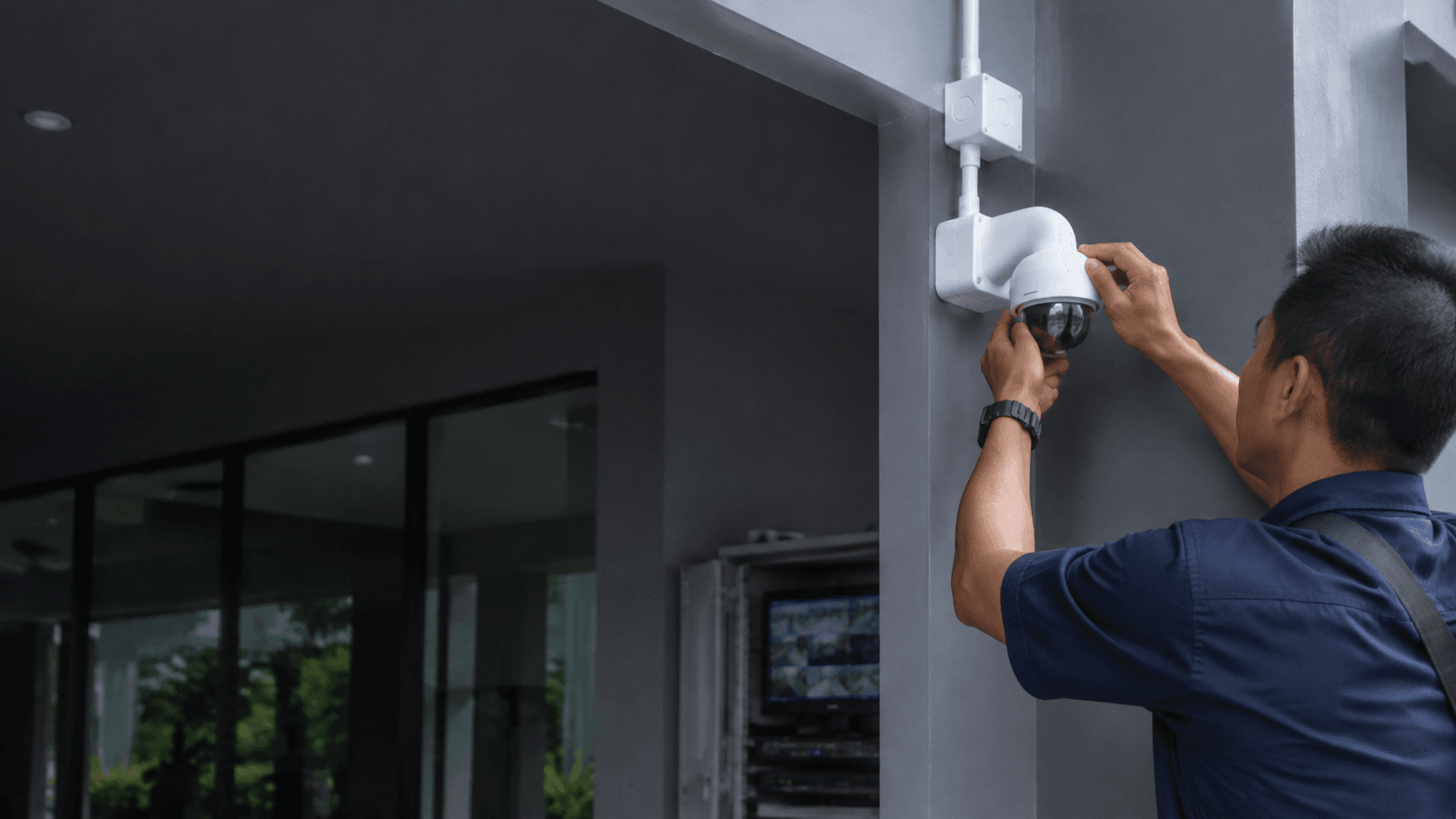
Buyers in Malaysia usually arrive with two questions tangled together: which Bosch PTZ model fits the site, and who will position and support it locally. The model question is answerable from published product listings. The second question depends on the site itself, because a PTZ camera earns its cost only when the movement range is matched to real activity across a wide or changing area.
What a Bosch PTZ camera does on a live site
A fixed camera holds one view. A Bosch PTZ camera moves that view on command or on a schedule, so one unit can cover a gate, a yard, a corridor and a loading bay without a camera on each. The trade-off is that a PTZ camera points somewhere at any given moment, which means anything outside the current position is not being recorded by that unit.
That single constraint shapes most planning decisions. Where continuous coverage of an entrance matters, a fixed camera watching that entrance plus a PTZ camera for the wider area usually beats a PTZ camera alone. Where the area is large and activity is intermittent, the PTZ camera carries more of the load.
Movement also has a mechanical cost. Pan and tilt motors, and the zoom assembly, are moving parts, so a PTZ camera that is constantly touring a site works harder than one that sits on a preset and moves when an operator or an event triggers it.
Bosch PTZ camera models seen in current search results
Published listings in the current result set name several Bosch PTZ families. The MIC-7604-Z12BR appears as a 2 megapixel outdoor IP PTZ camera with a 12x lens. The MIC-550 appears as an infrared PTZ camera described with an IP68 outdoor rating and a 36x option. The AutoDome 5000 appears as a 960H PTZ camera with 36x zoom, listed with indoor and outdoor variants and a long accessory list covering mounts, power supplies and housings.
Those listings also show how Bosch organises the range. Model codes carry the series, the resolution or platform generation, and the lens multiplier, and the accessory tables attached to each model list brackets, cables and power units separately from the camera. That structure matters at quotation stage, because a mount or power supply that is not ordered with the camera becomes a second delivery.
What the listings do not settle is fit. A 12x lens and a 36x lens are different tools: the longer zoom reaches further but narrows the field of view at the wide end, which changes how much of a compound one camera can hold. Resolution, low-light behaviour and recording compatibility for any specific Bosch PTZ model need to come from the manufacturer datasheet for that model rather than from a reseller page.
Planning pan, tilt and zoom coverage before installation
Coverage planning starts with the movement being watched, not with the camera. A site survey records where people and vehicles actually travel, at what times, and which of those movements need to be identifiable rather than merely visible.
Three practical checks decide most placements:
- Distance and identification. The zoom needed depends on how far the target sits and how much detail is required at that distance. A camera that identifies a face at the gate may only show a shape at the far fence.
- Light at the actual hour. Lighting conditions should be checked on site before placement is confirmed, because a position that reads well at midday can behave differently after dark.
- Presets and blind spots. Each preset position should be walked and confirmed, and the gaps between presets should be listed so nobody assumes the PTZ camera is watching an area it never points at.
Recording and viewing sit alongside placement. A PTZ camera feeds a recorder, and remote viewing lets someone off site move the camera and check a preset. Both need to be planned with the camera positions, because a preset that nobody can reach quickly is only useful during a review after an incident.
Installation sequence Eyonic follows for camera systems
Eyonic's CCTV installation process runs through four stages, and the same sequence applies to a PTZ camera deployment.
- Site survey. The site is walked to record movement, lighting, mounting points and cable routes before any model is proposed.
- System proposal. Camera positions, recording and remote viewing are set out so the scope is agreed before work starts.
- Installation. Cameras are mounted, cabled and configured, including preset positions for any PTZ unit.
- Handover. Recording and mobile viewing are demonstrated and tested with the people who will use the system.
Completed work in Sarawak shows the kind of brief this sequence serves. The Kuching Immigration Office project covered arrival flow, staff areas, visitor movement and dependable daily operation, with an approximate budget of RM 12,000 to RM 28,000 for that type of work. The KTA Sarawak Sdn Bhd project covered staff movement, visitor handling, tidy cabling and clearer daily site control, with an approximate budget of RM 8,000 to RM 18,000.
Both briefs share a pattern worth noting for PTZ planning: the requirement was defined by movement through a space, not by a camera count. That is the same starting point a PTZ camera needs, because the value of pan, tilt and zoom is entirely about which movements the camera has to follow.
Budget and next step for a Bosch PTZ camera
No supplied evidence states a Malaysia price for a Bosch PTZ camera or for its installation, so no figure is quoted here. What can be stated is the shape of the cost: the camera, the mount and housing, the power supply, the cabling, the recorder capacity, and the labour to position and configure it. Accessories listed separately against Bosch models are a reminder that the camera price alone is not the installed cost.
For comparison, Eyonic's published package pricing starts at RM 1,599 for a Hikvision CCTV package covering camera supply and setup, basic recording configuration and mobile viewing handover. A Bosch PTZ camera sits in a different product tier, and any figure for it has to come from a current quotation rather than from a package price.
Two constraints are worth settling before committing. First, whether the site needs continuous coverage of a specific point, in which case a fixed camera should be part of the design rather than relying on the PTZ unit. Second, who will operate the camera day to day, because a PTZ system with no one driving it is usually better replaced by wider fixed coverage.
Share your location, property type and required system with Eyonic on WhatsApp at +60 11-5111 7959 for the next practical step.