
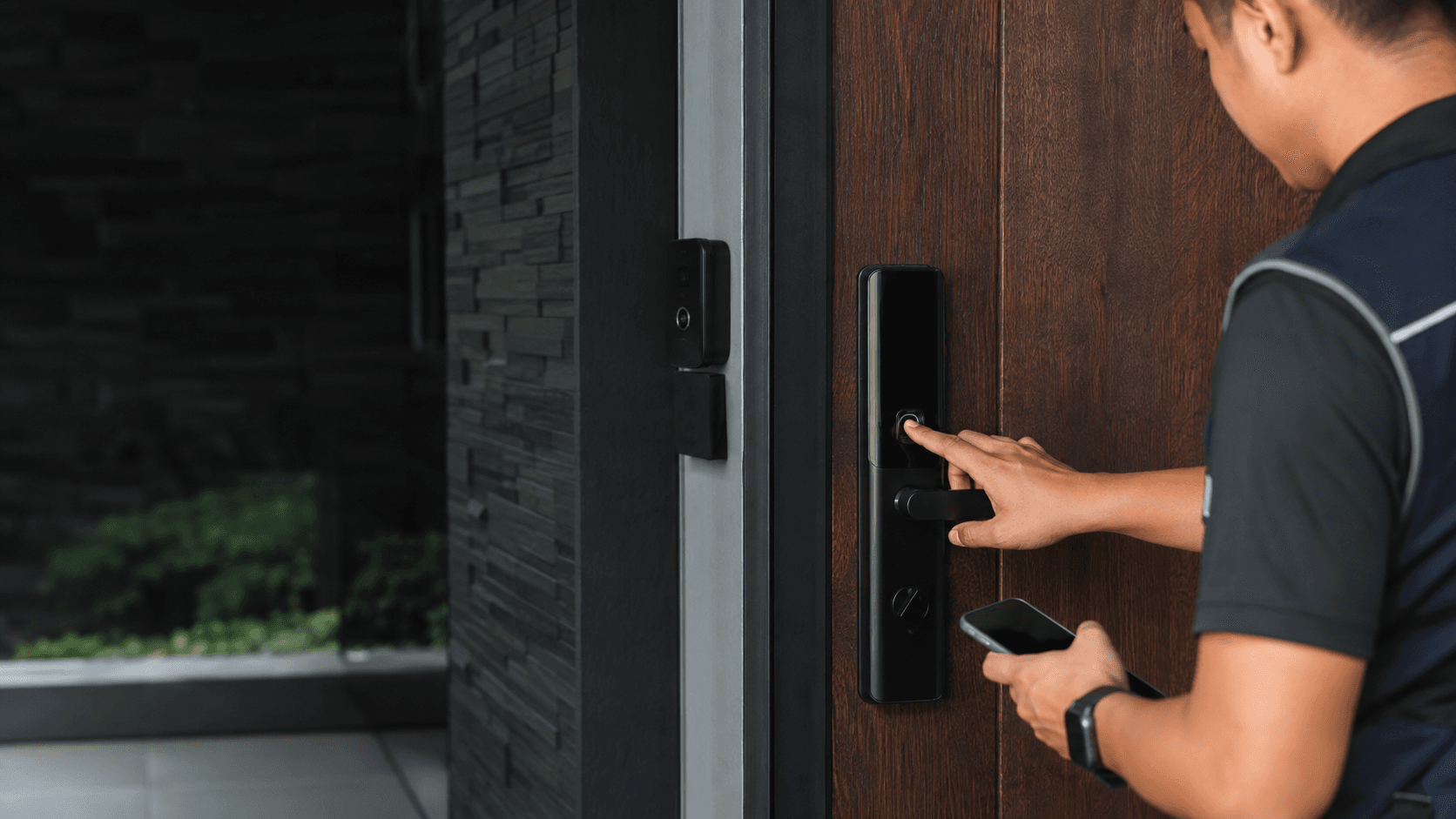
The model appears across the LAVNA LA Series as a wooden-door lock, and Malaysian buyers searching lavna la 24 are usually weighing one question: will this fit the door already hanging at the entrance, and who handles the work if something goes wrong after handover. That is a fit-and-support question more than a product-spec question, and it is the one this page answers.
What the Lavna La 24 Is Built For
Lavna La 24 sits in the LAVNA LA Series, which the brand presents as digital smart locks for main doors, with unlocking options that include fingerprint, WiFi, OTP, mobile app, RFID card and a manual key. Retail listings describe the LA24 as a WiFi smart digital door lock for wooden doors, and one variant is listed with a camera and screen.
Those are brand and retailer descriptions, not independently verified specifications. No primary specification sheet for the Lavna La 24 was available when this page was written, so dimensions, supported door thickness, battery type and exact connectivity behaviour should be confirmed with the seller before money changes hands.
The practical read is that this is a convenience-and-control lock rather than a heavy-duty commercial access system. Eyonic's own smart lock guidance makes the same distinction: smart locks work best when door condition, user roles and backup method are reviewed before installation, and for business use the choice between a standalone smart lock and a full access-control panel is worth checking first.
Door Condition and Lock Placement Checks
Wooden main doors in Malaysian homes vary far more than product pages suggest. A solid single-leaf door, a hollow-core door, a door with existing mortise hardware and a door that has swollen or warped all behave differently under the same lock body.
Retail descriptions reference wooden gates and wooden doors, but no verified compatibility statement exists for specific Malaysian door types or gate materials. That gap matters because a lock that fits one door may need additional carpentry on another.
Before committing, the checks that actually change the outcome are:
- Whether the door leaf is solid enough to carry the lock body and its bolt without flexing.
- Whether the existing cutout and mortise can be reused or whether new routing is needed.
- Whether the door closes squarely, since a misaligned leaf stresses any electronic bolt.
- Whether the frame side has enough material for the strike plate to sit securely.
- Whether the entrance is exposed to direct rain, which affects both the lock and the wiring route.
Placement is the second half of the same decision. A fingerprint reader mounted where the door naturally swings, or where afternoon sun hits it directly, gets used differently from one set at a comfortable standing height. Eyonic applies the same principle to camera placement, checking actual lighting conditions before confirming a position rather than assuming the first location works.
Backup entry is not optional
Every electronic lock eventually meets a flat battery, a failed reader or a forgotten PIN. Eyonic's smart lock guidance treats backup entry as a planning item, not an afterthought, which is why the manual key path and a second authorised user should be confirmed before the lock becomes the only way in.
Installation and Handover Sequence
Eyonic's installation work follows a four-stage sequence that applies to door access as much as to cameras and alarms. The same structure is used on commercial jobs, including the Kuching Immigration Office project, where the focus was arrival flow, staff areas, visitor movement and dependable daily operation.
- Site survey — the door, frame, existing hardware, power access and daily traffic pattern are inspected on site.
- System proposal — the recommended lock or access approach is set out against what the survey found.
- Installation — the lock is fitted, wired where required, and configured for the users who need access.
- Handover — access methods, backup entry and day-to-day operation are explained and tested with the user.
The survey stage is where most fit problems surface. A door that looks standard from the outside can have a non-standard thickness, an old mortise that no longer aligns, or a frame that has moved since it was hung. Finding that during a survey costs far less than finding it after the lock has been cut into the leaf.
Handover is the stage buyers most often underestimate. A lock that has been installed but not explained tends to end up with one person holding every credential, which defeats the point of multi-user access. Testing each entry method at handover, including the backup path, is what makes the system usable on an ordinary weekday.
Where Local Support Matters in Malaysia
Smart locks are electronic products with moving parts, and the failure modes are practical: a reader that stops responding, a bolt that sticks in humid weather, a battery that needs replacing at an awkward time. Distance to support decides how long any of those lasts as a problem.
Eyonic Sdn Bhd is a security system supplier based in Sarawak, working across CCTV and ELV systems with planning, supply and installation for homes, offices, shops and industrial sites. The founder, Eric Yong, has more than ten years in technical installation of digital security solutions for commercial businesses in Sarawak.
That local base matters for a different reason than price. A lock supplied and installed by a team that also handles alarms, autogate and intercom work can be integrated with the rest of the entrance rather than treated as a standalone gadget. On commercial sites, the same team can advise whether a standalone smart lock is sufficient or whether an access-control panel fits the user roles better.
For buyers outside Sarawak, the honest position is that coverage and after-sales terms for this specific model in Malaysia were not verified for this page. Those terms should be confirmed directly with the supplier before purchase rather than assumed from a product listing.
Questions Buyers Ask About the Lavna La 24
Does the Lavna La 24 suit a wooden main door? Brand and retailer material positions it for wooden doors and wooden gates, so the intended use case matches. The specific door still needs checking, because thickness, solidity and existing cutouts vary and no verified compatibility statement covers Malaysian door types.
What should be confirmed before buying? Door thickness and material, whether the existing mortise can be reused, the backup entry method, and who handles installation and after-sales support locally. Pricing and warranty terms for this model in Malaysia were not verified here and should come from the seller.
Is a smart lock the right choice for a business entrance? It depends on user roles. Eyonic's guidance is that smart locks suit controlled convenience when permissions and backup entry are planned properly, while business use sometimes calls for an access-control panel instead of a standalone lock.
How long does installation take? No verified installation time exists for this model, and the honest answer is that it depends on whether the door needs new routing or can reuse existing hardware. The survey stage is what produces a realistic estimate.
For buyers comparing this lock against other entrance options, the useful comparison is not feature counts but fit: how the door behaves, how many people need access, and what happens on the day the electronics do not cooperate. A lock that matches those three answers will outperform a better-specified one that does not.
Share your location, property type and required system with Eyonic on WhatsApp at +60 11-5111 7959 for the next practical step.