
The exact-match query poe cctv describes a wired camera setup where the network cable does the work of two cables. That single-cable idea is the whole appeal, and it is also the part most buyers in Malaysia misunderstand before they commit to a package.
Eyonic Sdn Bhd plans, supplies and installs CCTV and ELV systems in Sarawak, covering camera placement, NVR setup and remote viewing for homes, offices, shops and industrial sites. The company's founder, Eric Yong, has worked in the industry for more than ten years, with a focus on technical installation of digital security solutions for commercial businesses in Sarawak.
What Poe Cctv Means in a Wired Camera Setup
In a conventional analogue setup, every camera needs two connections: a video cable back to the recorder and a separate low-voltage power feed. Poe CCTV removes the second run. The camera draws its operating power from the same Ethernet cable that carries the video stream, which is why the term is written as power over Ethernet.
The practical effect is fewer cables, fewer power adaptors, and fewer points where something can come loose. It also changes where cameras can go. A camera position only needs a route back to the network, not a nearby plug point, which matters in shophouses, warehouses and factory floors where power sockets are rarely placed where a camera should sit.
The trade-off is that the whole system now depends on the network layer. If the recorder, switch or cabling is poorly planned, the cameras lose both power and video at the same time. That is why the survey stage matters more in a PoE job than in an analogue one.
How Power Reaches Each Camera on the Network
Power over Ethernet works by injecting voltage onto the same twisted-pair cable that carries data. In most installed systems, the network video recorder or a dedicated PoE switch supplies that power, and each camera negotiates what it needs when it connects. A camera that is not PoE-capable, or a device that needs more power than the port can supply, will not come up on that port.
Two constraints shape the design. The first is the power budget of the switch or recorder: every connected camera draws from a shared pool, so the total number of cameras is limited by that pool, not just by the number of ports. The second is cable distance. Ethernet has a working length limit, and long outdoor runs to a gate, a perimeter wall or a far corner of a factory need that limit respected rather than stretched.
Because the evidence supplied does not include verified wattage, PoE standard or maximum cable-run figures for Eyonic's PoE-capable offerings, those numbers should be confirmed against the actual equipment datasheet before any design is fixed. Stating a figure without that confirmation would be guesswork.
Why the recorder and switch choice decides the design
A PoE recorder with built-in ports suits smaller properties where all cameras terminate in one place. A separate PoE switch suits larger sites where cameras are spread across buildings and the recorder sits in a different room. The second option usually gives more headroom for adding cameras later, at the cost of one more device to house and power.
Camera Shapes and Where Each One Fits
Camera shape is a placement decision, not a specification contest. Dome cameras sit flush and are harder to redirect by hand, which suits corridors, entrances and shop interiors. Bullet cameras read as visible deterrents and suit perimeter walls and gate approaches. Turret-style bodies sit between the two and are commonly chosen where a wide view is needed without the bulk of a bullet housing.
What matters more than the shape is what the camera is pointed at. A camera aimed at a bright doorway will expose for the light and leave faces dark. A camera aimed down a long driveway needs a narrower field of view than one covering a small shop floor. These are the questions a site survey answers, and they cannot be answered from a product page.
Lighting conditions change the camera choice
Eyonic recommends checking actual lighting conditions before confirming placement for ColorVu-style cameras. Colour-at-night performance depends on how much ambient light is genuinely present after dark, which varies between a lit shopfront, a residential lane and an unlit industrial yard. A position that looks bright during a daytime survey can behave very differently at 2am.
What to Check Before Confirming Camera Placement
Placement is the decision that is hardest to reverse. Cable routes, mounting points and recorder location all get fixed once installation starts, so the checks below belong before any drilling.
- Site survey. walk the property, identify entry points, blind spots, lighting conditions and realistic cable routes.
- System proposal. match camera types, recorder capacity and coverage to the site rather than to a fixed package.
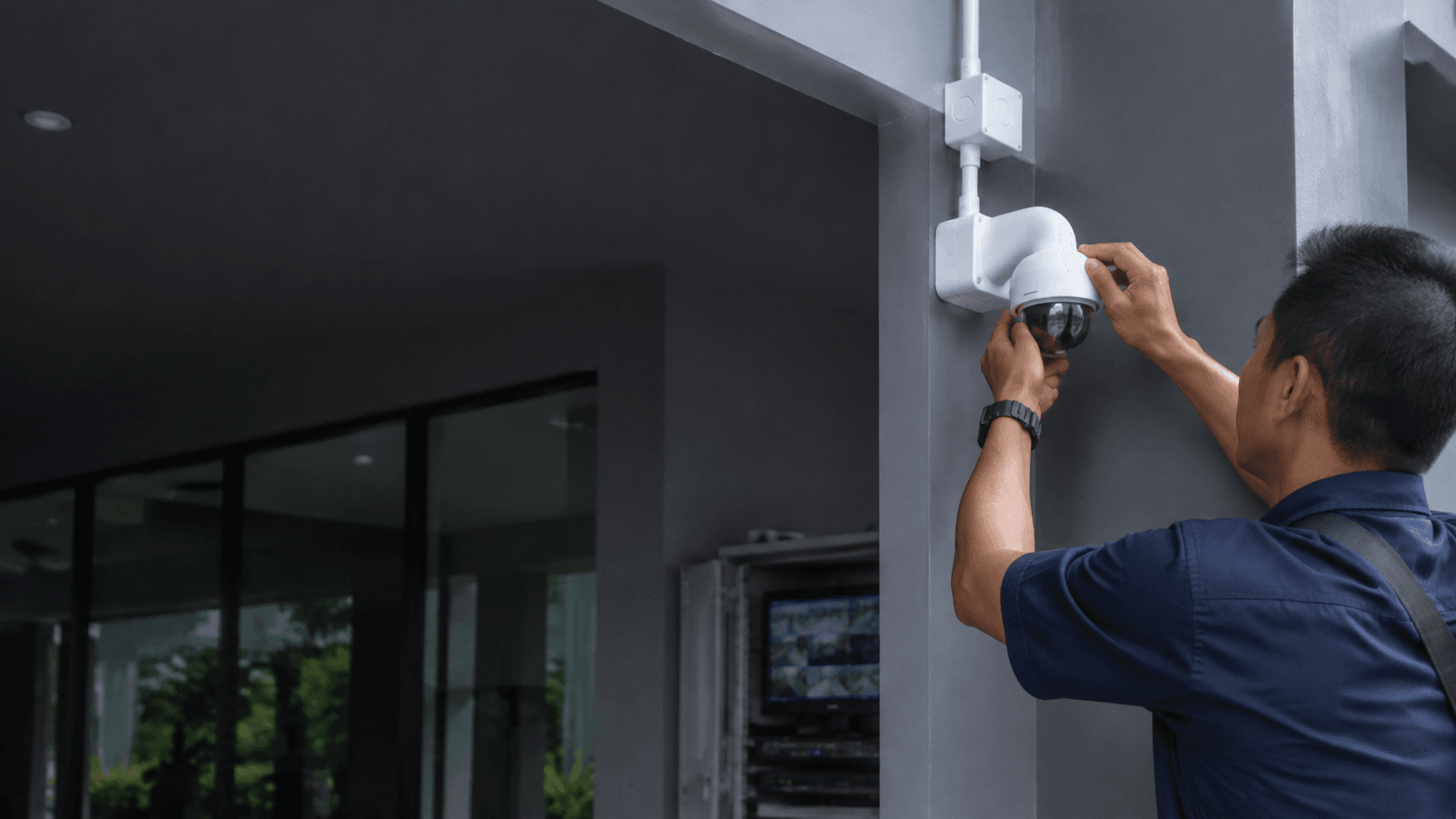
- Installation. mount cameras, run and terminate cabling, configure recording and remote viewing.
- Handover. confirm live views, playback, mobile access and day-to-day operation with the people who will use the system.
That sequence is the one Eyonic follows on CCTV installation work in Sarawak. It exists because the failure mode in wired camera systems is rarely the camera. It is a camera in the wrong place, a cable run that cannot be extended later, or a recorder that fills up faster than expected.
Two further checks are worth adding. First, confirm who will actually watch the footage and on what device, because remote viewing setup should match that answer. Second, confirm what happens to recordings over time, since retention depends on storage capacity and how many cameras are recording continuously.
Planning Installation and Handover in Sarawak
Local conditions shape a PoE design in ways a generic guide cannot cover. Sarawak sites range from single-storey homes in Kuching to multi-building commercial and industrial premises, and the cable routes differ enormously between them. Tidy cabling is not cosmetic. exposed or poorly supported runs are the most common source of intermittent faults in a wired system.
Eyonic's completed work includes the Kuching Immigration Office, where the focus was arrival flow, staff areas, visitor movement and dependable daily operation. That is a public building with continuous foot traffic, so coverage had to support daily operation rather than a single monitored entrance. A separate project for KTA Sarawak Sdn Bhd covered a practical office setup in Kuching supporting staff movement, visitor handling, tidy cabling and clearer daily site control.
Those two projects illustrate the range. A public office and an engineering consultancy office need different camera positions, different retention expectations and different handover conversations, even though both are wired systems in the same city.
What a realistic budget looks like
Eyonic's published basic packages are priced at RM 1,599 for a Hikvision CCTV package, RM 1,599 for a Hikvision alarm system and RM 1,599 for an autogate package. The CCTV package covers camera supply and setup, basic recording configuration and mobile viewing handover.
Larger commercial work sits well above that. The Kuching Immigration Office project carried an approximate budget of RM 12,000 to RM 28,000, and the KTA Sarawak Sdn Bhd project carried an approximate budget of RM 8,000 to RM 18,000. Those ranges reflect scope, camera count and site complexity rather than any PoE-specific pricing, and no separate PoE package price is evidenced.
Where PoE suits a site and where it does not
PoE fits properties where cameras need to sit away from power points, where cabling should stay tidy, and where the owner wants one system rather than a mix of power and video runs. It suits shops, offices, warehouses and homes with a clear route back to a central point.
It fits less well where a camera position has no viable cable route at all, where a building's structure makes internal runs impractical, or where a single camera is needed in an isolated spot with no network path. In those cases the honest answer is a different approach, not a longer cable.
Scalability is the other consideration. A PoE system with spare ports and spare power budget can grow one camera at a time. A system built to its limit on day one cannot, and upgrading the recorder or switch later costs more than sizing it correctly at the start.
Questions Buyers Ask About
Does a PoE camera need its own power point? No. Power arrives over the same Ethernet cable as the video, which is the main reason the setup is chosen for positions without nearby sockets.
Can a PoE system run without internet? Recording and local viewing run on the local network. Internet access is what enables remote viewing from a phone or another location, so the two should be planned as separate requirements.
Is PoE better than wireless cameras? Wired connections avoid the interference and bandwidth sharing that affect wireless cameras, and they carry power as well as data. Wireless suits positions where no cable route exists. The right answer depends on the site, not on a general preference.
How many cameras can one system support? That depends on the recorder or switch, its port count and its power budget. Because no verified channel-count or wattage figures are supplied for Eyonic's PoE-capable range, the number should be confirmed against the specific equipment proposed for the site.
What happens if a cable is damaged? That camera loses power and video together, which makes the fault obvious but also means cable routes should avoid areas likely to be cut, crushed or chewed.
For a property in Sarawak, the next practical step is a survey rather than a package choice. Sharing the location, property type and required system with Eyonic on WhatsApp at +60 11-5111 7959 gives enough context to judge whether a wired PoE layout fits the site.