
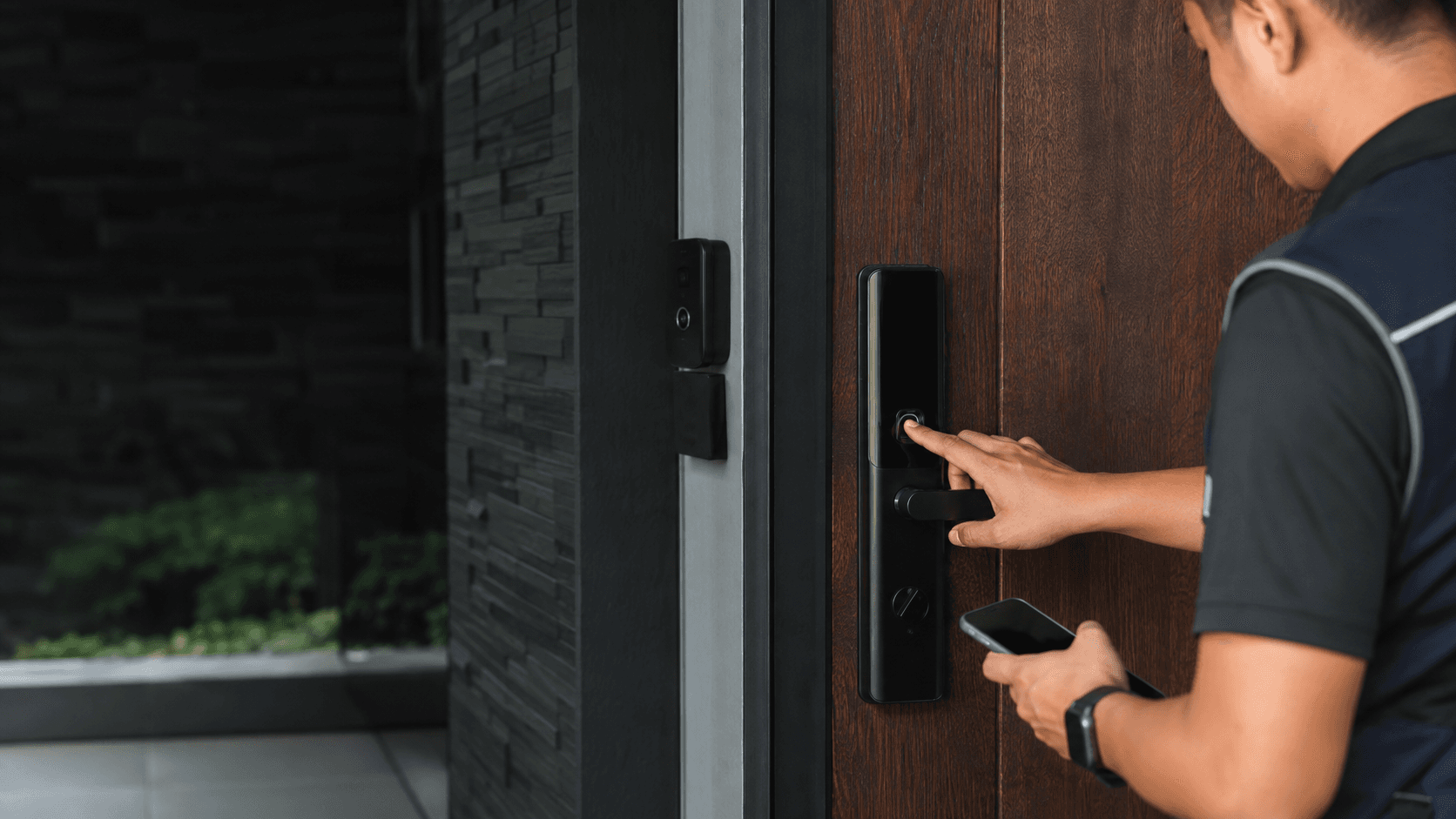
How Keyless Entry Door Knobs Work
A keyless entry door knob integrates an electronic locking mechanism directly into the knob or lever body. Instead of inserting a key, the user authenticates through a built-in interface, which then signals a motor to retract the latch. The core components are the same as a standard lockset—latch, strike plate, and mounting hardware—but the cylinder is replaced with an electronic control unit. The power source is typically batteries housed inside the interior unit. When the correct code is entered, a fingerprint is matched, or a signal is received from a smartphone, the lock mechanism activates. Most models retain a physical key override as a fallback, which is a critical feature to look for. Eyonic's product review on smart lock door access notes that these systems work best when the door condition, user roles, and backup method are reviewed before installation. For business use, Eyonic usually checks whether a standalone smart lock or an access-control panel is more appropriate. This distinction matters because a single keyless knob serves a home, while an office may need centralized control.Keyless Entry Door Knobs vs Traditional Locks
The primary difference between keyless entry door knobs and traditional locks is the credential. A traditional lock uses a physical key that can be lost, copied, or forgotten. A keyless system uses a code, biometric data, or a digital signal. Security considerations differ as well. A keyless entry door knob eliminates the risk of lock picking through the keyway, but introduces new concerns. Codes can be observed or shared, fingerprint sensors can fail on dirty or wet hands, and electronic components can malfunction. The backup key and battery life become the safety net. Convenience is the main driver for most buyers. No more fumbling for keys when carrying groceries. No need to rekey locks when a tenant moves out—just delete their code. For households with children or elderly members, a keypad removes the worry of lost keys.Types of Keyless Entry Door Knobs
Buyers in Malaysia will encounter three main types of keyless entry door knobs. Each uses a different access method, and the choice depends on the door's location and the user's routine.| Type | Access Method | Typical Features | Security Notes |
|---|---|---|---|
| Keypad | Numeric code entry | Backlit keys, auto-lock, multiple user codes | Codes can be observed; choose models with hidden entry or scramble feature |
| Fingerprint | Biometric scan | Fast access, no code to remember, stores multiple fingerprints | Sensor reliability varies; check performance with dry or worn fingerprints |
| Smart | Smartphone app, Wi-Fi or Bluetooth | Remote locking, activity logs, integration with home systems | Requires network security; check app permissions and firmware updates |
Choosing Keyless Entry Door Knobs for a Specific Door
Selecting the right keyless entry door knob requires matching the lock to the door's physical condition and the user's needs. Door thickness, backset, and latch size are the first technical checks. Most standard Malaysian wooden doors will fit a standard lockset, but older or non-standard doors may need modification. The door's condition is a factor Eyonic emphasizes. A warped or misaligned door can cause the latch to bind, draining batteries and causing false alarms. Before purchasing, check that the door closes smoothly and the existing strike plate aligns properly. Consider who will use the door most. A rental property benefits from a keypad model where codes can be changed between tenants. A family home with teenagers might prefer a fingerprint model to avoid sharing codes. A home office or business entrance may need a smart model with audit trails. Battery life is a practical constraint. Most units run on AA or AAA batteries lasting several months, but heavy use or extreme temperatures shorten that span. Look for models with a low-battery warning and an external battery backup terminal, often a 9V connection on the exterior unit.Installation and Maintenance of Keyless Entry Door Knobs
Installation of a keyless entry door knob is a task many homeowners can handle, but the process requires care. The steps below outline a typical replacement of an existing lockset.- Remove the existing interior and exterior knobs by unscrewing the mounting plate and pulling the two halves apart.
- Detach the latch assembly from the door edge and remove the old strike plate from the door frame.
- Check the new lock's template against the existing holes; most keyless knobs use the same 2-1/8-inch bore and 2-3/8-inch backset as standard locks.
- Install the new latch, ensuring the beveled edge faces the correct direction for the door to close.
- Mount the exterior keypad or reader, feed the cable through the door bore, and attach the interior unit.
- Insert batteries, test the lock function with the door open, then close the door and test the latch alignment.
- Program user codes or fingerprints according to the manual and perform a final test from both sides.
Security and Reliability of Keyless Entry Door Knobs
The question of whether keyless entry door knobs are secure has a nuanced answer. The lock is often not the weakest point; the door and frame are. A solid lock on a hollow door offers limited protection. Electronic locks introduce failure modes that mechanical locks do not have. A dead battery locks out the homeowner unless a backup key or external power terminal exists. A malfunctioning circuit board can render the lock inoperable. These risks are manageable but require planning. Eyonic's guidance on smart locks is direct: they work best when the door condition, user roles, and backup method are reviewed before installation. This means confirming the door is in good shape, deciding who gets access and how to revoke it, and ensuring there is always a way in if the electronics fail. For a business setting, the decision between a standalone smart lock and an access-control panel is significant. A standalone keyless knob on an office door may suffice for a small team. A larger operation with multiple doors and staff turnover needs a centralized panel that can manage permissions from one place.Common Questions About