
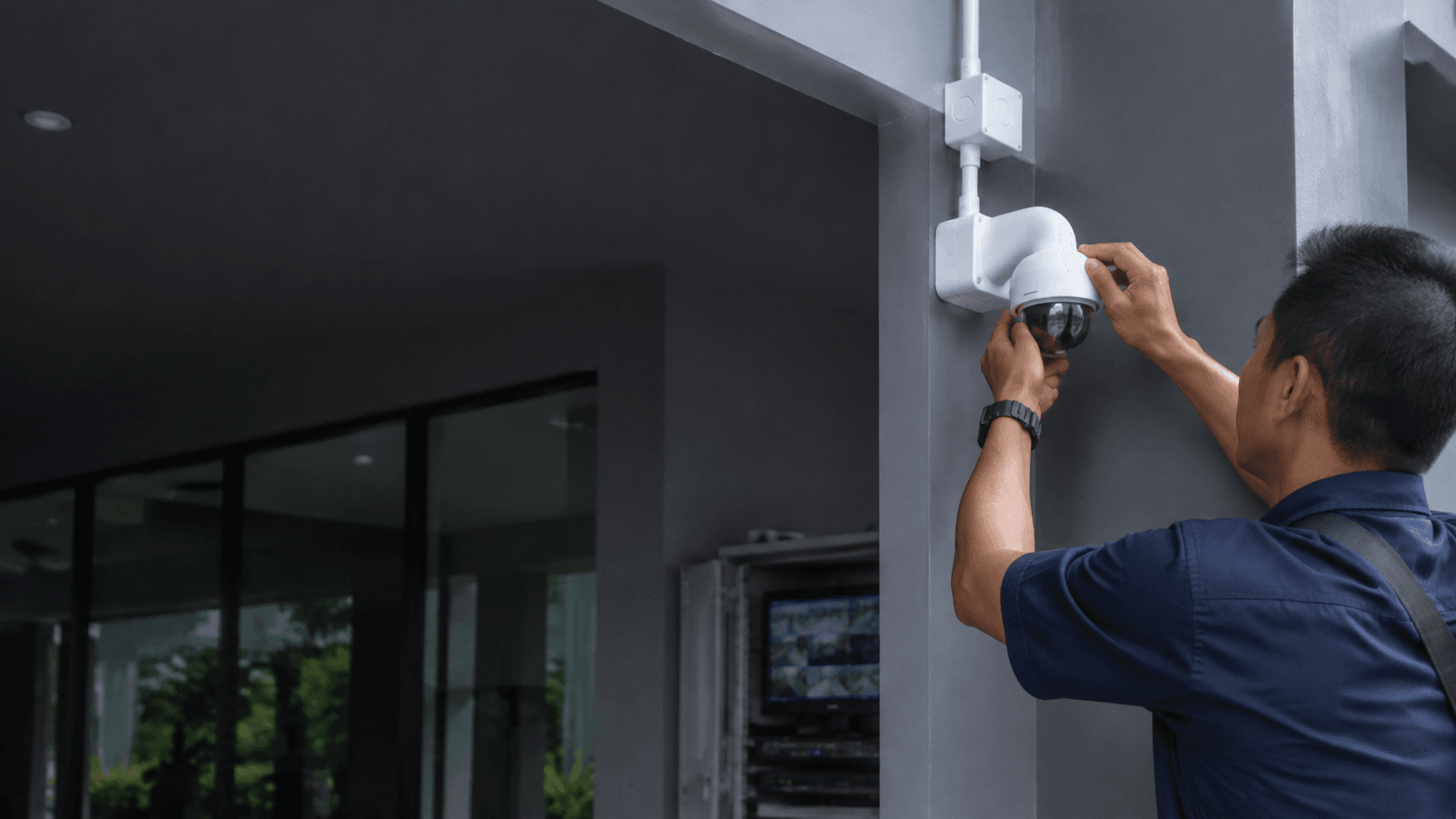
Sound changes what a recording is worth. A video clip shows that someone walked through a hallway; the same clip with audio shows whether a door closed, a gate rattled, or a conversation happened at the counter. That difference matters most in the places people actually pass through — entrances, corridors, service counters and shared living areas.
Buyers comparing in home cameras with audio usually start with a model list and end up with questions about placement, storage and who reviews the footage. The sections below work through those questions in the order they tend to come up.
What In Home Cameras With Audio Capture Beyond Video
A camera with audio captures two separate streams. The video stream records what the lens sees. The audio stream records what a microphone near the camera hears. Both are stored together on a recorder or memory card, and both are played back together unless the system is configured otherwise.
That second stream is what separates a basic indoor camera from an audio-capable one. It is also the part most affected by the room itself. Hard surfaces, air-conditioning units, televisions and open windows all feed into the same microphone that is meant to pick up a voice at the door.
Audio also changes how footage is reviewed. A person scanning a timeline for an incident can often find the moment faster by listening than by scrubbing through hours of quiet video. The trade-off is storage. audio adds to the size of every recording, and a system sized only for video may fill its drive sooner than expected.
Built-In Microphone Or Two-Way Talk
These are two different capabilities, and product listings often blur them together.
A built-in microphone records sound in one direction — from the room toward the camera. It is a listening feature. Footage is captured with audio attached, and nobody at the other end is speaking back.
Two-way talk adds a speaker alongside the microphone. Someone viewing the feed on a phone can speak through the camera, and the person in the room hears it. This is the feature that turns a camera into something closer to an intercom, and it is the one people usually mean when they describe wanting to speak to a delivery driver or a family member at home.
The practical difference shows up in wiring and placement. A camera used for two-way talk needs to be positioned where its speaker can actually be heard and its microphone is not buried behind furniture or aimed at a noisy appliance. A camera used only for recording audio has more placement freedom.
Which one fits a given room
Recording-only audio suits hallways, storage areas and rooms where the goal is a complete record of what happened. Two-way talk suits entry points, front doors, gates and reception counters, where the value is in responding to someone in real time rather than reviewing later.
Some households want both, which usually means more than one camera rather than one camera doing everything. A single unit placed to cover an entrance well will rarely also cover a living area well.
Where Sound Quality Breaks Down Indoors
Microphone performance indoors is governed more by the room than by the camera. Several conditions reliably degrade what gets recorded.
- Hard floors, bare walls and glass create echo, which smears speech into an indistinct blur.
- Air-conditioning, ceiling fans and refrigerators produce constant low-level noise that masks quieter sounds.
- Distance matters more than most buyers expect; a voice at the far end of a long room arrives weaker than one near the lens.
- Enclosed spaces such as stairwells and small service corridors amplify and distort sound.
- Cameras mounted inside cabinets, behind glass or under shelves pick up muffled or reflected audio.
None of these are reasons to avoid audio. They are reasons to decide placement before drilling, because moving a camera after installation usually means new cabling work.
Storage and review
Audio is stored the same way video is — on a recorder, on a memory card, or in a cloud service, depending on the system. Review happens through the same app or monitor used for video playback. The main constraint is capacity. a recorder sized for video-only retention will hold fewer days once audio is included, so retention expectations should be set before the drive is chosen.
Lighting And Placement Checks Before Confirming A Position
Placement decisions for audio-capable cameras overlap heavily with lighting decisions, because the same position has to serve both the lens and the microphone.
Eyonic's own guidance on ColorVu-style cameras is to check actual lighting conditions on site before confirming a position rather than relying on a general assumption about how a room is lit. The same principle applies to audio: the room should be assessed as it actually behaves during the hours that matter, not as it looks during a daytime visit.
A workable check sequence looks like this:
- Walk the property and identify the points where sound actually needs to be captured — entrances, counters, corridors, shared areas.
- Stand at each candidate position and listen. Note air-conditioning, traffic, machinery or other constant noise that would sit on top of every recording.
- Check the lighting at that same position at the times of day the camera will be relied on, including after dark.
- Confirm the mounting height and angle cover both the field of view and the area where sound matters.
- Confirm cabling, power and recorder capacity support the number of cameras being proposed.
- Agree the final positions before installation begins, since repositioning later adds cost and disruption.
Two edge cases are worth flagging early. First, a camera covering a wide area for video will often be too far from any single conversation to record it clearly; coverage and audio clarity pull in different directions. Second, rooms that change use — a home office that becomes a nursery, a shop counter that moves — may need the camera repositioned later, so leaving some flexibility in the cabling plan is sensible.
How Eyonic Plans Installs And Hands Over A System
Eyonic Sdn Bhd is a security system supplier based in Sarawak, Malaysia, working on CCTV and ELV systems for homes, offices, shops and industrial sites. The company's founder, Eric Yong, has more than ten years in the industry, with experience in technical installation of digital security solutions for commercial businesses in Sarawak.
The installation process runs through four stages: site survey, system proposal, installation, and handover. The survey is where placement, lighting and audio conditions get assessed together. The proposal sets out what will be supplied and where it will go. Installation follows the agreed positions, and handover covers recording configuration and mobile viewing so the system is usable from day one.
Completed work includes the Kuching Immigration Office, where the focus was arrival flow, staff areas, visitor movement and dependable daily operation, and KTA Sarawak Sdn Bhd, an engineering consultancy office in Kuching that needed support for staff movement, visitor handling and tidy cabling. Both are examples of the same approach applied to different building types rather than a fixed package dropped into every site.
For straightforward residential work, the Hikvision CCTV Package is listed at RM 1,599 and covers camera supply and setup, basic recording configuration, and mobile viewing handover. Larger or more specific requirements are quoted after the survey, since camera count, cabling runs and recorder capacity vary by property.
What to prepare before the survey
Three pieces of information make the survey faster and the proposal more accurate: the property type and layout, the areas where audio actually matters, and whether the requirement is recording only or two-way talk at specific points. Knowing whether footage needs to be reviewed remotely, and by how many people, also affects the recorder and network setup.
One limit worth stating plainly. audio recording rules differ by jurisdiction, and requirements around consent for capturing conversations vary. Anyone planning audio capture in a home or business should confirm the position that applies to their situation before installation rather than assuming a general answer covers it.
Share the location, property type and required system with Eyonic on WhatsApp at +60 11-5111 7959 for the next practical step.