
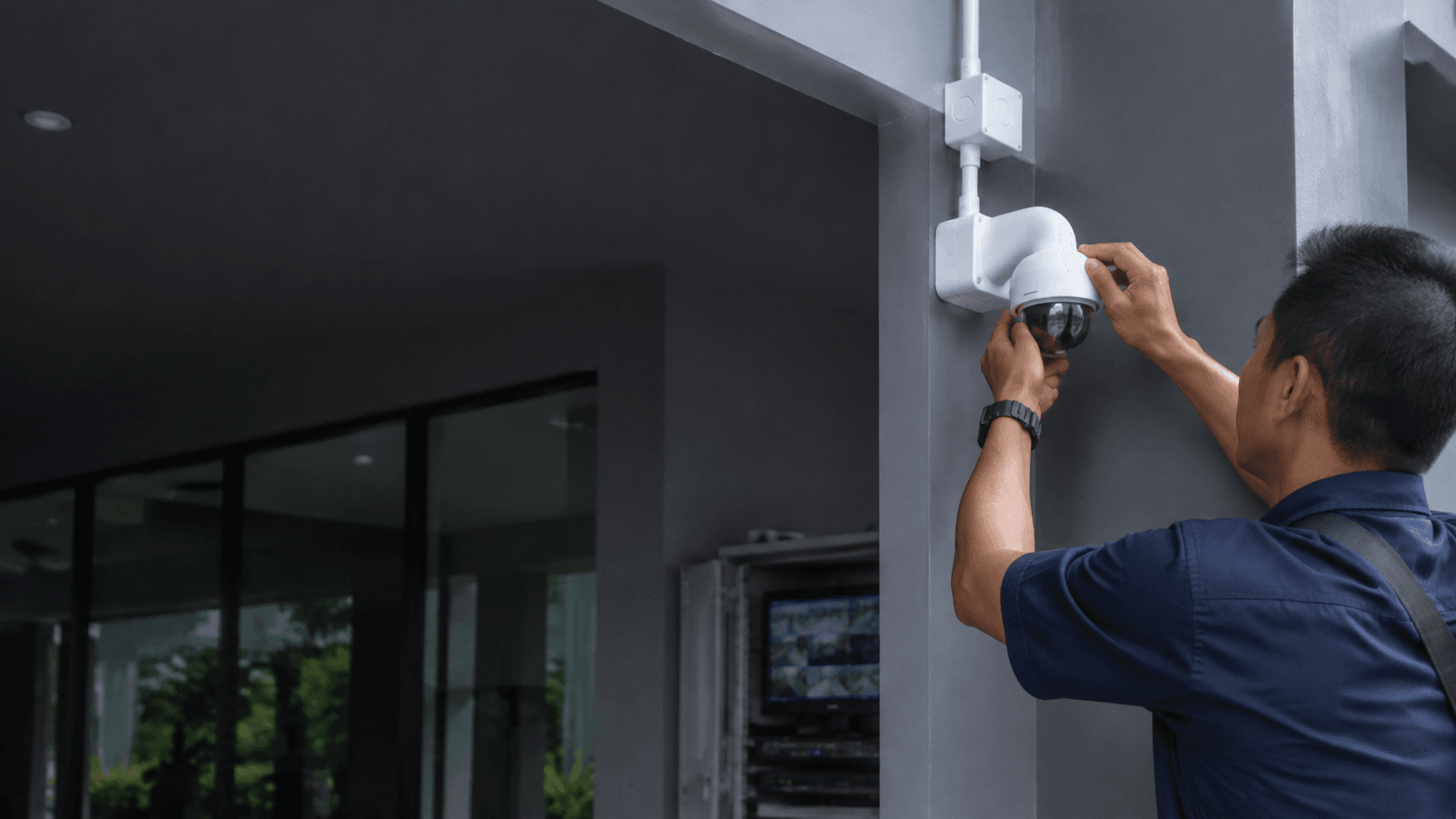
The term covers a wide range of hardware, from small cameras that sit quietly in a corner to units built into everyday objects. What separates a workable installation from a disappointing one is rarely the camera itself. It is the survey, the position, the recording path, and the handover that decide whether footage is actually usable when it matters.
Eyonic Sdn Bhd is a security system supplier in Sarawak that plans, supplies, and installs monitoring systems with camera placement, recording, and remote viewing for homes, offices, shops, and industrial sites. The company's founder, Eric Yong, has worked in technical installation of digital security solutions for commercial businesses in Sarawak for more than 10 years.
What Counts as a Hidden Cctv Camera
A hidden cctv camera is any camera chosen or positioned so it does not draw attention. Two broad families sit under that description, and they behave very differently in practice.
Low-profile cameras are ordinary working cameras in small or unobtrusive housings. They record the same way as a standard unit, connect to the same recorder, and are simply less obvious to anyone walking past. Covert cameras go further and are built into or disguised as another object. Retail catalogues in this category list formats such as smoke detector housings, wall clocks, exit signs, sprinkler heads, motion detectors, and pinhole lens units.
The distinction matters because the two families carry different constraints. A low-profile camera is usually part of a normal surveillance system, so it shares the recorder, storage, and viewing setup. A disguised unit often has its own power and recording arrangement, which changes where it can go and how long it can run.
Eyonic's documented product range centres on Hikvision cameras and smart locks, and the company's published service list covers camera placement, NVR setup, and remote viewing. Disguised-format hardware is not part of the documented range, so a buyer researching clock or smoke-detector cameras should confirm availability directly rather than assume it.
Why the Format Choice Comes After the Survey
Choosing a format before knowing the site usually leads to rework. A position that looks ideal on a floor plan may face a bright window, sit behind a pillar, or have no practical cable route. The survey exists to catch those problems while they are still cheap to fix.
Where Discreet Cameras Fit in Malaysian Properties
Discreet placement is most often requested where a visible camera would change behaviour or look out of place. Common settings include shop counters, office entrances, storage areas, and residential entry points.
Eyonic completed a project for the Kuching Immigration Office, focused on arrival flow, staff areas, visitor movement, and dependable daily operation. That project shows the pattern clearly: the requirement was coverage of specific movement areas, not concealment for its own sake. A public office needs cameras that work every day and cover the right zones.
A second project for KTA Sarawak Sdn Bhd covered a practical office setup in Kuching to support staff movement, visitor handling, tidy cabling, and clearer daily site control. Tidy cabling is worth noting. A camera that is discreet at the lens but trailing visible cable across a wall defeats the purpose.
For homes, shops, and industrial sites, the same logic applies. The question is which areas need coverage, how discreet the housing needs to be, and whether the recorder and viewing setup can reach that position cleanly.
When a Visible Camera Is the Better Answer
Deterrence and discretion pull in opposite directions. A clearly visible camera at an entrance discourages some activity before it happens. A discreet camera documents what occurs without announcing itself. Many properties end up using both: visible units at the perimeter and low-profile units at counters, cash areas, or internal corridors.
Placement Checks Before Any Hidden Cctv Camera Is Confirmed
Placement is where most of the practical risk sits. Eyonic recommends checking actual lighting conditions before confirming placement for ColorVu-style cameras, because a position that performs well in daylight can behave very differently after dark.
The checks below follow the sequence Eyonic uses on installation work, from the initial survey through to handover.
- Site survey. walk the property, identify the areas needing coverage, and note lighting, obstructions, and cable routes.
- System proposal. set out the camera positions, recorder location, and viewing method before any hardware is fixed.
- Installation. mount and configure the cameras, run cabling tidily, and confirm each position records what it is meant to record.
- Handover. test the system with the people who will use it and confirm they can find and view footage.
Within the survey, four checks decide whether a position is viable.
- Lighting conditions. confirm how the position performs at night, not only during the day.
- Camera position. check the field of view, height, and angle against the area that needs covering.
- Recording path. confirm the cable or network route back to the recorder is practical and tidy.
- Viewing access. confirm who will review footage and on which device.
A position that fails any of these four checks usually costs more to fix later than to change during the survey. The lighting check is the one most often skipped, and it is the one that most often decides whether night footage is usable.
Edge Cases Worth Raising Early
Some properties need extra thought. Rental units raise questions about who authorises installation and what happens at the end of a tenancy. Shared buildings may restrict where cabling can run. Sites with existing recorders may need compatibility confirmed before new cameras are added. Raising these points during the survey keeps the proposal realistic.
Recording Viewing and Handover
A camera that records but cannot be reviewed is not a working system. Eyonic's documented service list includes NVR setup and remote viewing alongside camera placement, which reflects how the three depend on each other.
Recording configuration determines what is captured and how long it is kept. Remote viewing determines whether footage can be checked from outside the property. Handover determines whether the people on site can actually use either. The Hikvision CCTV Package documented at RM 1,599 covers camera supply and setup, basic recording configuration, and mobile viewing handover, which maps to those three stages.
Handover is the stage most likely to be treated as a formality. It is worth testing the system with the people who will use it, confirming they can open the viewing app, find the right camera, and locate footage from a specific time. A system nobody can operate is effectively absent.
Questions That Come Up at Handover
Two practical questions tend to surface. The first is who holds viewing access, which matters in offices and shared buildings where staff change. The second is what happens when the internet drops, since remote viewing depends on connectivity while local recording does not.
Both are worth settling before the installer leaves, because both are easier to adjust on site than over a follow-up visit.
Practical Limits and Legal Care
Discretion has limits, and some of them are not technical.
Coverage is the first limit. A discreet camera covers a narrow area well. Spreading the same budget across too many positions usually produces several weak views instead of one clear one. Fewer, better-placed cameras generally serve a property better than a large number of marginal ones.
Maintenance is the second. Low-profile units are easy to forget, and a camera nobody remembers is a camera nobody checks. A short periodic review of each position keeps the system honest.
Legal care is the third, and it deserves more attention than it usually gets. Rules on recording in workplaces, rental properties, and areas where people expect privacy vary, and the position taken in one setting may not hold in another. Anyone planning covert recording should confirm the applicable requirements for their specific situation before installation rather than relying on general assumptions.
Cost is the fourth. The documented Eyonic packages are the Hikvision CCTV Package, the Hikvision Alarm System, and the Autogate Package, each at RM 1,599. Larger project work sits in a different range: the Kuching Immigration Office project carried an approximate budget of RM 12,000 to RM 28,000, and the KTA Sarawak Sdn Bhd project an approximate budget of RM 8,000 to RM 18,000. A discreet installation on a commercial site is closer to the project range than the package range, because survey, cabling, and configuration scale with the property.
What to Confirm Before Committing
Three things are worth confirming in writing before work starts: which camera formats are actually being supplied, what the recording and viewing setup includes, and who is responsible for checking that the finished system meets the original requirement. Each of these is easier to settle in the proposal stage than after installation.
For properties in Sarawak, Eyonic handles planning, supply, and installation across homes, offices, shops, and industrial sites. Sharing the location, property type, and required system on WhatsApp at +60 11-5111 7959 gives the team enough to work from for the next practical step.