
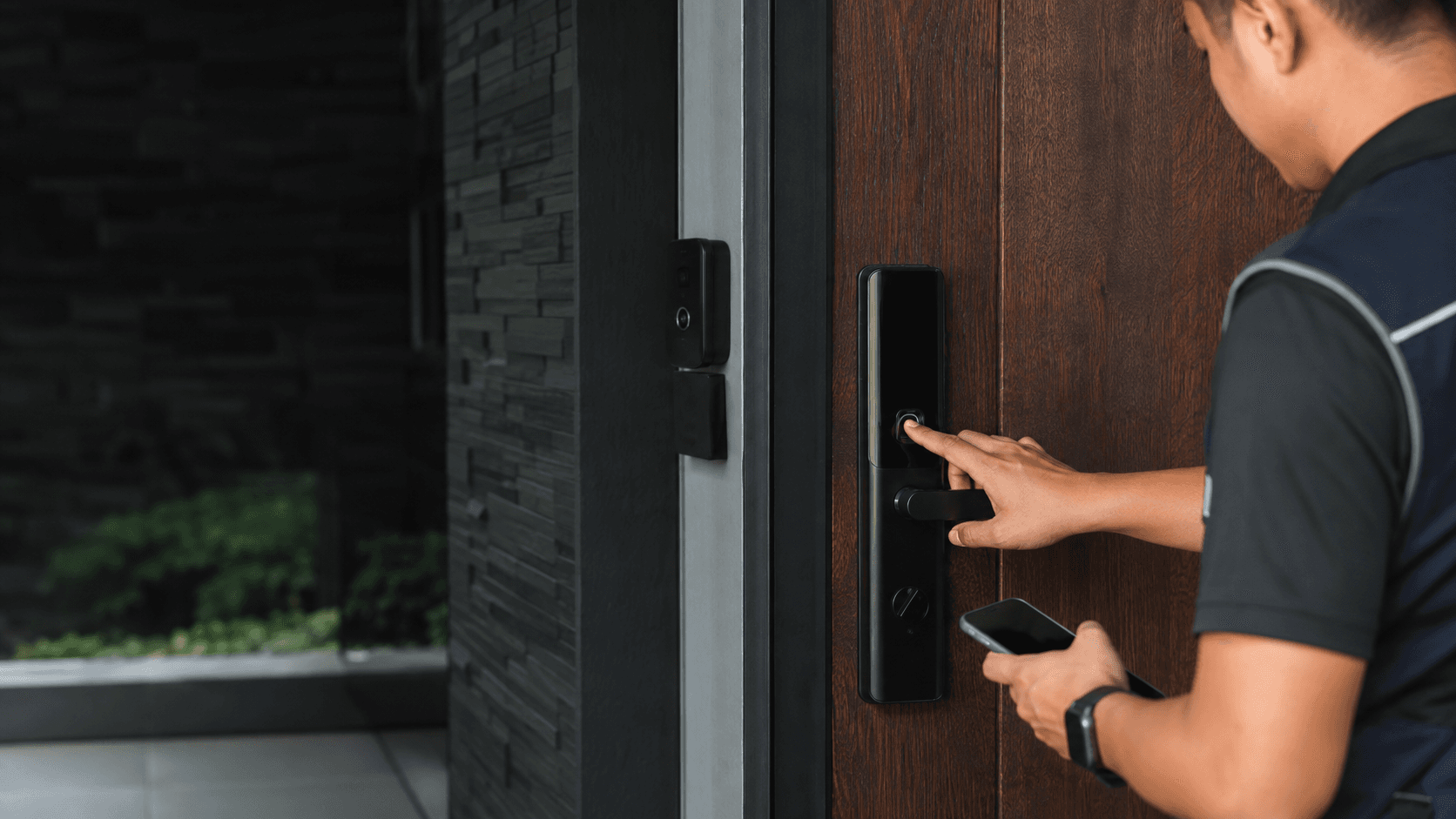
Keypad Deadbolt Locks for Malaysian Homes
Malaysian homeowners are moving toward keyless entry systems that remove the need to carry physical keys. A deadbolt lock with keypad suits this shift because it keeps the familiar deadbolt security while adding code-based access. The practical appeal is clear. family members, maids, or contractors can enter without key duplication, and the lock can be reprogrammed when someone moves out.
The local market context matters. Most top-ranking guides on the deadbolt lock with keypad come from US sources like Consumer Reports and Wirecutter, which test models such as the Yale Assure Lock SL and Schlage BE365. Those reviews are useful for understanding quality, but Malaysian buyers must check local voltage, door thickness, and whether the model is actually sold through regional distributors.
What to Look for in a Deadbolt Lock with Keypad
Choosing a deadbolt lock with keypad requires attention to several factors that determine both security and daily usability. The ANSI/BHMA grade is the most direct measure of physical strength. Grade 1 offers the highest resistance to forced entry, Grade 2 suits most residential doors, and Grade 3 meets basic building code requirements. Most keypad deadbolts sold for homes carry Grade 2 certification, which is adequate for standard Malaysian terrace houses and condominiums.
Battery life and backup options deserve equal weight. A deadbolt lock with keypad typically runs on four AA batteries lasting six months to a year with normal use. When batteries die, a mechanical key override becomes essential. Some models include a 9V battery terminal on the exterior for emergency power, but the physical key slot remains the most reliable fallback. Malaysian buyers should confirm the lock includes a key override before purchase.
Keypad type affects both security and longevity. Backlit keypads improve visibility at night, a real advantage for homes with dim porch lighting. Touchscreen models look modern but can be harder to read in direct sunlight and may wear out faster than physical buttons. The trade-off is aesthetic versus durability, and the choice depends on the door's exposure to weather.
How a Deadbolt Lock with Keypad Works
The mechanism inside a deadbolt lock with keypad is straightforward. Entering a valid code on the keypad sends a signal to a small motor or solenoid inside the lock body, which retracts the bolt. The bolt itself is the same hardened steel component found in a traditional deadbolt, so the physical barrier against forced entry remains intact.
The electronic components add convenience layers. Most models store between 10 and 30 unique user codes, allowing separate codes for family, helpers, and temporary visitors. Auto-lock features re-engage the bolt automatically after a set delay, typically 30 seconds to a few minutes. This prevents the common mistake of leaving the door unlocked, but it can also lock out someone who steps outside briefly without the code.
Connectivity separates basic keypad deadbolts from smart locks. A standard deadbolt lock with keypad operates entirely offline, storing codes locally on the device. Smart versions add Bluetooth, Wi-Fi, or Z-Wave, enabling remote locking, activity logs, and integration with home automation systems. The added connectivity raises the price and introduces a new failure point: a dead Wi-Fi network does not stop the keypad from working, but it does disable remote features.
Installation and Maintenance for a Deadbolt Lock with Keypad
Installing a deadbolt lock with keypad follows a similar process to replacing a standard deadbolt, but the electronic components demand extra care with wiring and alignment. Most models fit standard 2-1/8-inch bore holes and 1-inch latch holes, which are common on Malaysian doors. However, older wooden doors may have non-standard spacing that requires drilling.
- Remove the existing deadbolt by unscrewing the interior plate, pulling out the latch assembly, and detaching the exterior cylinder.
- Check the door edge for the latch hole and the door face for the bore hole, confirming both align with the new lock's template.
- Install the new latch assembly first, ensuring the bolt faces the correct direction and the latch plate sits flush against the door edge.
- Mount the exterior keypad assembly, feeding the cable through the bore hole, then secure the interior mounting plate.
- Connect the cable to the interior unit, insert batteries, and test the bolt movement manually before programming any codes.
- Program the master code and user codes according to the manual, then test each code multiple times with the door open and closed.
Maintenance is minimal but not optional. The keypad surface collects dust and moisture, especially on doors exposed to rain. Wiping the keypad with a dry cloth and checking the battery level every few months prevents most failures. The bolt mechanism should be lubricated annually with a dry graphite lubricant, not oil, which attracts dust and gums up the mechanism over time.
Door alignment is the most common installation problem. A deadbolt lock with keypad requires the bolt to slide cleanly into the strike plate on the door frame. If the door sags or the frame shifts, the bolt binds, the motor strains, and the lock may fail to engage. Malaysian homes with heavy solid timber doors are prone to this issue, so checking the door gap before installation saves frustration later.
Comparing Deadbolt Lock with Keypad Options
The market offers a wide range of deadbolt lock with keypad options, from basic offline models to fully connected smart locks. The table below compares representative models across key dimensions, based on features commonly cited in US testing and manufacturer specifications.
| Model | Keypad Type | Connectivity | ANSI/BHMA Grade | Typical Price Range |
|---|---|---|---|---|
| Schlage BE365 | Physical buttons | None (offline) | Grade 2 | RM 400 - RM 600 |
| Yale Assure Lock SL | Touchscreen | Bluetooth (optional Wi-Fi module) | Grade 2 | RM 700 - RM 1,100 |
| Kwikset SmartCode 917 | Touchscreen | Z-Wave | Grade 2 | RM 600 - RM 900 |
| Schlage Encode Plus | Touchscreen | Wi-Fi + Bluetooth | Grade 2 | RM 1,200 - RM 1,800 |
The Schlage BE365 represents the simplest reliable choice. It has no connectivity, no app, and no smart home integration, but it delivers dependable code entry with a physical key override. Wirecutter has named it a runner-up for exactly this reason: higher security with fewer features that can fail.
The Yale Assure Lock SL adds a sleek touchscreen and optional smart connectivity. Wirecutter's top pick among electronic keypad locks, it balances modern design with proven reliability. The touchscreen responds well in most lighting, though direct sunlight can reduce visibility.
Kwikset's SmartCode series integrates with Z-Wave home automation systems, making it a strong option for existing smart home setups. The trade-off is that Z-Wave requires a separate hub, adding cost and complexity for users who only want a keypad.
The Schlage Encode Plus represents the premium tier with built-in Wi-Fi and Apple Home Key support. It offers the most features but at a price that exceeds what many Malaysian homeowners need for a basic keyless entry upgrade.
Choosing the Right Deadbolt Lock with Keypad
The right deadbolt lock with keypad depends on the door, the users, and the level of smart home integration desired. For a straightforward upgrade on a standard residential door, an offline model like the Schlage BE365 offers the best balance of security, simplicity, and cost. It avoids the subscription fees and app dependencies that complicate smart locks.
For households with multiple users or rental properties, a model with more user codes and temporary code features provides better control. The ability to issue a code for a contractor that expires after a day is a genuine security advantage over traditional keys, which cannot be revoked without rekeying the lock.
Smart connectivity makes sense only when the user will actually use it. Remote locking from a phone is convenient for those who frequently wonder whether they locked the door. Activity logs help parents monitor when children arrive home. But these features require a stable Wi-Fi connection and a willingness to manage another app. A deadbolt lock with keypad that lacks connectivity cannot be hacked remotely, a security consideration that offline models handle by default.
Eyonic, a security system supplier in Sarawak, notes that smart locks work best when the door condition, user roles, and backup method are reviewed before installation. For business use, Eyonic typically checks whether a standalone smart lock or a full access-control panel is more appropriate. The same logic applies to homes. a single deadbolt lock with keypad suits a family entrance, while a property with multiple doors and many users may need a more integrated system.
The installation process itself is a deciding factor. A confident DIYer can replace a deadbolt in under an hour with basic tools. Those uncomfortable with drilling or aligning door hardware should factor in professional installation costs. Eyonic's CCTV installation process includes a site survey, system proposal, installation, and handover, a structured approach that also applies to smart lock installation for those who prefer expert handling.
Battery management remains the single most important maintenance habit. A deadbolt lock with keypad that runs out of power locks out everyone unless a key override exists. Checking battery levels quarterly and replacing them annually prevents the most common lockout scenario. Some models provide low-battery warnings on the keypad or through a connected app, giving advance notice before failure.
The final consideration is local support. US-focused reviews cannot confirm which models are officially distributed in Malaysia or whether warranty service is available locally. Buyers should verify that the chosen deadbolt lock with keypad has a local distributor, spare parts availability, and a warranty that can be honored in Malaysia. A slightly less feature-rich model with local support outperforms a premium model that cannot be serviced when something goes wrong.