
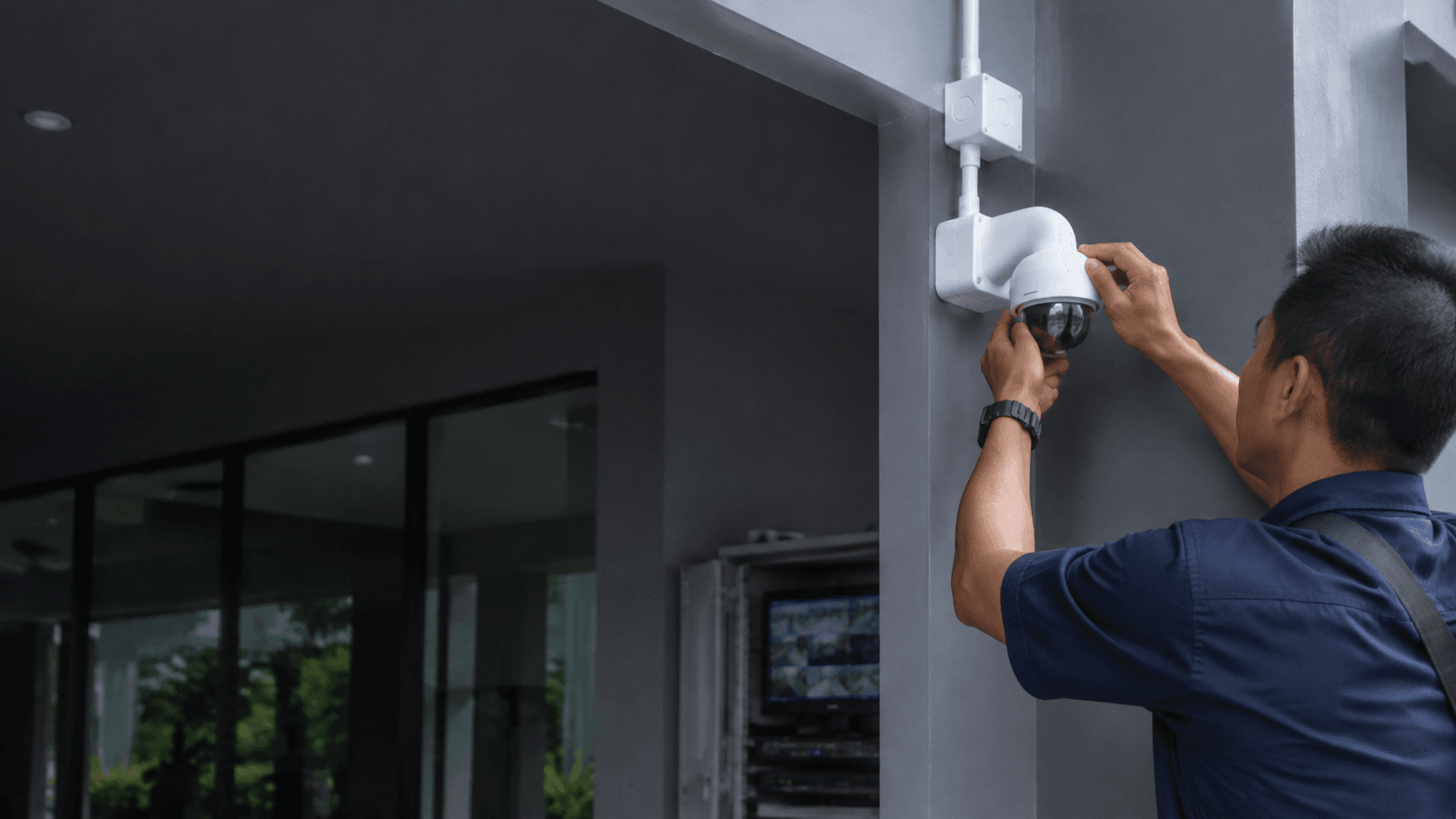
The phrase best cellular security camera points to a specific job: watching a place where no router, no power outlet, or no fixed line exists. That covers farms, construction sites, cabins, docks, and remote gates. The camera carries its own SIM, its own battery or solar panel, and its own storage. The trade-off is that the mobile link, the data plan, and the power budget all become part of the system design.
Best Cellular Security Camera. What Matters Before You Choose
Four things decide whether a cellular camera works in practice: mobile coverage at the exact mounting point, a power source that survives the site's weather, a data plan sized to the recording pattern, and storage that keeps footage when the signal drops.
- Check mobile signal strength at the intended mounting height, not at ground level near the gate.
- Decide the power method. rechargeable battery, built-in solar panel, or a wired supply where one already exists.
- Match the data plan to how often the camera records and uploads, since continuous streaming consumes far more than motion-triggered clips.
- Confirm local storage, such as a microSD card, so recording continues when the mobile link is unavailable.
- Plan the mounting angle around the actual lighting at the site, including any floodlights or street lamps that change the scene after dark.
- Test the live view and alert delivery from the phone that will actually receive them before the installation is treated as finished.
Coverage is the constraint that cannot be fixed after purchase. A camera mounted on a far boundary post may sit in a weak spot even when the house at the centre of the property shows full bars. Signal also varies with terrain, tree cover, and nearby buildings, so the check belongs at the camera position rather than at the office desk.
Choosing the Right Cellular Security Camera
Selection comes down to matching the camera's power and connectivity profile to the site, rather than picking the highest specification on a listing page.
What is cellular security camera technology built around?
A cellular security camera replaces the Wi-Fi or Ethernet link with a 4G LTE or similar mobile connection. The camera holds a SIM card, communicates with a mobile network, and pushes alerts, live view, and recorded clips to a phone app. Power usually comes from a rechargeable battery, a solar panel, or both. Storage is typically a microSD card inside the camera, with optional cloud storage on a subscription.
That combination is what makes the category useful off-grid. It also explains the limits. upload speed depends on the mobile network, and battery life depends on how often the camera wakes, records, and transmits.
Where a cellular camera fits better than a wired system
A wired CCTV system remains the stronger choice where mains power and a network connection already reach the camera positions. A cellular security camera earns its place where cabling is impractical, where the site is temporary, or where the property is unoccupied for long stretches. Construction sites, agricultural land, boat moorings, and remote gates are the common cases.
For a permanent building with existing power and internet, the mobile link adds an ongoing data cost without removing much installation work. That is a genuine trade-off rather than a shortcoming of the technology.
Cameras - DEFEND Cellular Camera by Tactacam
The DEFEND Cellular Camera by Tactacam appears in the competitor set as a dedicated cellular camera line, with product specifications and performance facts published on the manufacturer's own pages. Buyers comparing that model should read the manufacturer's stated specifications directly, because resolution, detection range, and plan terms change between product generations.
V150 » VOSKER | Mobile Security Cameras
The VOSKER V150 is listed as a solar-powered camera with 4G LTE connectivity, HD video, motion detection, and a weatherproof design. Its published feature set includes a built-in solar panel, a rechargeable battery, mobile alerts, local storage by microSD, and app-based live view and playback. Those are the manufacturer's stated features, and they describe the pattern the whole category follows: solar or battery power, mobile data, local storage, and a phone app.
Practical Considerations for Deployment
Deployment decisions matter more than the model number, because the same camera performs differently across sites.
Data plans and running costs
Every cellular camera needs a data plan or SIM arrangement. Motion-triggered clips use far less data than continuous recording, and a camera that uploads short clips a few times a day sits at the low end of typical usage. A camera streaming live video for hours does not. The plan should be sized to the recording pattern, and the recording pattern should be chosen deliberately rather than left at a default.
Power weather and battery expectations
Battery life claims assume a specific number of triggers per day and a specific climate. Cold weather reduces usable battery capacity, and heavy motion traffic drains a battery faster than the specification suggests. A solar panel helps only where the panel receives enough daylight, which is a placement question rather than a product question.
Night image quality and lighting checks
Night performance depends on the light actually present at the site. Eyonic advises checking real lighting conditions before confirming placement for ColorVu-style cameras, and the same discipline applies to any camera expected to produce usable images after dark. A position that looks clear in daylight can face glare from a nearby lamp or sit in complete darkness with no ambient source.
Installation sequence for a site without fixed internet
Eyonic's CCTV installation process runs through site survey, system proposal, installation, and handover. For a cellular deployment, the survey stage carries extra weight because signal strength, power availability, and mounting height all need confirming before equipment is ordered. Handover should include a live-view test and an alert test on the phone that will receive them.
What a cellular camera does not replace
A cellular camera is not a monitored alarm system. It records and alerts; it does not dispatch a response. Sites that need verified alarm response, access control, or intercom usually combine several systems rather than relying on cameras alone. Eyonic supplies and installs CCTV, alarm systems, autogate packages, keyphone intercoms, and Starlink internet installation in Sarawak, which means a site can be planned as one system instead of separate purchases.
Making an Informed Choice About Systems
The practical test is whether the site can support the camera's three dependencies: mobile signal, power, and a data plan. Where all three hold, a cellular camera delivers monitoring that a wired system cannot reach without major civil work. Where any one of them fails, the camera will underperform regardless of its specification.
For sites in Sarawak, local conditions shape the decision. Terrain, tree cover, and building density affect mobile reception, and the wet climate makes weatherproofing and mounting quality part of the reliability picture rather than an afterthought. A site survey that confirms signal at the mounting point, checks the lighting after dark, and agrees the recording pattern before installation removes most of the risk.
Eyonic's completed work includes the Kuching Immigration Office project, which focused on arrival flow, staff areas, visitor movement, and dependable daily operation, and the KTA Sarawak Sdn Bhd project, which covered staff movement, visitor handling, tidy cabling, and clearer daily site control. Both show the same principle. the camera positions and the recording pattern are decided around how the site is actually used.
Budget expectations vary with scope. Eyonic's published packages start at RM 1,599 for a Hikvision CCTV package, an alarm system, or an autogate package, while larger office projects have carried approximate budgets in the RM 8,000 to RM 28,000 range depending on the site. A cellular deployment on a remote property sits somewhere between those poles, and the deciding factors are the number of camera positions, the power method, and whether the site needs supporting systems.
Share your location, property type and required system with Eyonic on WhatsApp at +60 11-5111 7959 for the next practical step.