
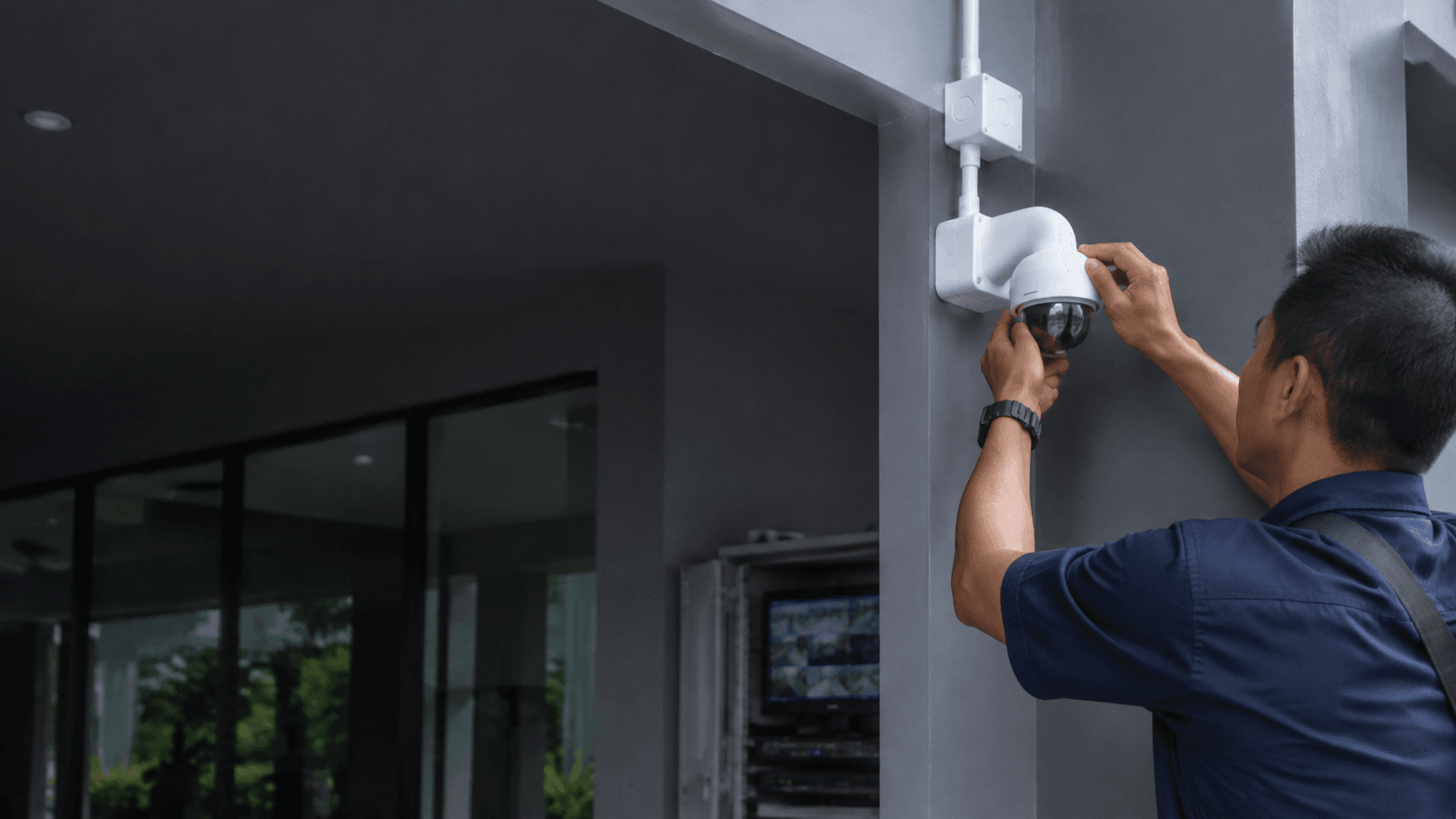
The exact-match query cctv cost is a budgeting question before it is a shopping question. Buyers want to know what a working system costs, what changes that number, and which parts of the price are fixed at purchase versus paid again later. This article works through those parts in order, using published package pricing from Eyonic Sdn Bhd, two completed Sarawak projects with disclosed budget ranges, and the cost drivers that appear across the commercial pricing guides currently ranking for this query.
Cctv Cost. What Matters Before Choosing a System
Four things move the number more than brand choice: how many cameras are needed, whether cable runs are short or long, whether recording is local or cloud, and whether the site needs work outside the camera system itself, such as network points or power outlets.
A useful budgeting sequence looks like this:
- Count the areas that need coverage, not the cameras. Arrival points, staff areas and visitor movement are three separate coverage zones in the Kuching Immigration Office project.
- Check lighting at each position before confirming camera type, because low-light performance changes which model is suitable.
- Decide where footage is stored and for how long, since recorder capacity and drive size follow from that decision.
- Confirm whether existing cabling and network points can be reused or whether new runs are required.
- Ask for the handover scope in writing, including mobile viewing setup and user testing.
Eyonic's published installation process follows the same order: site survey, system proposal, installation, then handover. That sequence matters for cost because the survey is where cable routes, camera positions and recorder location get fixed. A quote issued without a survey carries more risk of variation later.
What Drives CCTV Cost Up or Down
Camera count is the largest single driver, but it is not linear. Adding a fourth camera to a system that already has a recorder, a switch and a cable route costs less than adding the first camera to a site with no infrastructure.
Cabling distance is the second driver and the one most often underestimated. A camera 40 metres from the recorder needs more cable, more labour and sometimes a different cable type than a camera 8 metres away. On multi-level or multi-building sites, this can exceed the equipment cost of the cameras themselves.
Storage is the third. Local recording on a network video recorder is a one-time hardware cost. Cloud or remote storage is usually a recurring subscription, which changes the total cost of ownership over three to five years even when the upfront figure looks lower.
Camera capability is the fourth. Higher resolution, colour night vision and built-in analytics each raise the unit price. Eyonic's own guidance on ColorVu-style cameras is to check actual lighting conditions before confirming placement, because a camera specified for the wrong light level either underperforms or costs more than the site needs.
How Much Do Security Cameras Cost in Malaysia?
Eyonic publishes a Hikvision CCTV package at RM 1,599. The package covers camera supply and setup, basic recording configuration, and mobile viewing handover. That figure is a starting reference for a small system, not a ceiling.
Larger or more complex sites sit well above it. Two completed Eyonic projects show the range:
| Project | Scope focus | Approximate budget |
|---|---|---|
| KTA Sarawak Sdn Bhd | Office setup in Kuching supporting staff movement, visitor handling and tidy cabling | RM 8,000 – RM 18,000 |
| Kuching Immigration Office | Public office covering arrival flow, staff areas and visitor movement | RM 12,000 – RM 28,000 |
The gap between RM 1,599 and RM 28,000 is not a pricing inconsistency. It reflects camera count, site size, cable routing complexity and the level of daily operational reliability a public office needs compared with a small premises.
For comparison, commercial pricing guides covering the United States market quote figures in US dollars and describe per-camera pricing, labour rates and hidden fees in that market. Those numbers do not transfer directly to Malaysian pricing because labour rates, cable costs and equipment supply chains differ.
Choosing the Right Cctv Setup for the Budget
The right setup is the one that covers the required areas at a resolution and light sensitivity that actually produces usable footage. A cheaper camera that fails at night costs more over time than the correct camera bought once.
Three practical scenarios illustrate how the budget splits:
Small shop or single-office unit. A package-level system at the published RM 1,599 reference point is usually sufficient. Coverage is typically the entrance, the counter and the stock or server area. Cable runs are short and the recorder sits in the same unit.
Multi-floor office or consultancy site. The KTA Sarawak project is the reference case here. Staff movement, visitor handling and tidy cabling all need addressing, and the budget range of RM 8,000 to RM 18,000 reflects that broader scope.
Public-facing or high-traffic premises. The Kuching Immigration Office project shows what this looks like: arrival flow, staff areas and visitor movement each need separate coverage, and the system has to run dependably every day. The disclosed range is RM 12,000 to RM 28,000.
One constraint applies across all three. Camera placement decisions made before checking actual lighting conditions tend to be revised later, and revisions cost money. Confirming light levels at each position during the survey is cheaper than correcting placement after installation.
Practical Considerations and Next Steps
Several cost items sit outside the camera and recorder line. Network switches, power provision at camera locations, cable containment, and any building work needed to route cable all add to the total. On sites with existing structured cabling, these costs fall. On older buildings, they can be significant.
Recurring costs also deserve a place in the budget. Cloud storage, remote monitoring subscriptions and maintenance visits are ongoing. A system quoted only on hardware and installation will show a lower upfront figure and a higher five-year figure than one that accounts for both.
Scope clarity protects the budget more than any negotiation. Eyonic's process ends with handover, which includes mobile viewing setup and user testing. Confirming that handover covers the intended users, and that recording configuration matches the retention period required, prevents the common situation where a system is installed but not fully usable.
For sites in Sarawak, sharing the location, property type and required system with Eyonic on WhatsApp at +60 11-5111 7959 allows the next practical step to be scoped against the actual site rather than a generic package.
Making an Informed Choice About Cctv Cost
A defensible budget starts from coverage requirements, not from a target price. Counting the areas that need watching, checking light at each position, deciding on storage, and confirming cable routes produces a scope that can be priced accurately.
Published package pricing gives a floor. Completed project ranges give a realistic picture of what mid-size and public-facing sites cost. The difference between the two is scope, and scope is decided during the survey.
Eric Yong, founder of Eyonic Security Systems, has worked in the industry for more than ten years and specialises in technical installation of digital security solutions for commercial businesses in Sarawak. That experience is applied at the survey stage, where the decisions that determine final cost are made.