
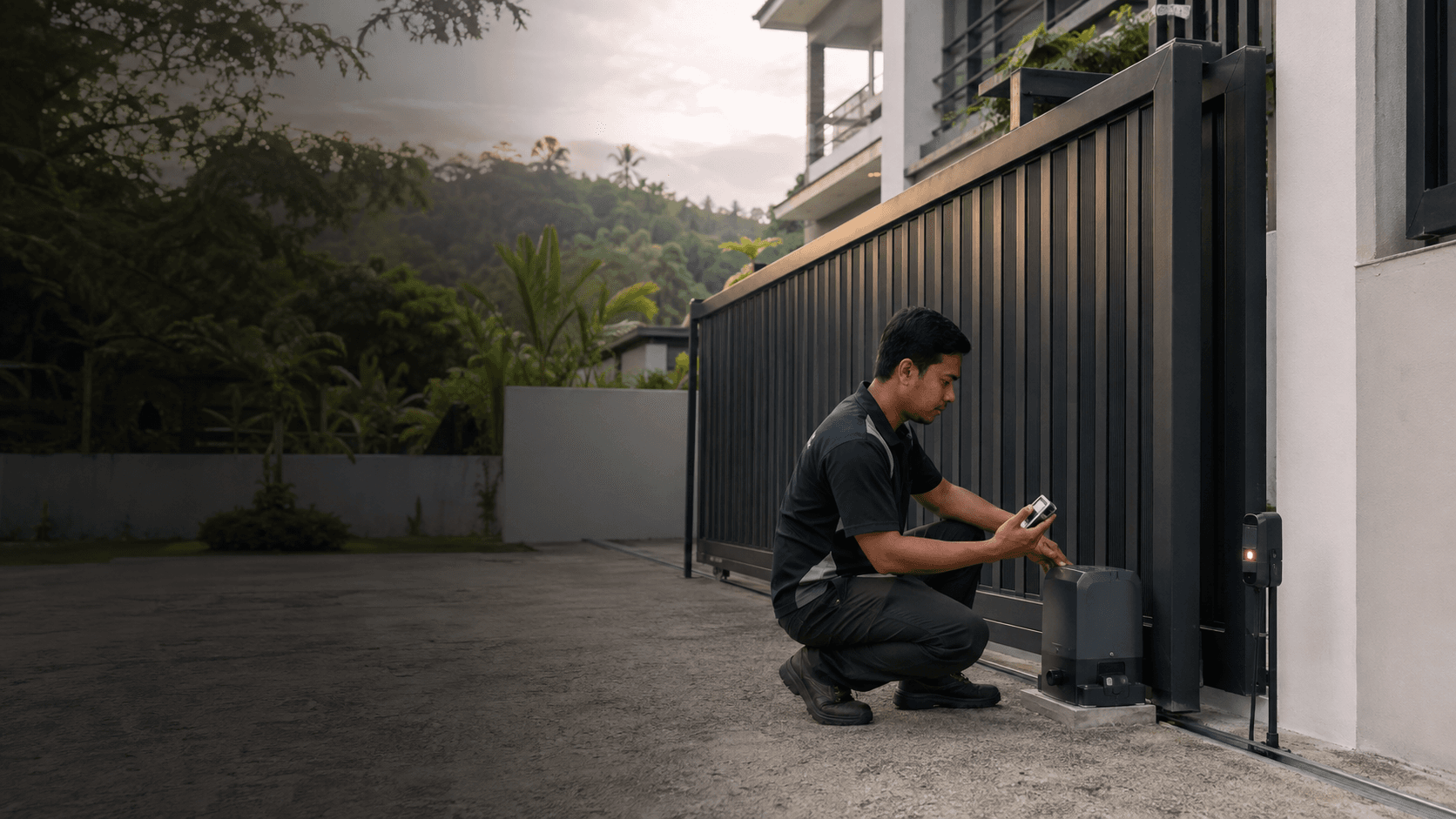
Electric Driveway Gate Installation: What Matters Before You Choose
Electric driveway gate installation changes how a property controls vehicle access, but the right approach depends on site conditions, gate type, and power availability. A swing gate needs clearance for the leaf to arc inward or outward, while a sliding gate requires straight track space along the fence line. Properties with a sloped driveway often suit sliding gates better because swing leaves can drag on uneven ground. The gate itself must be rigid enough that the opener does not fight against sagging panels or misaligned hinges.
The decision sequence below reflects the practical order that installers such as Eyonic follow when planning an electric driveway gate installation.
- Measure the driveway opening width and confirm the gate leaf weight and length against the opener's rated capacity.
- Check the mounting surface for swing gates or the track area for sliding gates, noting slope, drainage, and clearance.
- Confirm the power source location and whether a backup battery or solar option is needed for the opener.
- Select the gate material and finish based on local weather exposure and maintenance expectations.
- Arrange a site survey so the installer can verify measurements and propose the correct system before supply.
Choosing the Right Electric Driveway Gate Installation
The main entity in this decision is the complete electric driveway gate installation, not just the gate panel or the opener alone. A common error is buying a gate and opener separately without checking compatibility. The opener must match the gate's swing direction, leaf weight, and duty cycle. Residential gates open a few times daily, while commercial entrances need heavier operators rated for frequent use.
Gate material affects both cost and long-term operation. Galvanized steel with a powder-coated finish resists rust and needs less repainting than bare metal. Aluminum gates weigh less, which can allow a smaller opener, but they may flex more on wide spans. Wood gates suit certain architectural styles but require periodic sealing and can warp, which strains the automation over time.
What Is Electric Driveway Gate Installation?
Electric driveway gate installation refers to fitting a motorized operator to a driveway gate so the leaf opens and closes by remote control, keypad, intercom, or sensor rather than by hand. The system typically includes the gate structure, the opener mechanism, safety sensors, and a control board. Swing gates pivot on hinges, while sliding gates move horizontally on wheels or a cantilever track. Each type has distinct installation demands and maintenance profiles.
Eyonic's autogate installation service in Sarawak covers the supply and fitting of these systems for residential and commercial properties. The company's CCTV installation process follows a sequence of site survey, system proposal, installation, and handover, and autogate work follows a similar practical structure. A site survey matters because the installer must verify the gate area, power access, and any obstacles before recommending equipment.
Practical Considerations for Electric Driveway Gate Installation
Power supply is the first practical constraint. A hardwired electric opener connects to the property's mains supply, which is reliable but requires a cable run to the gate. Battery backup keeps the gate operable during outages, and solar panels can charge the battery where trenching for power is difficult. The trade-off is that solar output depends on panel exposure and local weather, so a shaded gate location may not suit a solar-only setup.
Safety features are not optional extras in a complete electric driveway gate installation. Photoelectric sensors detect obstructions and reverse the gate before it closes on a vehicle, pet, or person. An emergency release mechanism lets the gate be opened manually during a power failure or malfunction. Entrapment protection is especially important for sliding gates, which can trap someone between the moving leaf and the post if no sensor is fitted.
The table below compares the two main gate automation types across factors that affect installation decisions.
| Factor | Swing Gate | Sliding Gate |
|---|---|---|
| Space needed | Clear arc for the leaf to open | Straight track length beside the opening |
| Slope tolerance | Poor on uneven driveways | Better on sloped ground |
| Opener type | Articulated arm or underground operator | Rack-and-pinion or chain-driven carriage |
| Typical best fit | Flat sites with wide setbacks | Limited clearance or sloping driveways |
| Maintenance focus | Hinges, arm lubrication, leaf alignment | Track debris, rollers, gear lubrication |
Site Survey and System Proposal
A professional electric driveway gate installation begins with a site survey rather than a catalogue order. The surveyor checks the driveway width, gate opening direction, power source distance, and ground conditions. Eyonic's approach to security installations includes a site survey before any system proposal, and the same logic applies to autogates because the gate must suit the physical site.
The survey also reveals constraints that affect cost. A long cable run to the power source adds material and labour. Poor soil may require a deeper concrete foundation for the gate posts. Existing gate posts may need reinforcement if they were built for a manual gate and cannot handle the torque of an opener. These findings shape the proposal and the final price.
Installation and Handover
The installation phase covers mounting the gate, fitting the opener, running the control wiring, and setting the safety sensors. The control board is programmed for the gate's travel limits, and the remote transmitters are paired to the receiver. A dependable daily operation depends on clean wiring and correct adjustment, which is why Eyonic's project work for the Kuching Immigration Office focused on arrival flow, staff areas, and reliable operation in a public setting.
Handover matters as much as the physical fitting. The installer should demonstrate how to use the remote, keypad, and manual release, and explain the maintenance schedule. Eyonic's CCTV process includes a handover stage after installation, and autogate customers benefit from the same clarity about how the system works and what to check periodically.
Making an Informed Choice About
The cost of electric driveway gate installation varies widely because the gate material, size, opener type, and site work all contribute to the total. Eyonic lists an autogate package at RM 1,599, which serves as a starting reference point for a basic residential setup. A full installation with a custom gate, longer track, or extensive wiring will cost more than the package price alone.
Property owners in Sarawak should compare the package contents against their site needs. A package price typically covers the opener and standard accessories, but site-specific work such as concrete foundations, long cable runs, or gate fabrication may be quoted separately. Sharing the property type and location with the installer allows a more accurate proposal.
Maintenance and Long Term Operation
An electric driveway gate installation needs periodic attention to stay reliable. Swing gate hinges and sliding gate rollers require lubrication. The track on a sliding gate must be kept clear of debris, stones, and mud that can jam the wheels. Safety sensors should be tested regularly to confirm they reverse the gate when obstructed. Battery backup units need replacement every few years depending on usage and climate.
Weather exposure in Malaysia accelerates wear on exposed metal parts. Rain and humidity can corrode hinges and electrical connections if they are not protected. Choosing galvanized or powder-coated components and ensuring the control box is weatherproof reduces these risks. A gate that operates smoothly for years is usually the result of proper installation, not just quality parts.
Getting the Next Practical Step Done
Electric driveway gate installation is a project that benefits from local knowledge of site conditions and power requirements. Eyonic Sdn Bhd supplies and installs autogate systems in Sarawak, with founder Eric Yong bringing more than 10 years of experience in technical installation of digital security solutions for commercial businesses. The company's completed work includes practical support for the Kuching Immigration Office and KTA Sarawak Sdn Bhd, where the focus was on dependable daily operation.
Share the location, property type, and required system with Eyonic on WhatsApp at +60 11-5111 7959 for the next practical step. A site survey will confirm the gate type, opener capacity, and power solution that fits the property before any equipment is supplied.