
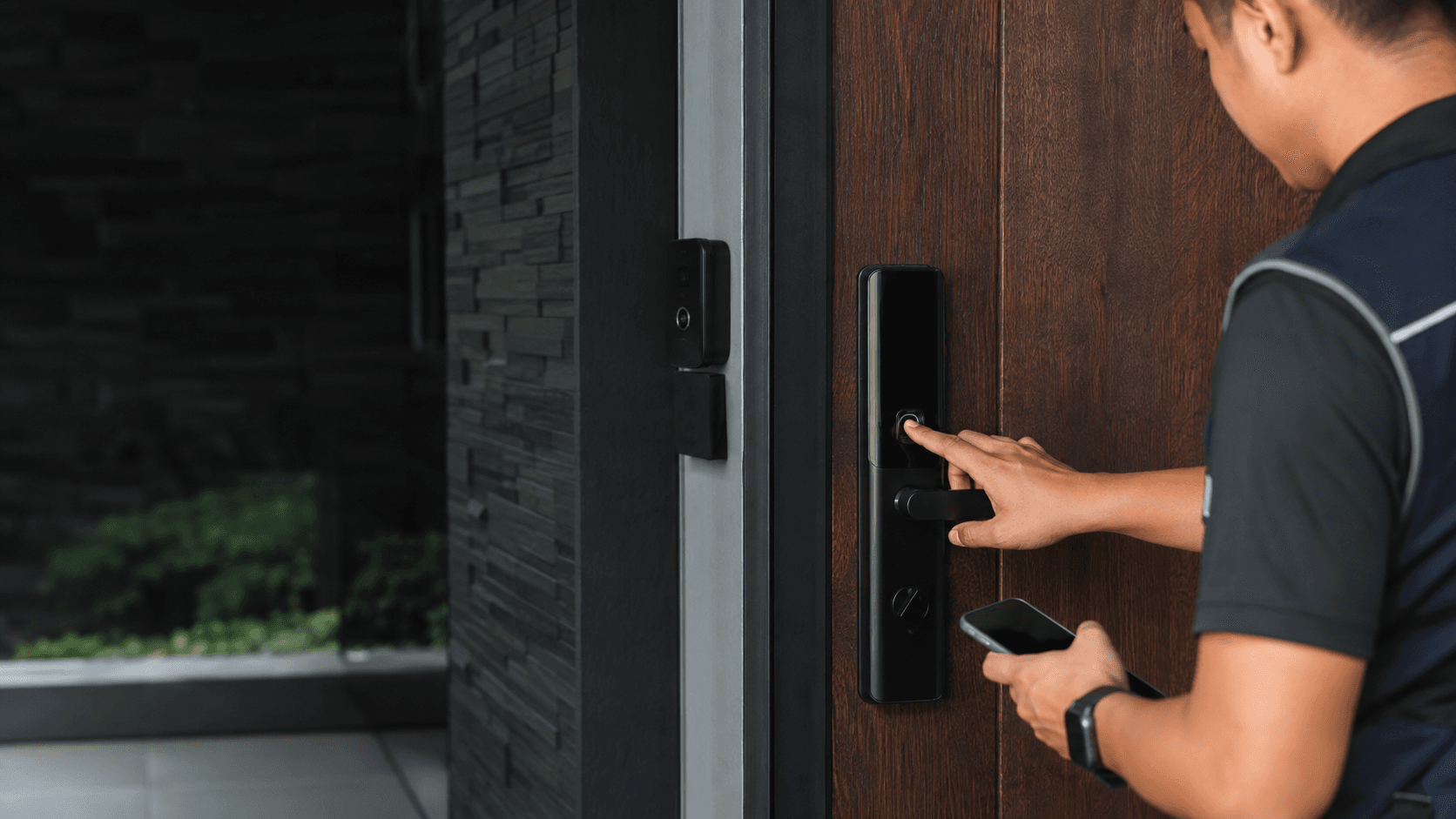
The appeal is straightforward. a finger opens the door, and the app decides who else can. What decides whether the lock works well for years is less glamorous — the door it sits on, the roles assigned to each user, and the method that still works when a fingerprint reader does not.
Malaysia-facing buyers also weigh a second question early: whether a single door needs a standalone lock or whether the site needs a wider access-control arrangement. That choice shapes cost, wiring and daily administration more than the fingerprint sensor itself.
Tuya Fingerprint Door Lock. What Buyers in Malaysia Should Check
Three checks matter before any model is discussed. First, the door: thickness, existing mortise cut-out, and whether the frame closes cleanly. Second, the users: how many people need entry, and whether they need permanent, temporary or one-time access. Third, the backup: what happens when a battery runs flat or a finger is wet, cut or unreadable.
Connectivity is a fourth consideration, but it should follow the first three. A lock that talks to an app is only useful if the door accepts it and the users can be managed sensibly. Buyers comparing listings online often see Wi-Fi, ZigBee and Bluetooth mentioned interchangeably; the practical difference is whether the lock needs a separate gateway or hub to reach the app, and that detail belongs in the site survey rather than in an assumption.
Because published specifications vary between models and suppliers, the safe approach is to confirm the exact model's fingerprint capacity, power source and door compatibility in writing before ordering. A Tuya fingerprint door lock bought on specification alone can arrive with a mortise that does not match the door.
How Fingerprint Access Fits a Door and Daily Use
Fingerprint access removes the two daily frictions of keyed entry: carrying a key and handing one over. For a family home, that means no spare key under a pot and no rekeying when a helper or tenant changes. For a shop or office, it means staff arrive and leave without a shared key that nobody can trace.
The reader itself is the least interesting part of the system. What makes daily use smooth is the enrolment routine — registering each finger properly, including a second finger per person for redundancy — and the access log, which shows which credential opened the door and when. Logs are what turn a convenience feature into something a business can actually manage.
App control adds remote visibility. Depending on the model and how it connects, the app may show entry records, allow temporary credentials, and let an administrator add or remove a user without visiting the door. These functions depend on the specific product and its connectivity, so they should be demonstrated at handover rather than assumed from a listing.
Door Condition, User Roles and Backup Entry
Door condition decides feasibility. A solid timber door with an existing mortise is usually the simplest case. A metal gate, a glass door or a thin hollow-core door may need a different lock body or additional reinforcement. A door that does not sit squarely in its frame will stress any electronic lock, regardless of brand.
User roles decide configuration. A home typically needs a small number of permanent users plus occasional access for a cleaner or contractor. An office usually needs grouped permissions — management, staff, and visitors — so that removing one person does not disturb everyone else. A rental property needs a way to issue access at check-in and revoke it at check-out without a physical key exchange.
Backup entry decides resilience. Every electronic lock needs at least one path that does not depend on the fingerprint reader or the app. Mechanical key override is the common answer; a keypad code is another. The backup method should be tested at handover, and the override key should be stored somewhere other than inside the property it protects.
Standalone Lock or Access-Control Panel
A standalone lock is the right fit for one door, a modest number of users, and a site without existing access infrastructure. It is simpler to install, simpler to explain to users, and simpler to replace.
An access-control panel becomes the better choice when several doors must share one user list, when entry needs to integrate with attendance or visitor records, or when the site already runs a panel and adding a separate lock would create two disconnected systems. Eyonic's own product guidance notes that smart locks work best when door condition, user roles and backup method are reviewed first, and that for business use the usual check is whether a standalone smart lock or an access-control panel is more appropriate.
The trade-off is administration. A panel centralises control but adds wiring, a controller and a maintenance surface. A standalone lock avoids that overhead but multiplies the work when there are many doors, because each lock holds its own user list.
Installation Steps Eyonic Follows
Eyonic's installation process runs through four stages, and the same sequence applies to smart lock work as to the CCTV and ELV systems the company installs across Sarawak.
- Site survey — the door, frame, existing hardware and power or wiring options are inspected on site.
- System proposal — the recommended lock or access-control approach is set out, including user roles and the backup entry method.
- Installation — the lock is fitted, configured and connected to the app or panel as agreed.
- Handover — fingerprints, codes and admin access are enrolled, the backup method is tested, and the user is shown how to manage access.
The survey stage carries the most weight. It is where door thickness, mortise dimensions and frame alignment are confirmed against the actual product, and where the standalone-versus-panel question is settled. Skipping it is the most common reason a smart lock project needs a second visit.
What Handover Should Cover
Handover is not just a demonstration. It should leave the site with at least two enrolled administrators, a tested backup entry method, a record of which credentials belong to which person, and a clear explanation of what to do when the battery indicator appears. If the lock connects through a gateway or hub, the handover should also confirm that the app still reaches the lock from outside the property.
Practical Next Step for Supply and Installation
Eyonic Sdn Bhd plans, supplies and installs security and ELV systems for homes, offices, shops and industrial sites in Sarawak, and has completed projects including the Kuching Immigration Office and KTA Sarawak Sdn Bhd. The company's founder, Eric Yong, has more than 10 years in the industry, with experience in technical installation of digital security solutions for commercial businesses in Sarawak.
For a Tuya fingerprint door lock enquiry, the useful information to bring to the first conversation is the property location, the type of door, the approximate number of users, and whether the site already has an access-control panel. Those four details are enough to decide whether a standalone lock or a wider arrangement is the sensible starting point.
Share your location, property type and required system with Eyonic on WhatsApp at +60 11-5111 7959 for the next practical step.