
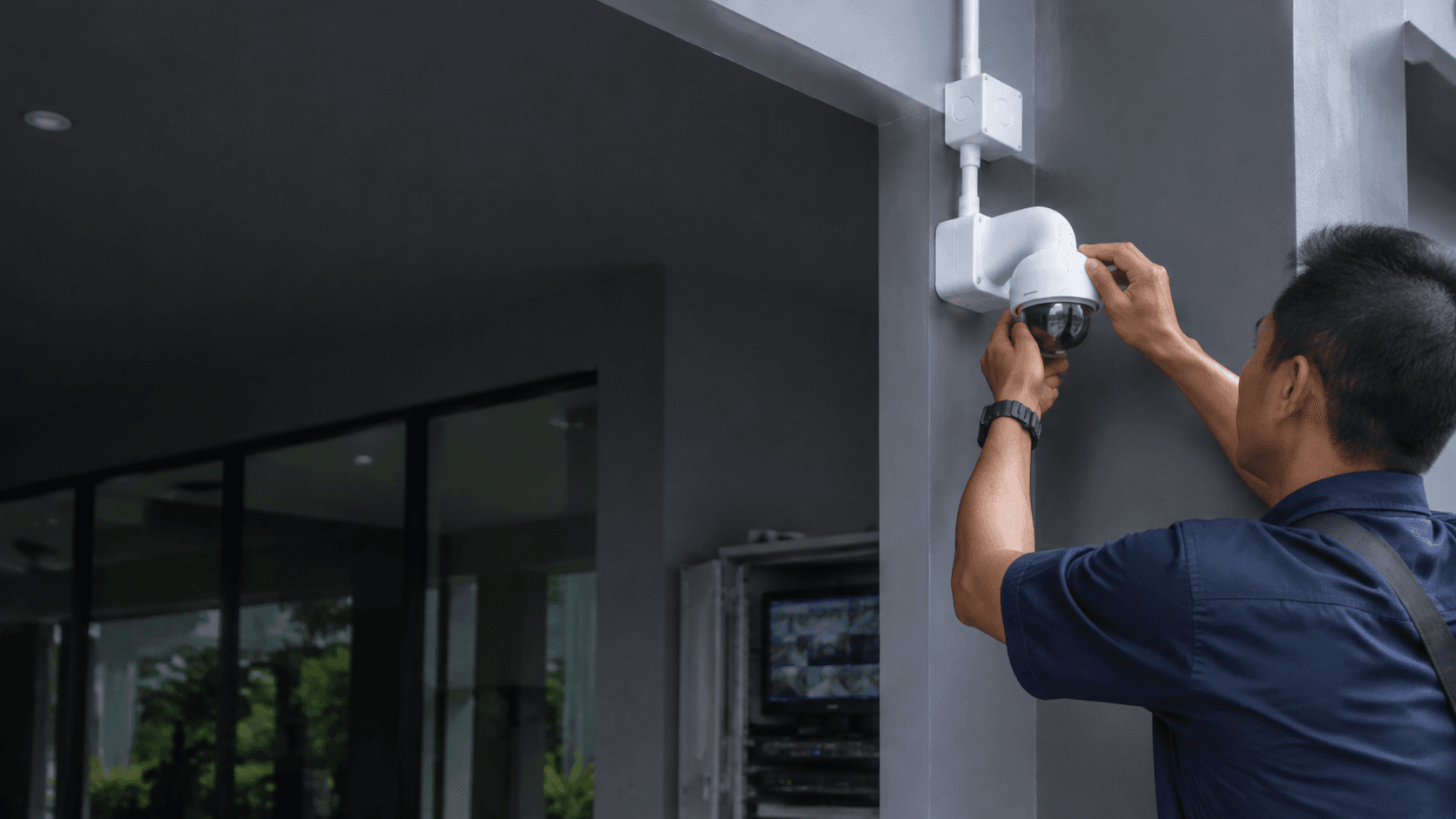
What Is a Dome CCTV Camera?
The dome CCTV camera gets its name from the rounded, half-sphere casing that covers the lens and camera body. That housing is the defining feature, and it shapes how the camera performs in real installations. The curved cover makes it harder for someone to tell which direction the lens is pointing, which adds a layer of deterrence that flat-bodied cameras do not offer.
Dome cameras are distinct from bullet cameras, which have an elongated, cylindrical shape. The dome form factor is usually more discreet and blends into ceilings and walls more easily. This makes the dome CCTV camera a frequent choice for retail shops, offices, and other indoor spaces where a bulky camera would feel intrusive.
The dome housing also provides physical protection. Many dome models are built with impact-resistant materials, which is why they are often described as vandal-resistant. That protection matters in public areas where cameras are within arm's reach, such as lobbies, corridors, and reception counters.
Why Choose a Dome CCTV Camera for Your Premises?
Selecting a dome CCTV camera comes down to matching the camera's strengths to the specific area being monitored. The dome shape is not just cosmetic; it changes how the camera can be mounted and what it can capture.
Discreet Coverage Without Announcing the Lens Direction
Because the dark or tinted dome cover hides the lens position, people under surveillance cannot easily tell whether the camera is pointed at them. This is useful in shops and offices where staff and visitors should feel monitored without knowing exactly where the camera is looking. The uncertainty itself can discourage unwanted behaviour.
Vandal Resistance for Public and High-Traffic Areas
The tough dome casing protects the lens from impact and tampering. A dome CCTV camera is therefore a practical option for areas where the camera is mounted low enough to be reached, such as corridors, waiting areas, and building entrances. The casing also makes it harder for someone to redirect the camera or knock it out of alignment.
Indoor and Outdoor Versatility
Dome cameras are available for both indoor and outdoor use. Outdoor-rated dome models come with weatherproof housings that protect against rain and dust. However, the specific weatherproof rating matters, and the right choice depends on whether the camera will face direct rain, strong sun, or covered outdoor areas like a porch or car park canopy.
Ceiling and Wall Mounting Flexibility
The dome form factor is well suited to ceiling mounting, where the camera sits flush and provides a wide view of the room below. Wall mounting is also possible, particularly for corner coverage. This flexibility makes the dome CCTV camera a strong candidate for rooms where the camera needs to be mounted out of the way.
Key Features to Compare in s
Not all dome cameras perform the same way. The housing shape is only one part of the decision. Several technical features determine whether a particular dome CCTV camera will deliver the coverage a property needs.
Resolution and Image Detail
Resolution determines how much detail the camera can capture. Higher resolution cameras can identify faces and number plates at greater distances, but they also produce larger video files that require more storage. The right resolution depends on the size of the area and how close people will be to the camera.
Night Vision and Low Light Performance
Most dome cameras include infrared LEDs for night vision. The range of that infrared illumination varies between models. A camera with a short infrared range will not provide useful footage in a large, dark car park. Eyonic recommends checking actual lighting conditions before confirming placement for ColorVu-style cameras, which are designed to capture colour footage in low light. That advice applies to any camera where night performance is a priority.
Field of View and Lens Type
The lens determines how wide an area the camera can see. A fixed lens has a set field of view, while a varifocal lens allows the installer to adjust the angle during setup. A wider field of view covers more area but with less detail at a distance. A narrower view captures more detail but covers less ground.
Vandal Resistance Rating
The level of impact protection varies between dome models. Some are designed for basic indoor use, while others are built to withstand deliberate impact. For public-facing areas, a higher impact rating is worth prioritising. The dome casing is the main defence, but the strength of that casing is not uniform across all models.
Power and Connectivity
Dome cameras connect to the recording system either through a network cable or through a coaxial cable. Power over Ethernet (PoE) cameras receive both power and data through a single network cable, which simplifies installation. The choice between network and analogue systems affects cabling, recording hardware, and remote viewing options.
How to Install a A Step by Step Guide
A dome CCTV camera installation involves more than mounting the unit and plugging it in. The process followed by professional installers covers planning, placement, and verification to ensure the camera actually serves its purpose.
- Conduct a site survey to identify the areas that need coverage, the lighting conditions, and the best mounting positions for each camera.
- Prepare a system proposal that specifies the camera models, recording equipment, cabling route, and expected coverage for each location.
- Install the cabling and mount each dome CCTV camera at the agreed position, ensuring the lens angle is set correctly before securing the dome cover.
- Configure the recording system, network settings, and remote viewing access so footage can be reviewed from the intended devices.
- Hand over the system with a walkthrough that shows how to view live footage, review recordings, and perform basic checks.
This is the installation process Eyonic follows for CCTV systems in Sarawak. The site survey is the critical first step because it determines whether the camera placement will actually capture the required areas. A camera mounted in the wrong position cannot be fixed by adjusting settings later.
Why the Site Survey Matters for Dome Cameras
The dome shape creates a specific installation consideration. Because the lens sits behind a curved cover, the angle of the camera must be set correctly during installation. If the camera is mounted too high or at the wrong tilt, the dome cover can cause glare or reflection that degrades the image. Checking the actual lighting conditions before finalising placement helps avoid this problem.
Indoor Placement Considerations
For indoor dome cameras, ceiling mounting is the most common approach. The camera should be positioned to cover entry points, cash registers, or corridors without being blocked by shelving or partitions. The dome cover can collect dust, which softens the image over time, so placement away from direct airflow or dusty areas helps maintain clarity.
Outdoor Placement Considerations
Outdoor dome cameras need protection from the elements. A camera under an eave or canopy faces less direct rain than one mounted on an open wall. The mounting height also matters. A camera mounted too low is easier to reach and tamper with, while one mounted too high may lose the detail needed to identify a person.
Maintenance and Best Practices
A dome CCTV camera will only deliver reliable footage if it is maintained properly. The dome cover is the most vulnerable part of the camera, and its condition directly affects image quality.
Cleaning the Dome Cover
The curved dome cover collects dust, fingerprints, and water spots. Even a thin layer of grime reduces image sharpness and can cause glare at night when infrared LEDs are active. Regular cleaning with a soft, lint-free cloth keeps the image clear. Cleaning should be scheduled more frequently in dusty environments or areas with high foot traffic.
Checking the Lens Angle
Dome cameras can be knocked out of alignment, especially in public areas where people brush against them or attempt to tamper with them. A periodic check of the live view helps confirm that each camera is still pointing at the intended area. This is a simple check that can be done remotely through the viewing app.
Verifying Recording Continuity
A camera that stops recording provides no protection. Regular checks should confirm that footage is being recorded continuously and that the storage device has sufficient space. Reviewing a short clip from each camera also confirms that the recording quality matches expectations.
Reviewing Footage After Incidents
When an incident occurs, footage should be reviewed promptly. The recording system should make it easy to locate the relevant time window and export the clip if needed. This is where the handover process matters; staff should know how to find and export footage before they need to do it in an emergency.
Installation in Malaysia
For properties in Malaysia, the decision to install a dome CCTV camera is often part of a broader security setup. Eyonic Sdn Bhd, a security system supplier in Sarawak, plans, supplies, and installs monitoring systems for homes, offices, shops, and industrial sites. Their work includes camera placement, recording setup, and remote viewing configuration.
The company's project history shows the range of environments where CCTV systems are deployed. Eyonic completed a project for the Kuching Immigration Office, where the focus was on arrival flow, staff areas, visitor movement, and dependable daily operation. That project illustrates how a public office needs cameras that work reliably every day, not just during business hours.
Another project for KTA Sarawak Sdn Bhd, an engineering consultancy, required a practical office setup in Kuching. The priorities there were staff movement, visitor handling, tidy cabling, and clearer daily site control. These examples show that the right camera choice depends on the specific operational needs of each property.
Matching the Camera to the Property Type
A dome CCTV camera suits some properties better than others. Retail shops benefit from the discreet appearance and the difficulty of telling where the camera is pointed. Offices benefit from the low-profile design that does not distract staff or visitors. Public buildings benefit from the vandal-resistant housing that protects the camera in high-traffic areas.
For industrial sites or large outdoor perimeters, other camera types may be more appropriate. Bullet cameras often have longer infrared ranges and are easier to aim at specific distant points. The dome CCTV camera is not the universal answer; it is the right answer for specific situations.
Working with a Professional Installer
The installation process matters as much as the camera model. A professional installer conducts a site survey, proposes a system, installs the equipment, and hands over the system with a clear explanation of how to use it. This process reduces the risk of poor placement, inadequate coverage, or configuration errors that leave gaps in protection.
Share your location, property type and required system with Eyonic on WhatsApp at +60 11-5111 7959 for the next practical step.