
The recorder is one line item. A working 16-channel system is several, and the gap between a bare unit and an installed job is where most quotes differ. Eyonic Sdn Bhd plans, supplies and installs CCTV and ELV systems in Sarawak, and its published Hikvision CCTV package sits at RM 1,599 for camera supply, basic recording configuration and mobile viewing handover.
Hikvision 16 Channel Nvr Price: What Matters Before You Choose
A 16-channel network video recorder is the box that receives video from IP cameras, writes it to a hard disk, and serves live and recorded views to a monitor or phone. On its own, that box records nothing. It needs cameras to feed it, a drive to write to, and a network to reach.
Buyers comparing a Hikvision 16 Channel Nvr price across listings often compare three different things without noticing. Some listings are the recorder chassis with no hard drive. Some bundle a drive of a stated capacity. Some are full installed jobs with cameras and cabling. The number on the page only means something once the scope behind it is clear.
Channel count is the other variable. A 16-channel unit accepts up to sixteen cameras, but it can run with fewer. A site with eight cameras can still use a 16-channel recorder and leave half the channels free for later. That choice raises the hardware cost now and avoids replacing the recorder later, which is a trade-off rather than a saving.
Storage, cameras and cabling
Storage is usually the largest single addition after the recorder. Surveillance drives are sold by capacity, and the capacity needed rises with camera count, camera resolution, frame rate, and how many days of footage the site wants to keep. Retention length is a business decision before it is a technical one: a shop that reviews incidents within a week needs far less storage than a site holding thirty days.
Cameras carry their own price spread. Resolution, low-light performance, and whether the camera includes its own recording or analytics all move the figure. Eyonic advises checking actual lighting conditions before confirming placement for ColorVu-style cameras, because a camera chosen for a bright entrance may behave differently in a dim back lane.
Cabling is the quiet cost. Every camera needs a run back to the recorder or a network switch, and the length, route, and surface of that run decide the labour. Tidy cabling through a finished office ceiling costs more time than a run across an open warehouse. On the KTA Sarawak Sdn Bhd project, the brief included tidy cabling alongside staff movement and visitor handling, which shows how often cabling quality sits inside the scope rather than beside it.
Power over Ethernet changes the wiring picture. Where cameras draw power over the network cable, separate power runs are avoided, but the recorder or switch must supply that power. That requirement belongs in the specification before the recorder is chosen, not after.
How installation changes the figure
Labour is where two quotes for the same hardware can diverge most. Installation includes mounting cameras, running and terminating cable, configuring the recorder, setting recording schedules, and handing over mobile viewing. Each of those steps scales with site size and access difficulty.
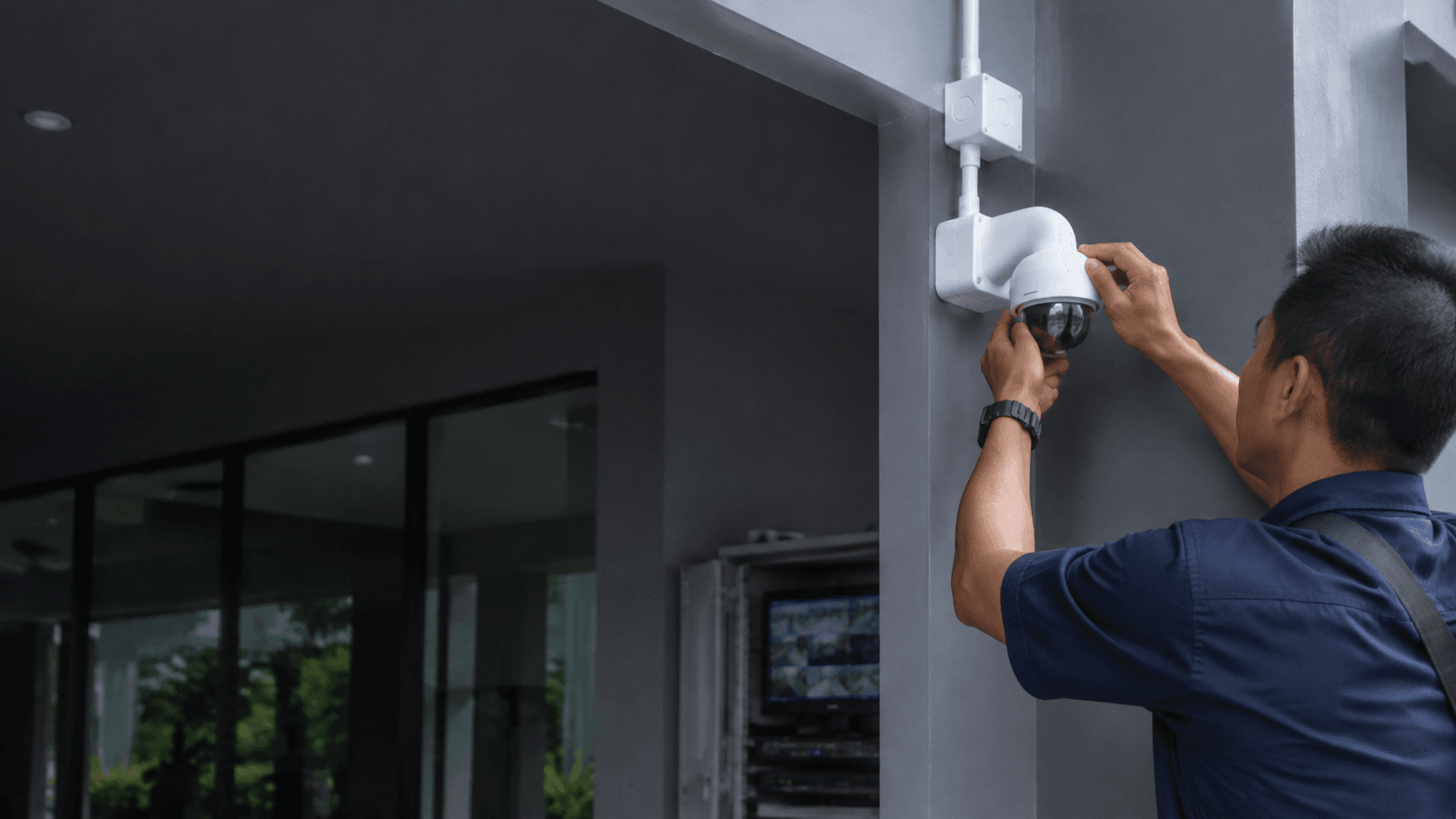
Eyonic's CCTV installation process runs through four stages, and the same sequence applies to a 16-channel job.
- Site survey, to check camera positions, lighting, cable routes and power.
- System proposal, setting out the recorder, cameras, storage and cabling for the site.
- Installation, covering mounting, cabling, recorder setup and recording configuration.
- Handover, including mobile viewing setup and a walkthrough of the finished system.
The survey stage is what turns a generic figure into a site figure. A single-storey shop with clear ceiling access and a two-storey building with solid walls and long cable runs are not the same job, even with identical hardware lists.
Public and commercial sites add their own constraints. Eyonic completed a project for the Kuching Immigration Office covering arrival flow, staff areas, visitor movement and dependable daily operation, and the published approximate budget for that type of work is RM 12,000 to RM 28,000. That range reflects a multi-area site with operational continuity requirements, not a single recorder. It is useful as a scale reference for what a larger 16-channel deployment can involve, and it should not be read as a price for a recorder.
Comparing two quotes on the same basis
Two figures for a Hikvision 16 Channel Nvr price are only comparable when the scope matches. The fastest way to compare is to list what each quote includes and what it leaves out.
Check whether the recorder is quoted with or without a hard drive, and if a drive is included, what capacity. Check the camera count and model, because sixteen cameras and eight cameras on the same recorder are different jobs. Check whether cabling, connectors, and mounting hardware are inside the figure. Check whether installation labour, configuration, and handover are included or billed separately. Check whether the quote states what happens if cable routes turn out longer than assumed.
A lower figure that excludes storage or labour is not cheaper. It is a smaller scope. The same applies in reverse. a higher figure may include cameras and cabling that the lower one never mentioned.
Warranty terms and after-sales coverage belong in the comparison too, and they should be confirmed in writing with the supplier rather than assumed from a listing.
Getting a figure for a specific site
There is no single national price for a 16-channel recorder job, because the recorder is a fraction of the total. A site-specific figure comes from a survey that fixes camera positions, cable routes, storage retention, and the recorder model that fits them.
For readers in Sarawak, Eyonic's service area covers homes, offices, shops and industrial sites, with planning, supply and installation handled together. Sharing the location, property type and required system gives enough to work from. Eyonic can be reached on WhatsApp at +60 11-5111 7959 for the next practical step.
Where a budget figure is needed before a survey, the honest approach is to price the recorder and storage as one line, cameras as a second, and cabling and labour as a third, then compare any quote against those three lines. That structure makes the difference between quotes visible instead of hidden.