
How Solar Powered Cameras Work
Solar powered cameras operate as self-contained units. A photovoltaic panel converts sunlight into electricity, which charges an internal battery. That battery powers the camera through the night and during overcast periods. Most units connect to a home Wi-Fi network for live viewing, motion alerts, and recorded clips stored on a microSD card or cloud service.
The core trade-off is energy balance. The panel must collect enough charge during daylight to sustain the camera's recording, night vision, and connectivity demands. A camera positioned under deep shade or facing away from the sun's path will drain its battery faster than the panel can replenish it. This makes placement the single most important factor in whether a solar powered camera system performs acceptably.
Choosing Solar Powered Cameras for Malaysian Weather
Malaysia's equatorial climate presents specific conditions that affect solar powered cameras. The country receives consistent sunlight year-round, but heavy rainfall, high humidity, and frequent cloud cover during monsoon seasons reduce effective solar gain. Buyers should not assume that a sunny climate translates to uninterrupted charging.
Practical selection criteria include:
- **Panel size and efficiency**: Larger panels collect more energy in shorter sunny windows. A small panel paired with a power-hungry camera will struggle during prolonged rainy periods.
- **Battery capacity**: A larger battery provides a buffer for consecutive overcast days. Without verified specifications, buyers should ask suppliers for the battery rating in milliamp-hours (mAh) before purchase.
- **Weather resistance**: Units need proper ingress protection (IP rating) to withstand tropical downpours and humidity. Confirm the rating covers the Malaysian outdoor environment.
- **Camera resolution and features**: Higher resolution, continuous recording, and active spotlights consume more power. Buyers who need 24/7 recording may find that battery-powered solar units only support motion-triggered events.
The hidden need behind most solar powered camera purchases in Malaysia is avoiding frequent battery swaps and complex wiring. A unit with a small battery and marginal panel will fail that expectation during the northeast monsoon, when weeks of overcast weather are common in states like Sarawak.
Installation Considerations for Solar Powered Cameras
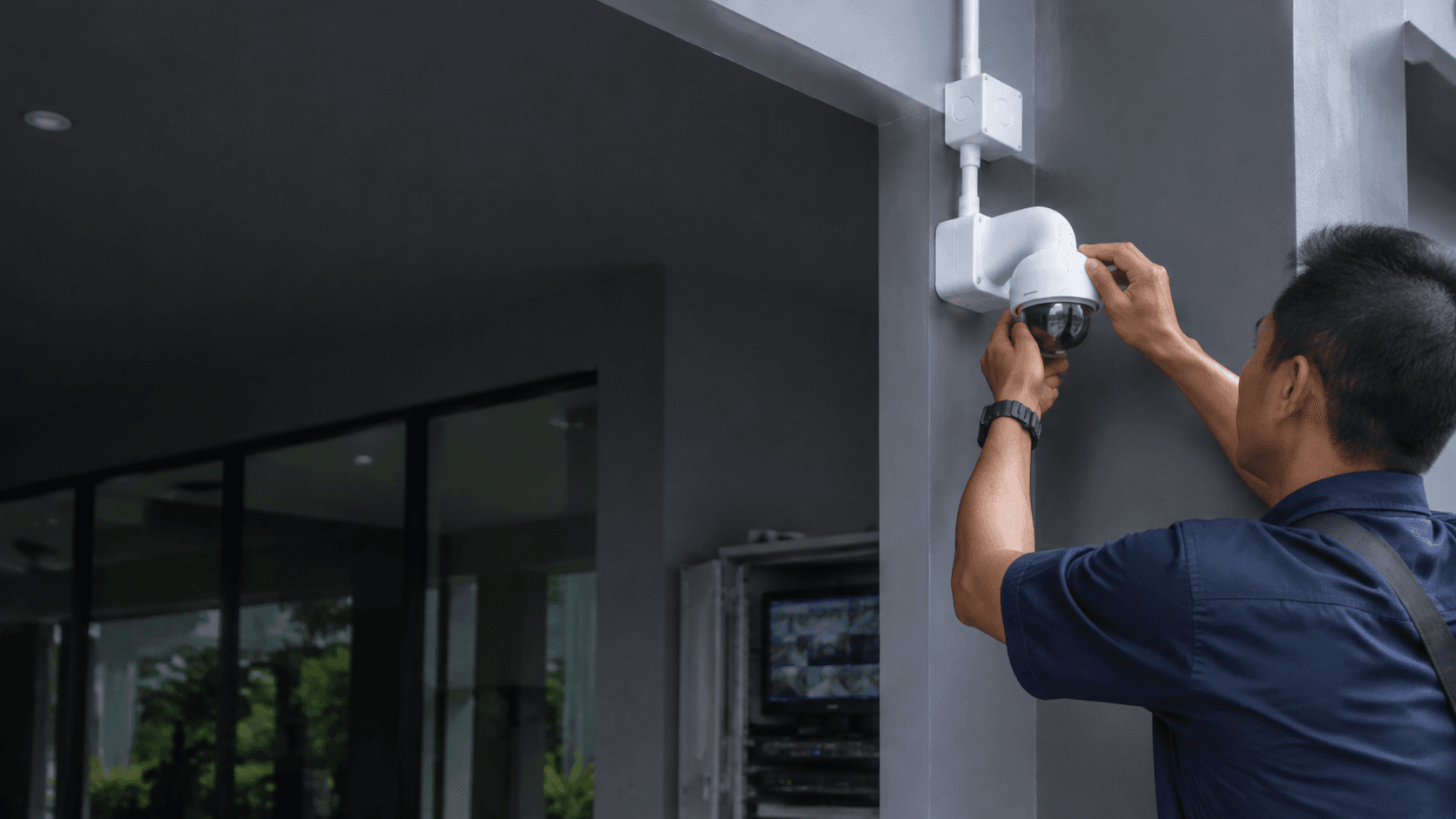
Proper installation determines whether solar powered cameras deliver dependable daily operation. Eyonic's CCTV installation process for conventional systems includes a site survey, system proposal, installation, and handover, and the same discipline applies to solar units. A site survey is especially valuable because it verifies sunlight exposure before mounting hardware.
Follow this sequence when installing solar powered cameras:
- Assess sunlight exposure across the intended mounting area at different times of day, noting any trees, roof overhangs, or neighbouring buildings that cast shade.
- Mount the solar panel at the angle that captures the most direct sun, typically facing the equator's path, and secure it against strong winds.
- Position the camera to cover the required area while keeping the connecting cable short and protected from weather and tampering.
- Connect the panel to the camera, power on the unit, and test the Wi-Fi signal strength and motion detection range before finalising the installation.
The panel and camera do not always need to sit together. A panel mounted on a roof or open wall can feed a camera positioned under an eave where direct sunlight is limited. This separation adds flexibility but requires a longer cable, which must be rated for outdoor use and secured against rodents and weather damage.
Eyonic also recommends checking actual lighting conditions before confirming placement for cameras with specialised features. That guidance applies to solar powered cameras as well, since the lighting environment affects both image quality and solar charging potential.
Comparing Solar Powered Cameras with Traditional CCTV
Solar powered cameras and traditional CCTV serve different situations. Traditional wired CCTV, such as the Hikvision systems Eyonic supplies, runs on continuous power and records around the clock. Solar powered cameras typically operate on motion-triggered events to conserve battery, which means they may miss activity that occurs outside the detection zone or during a wake-up delay.
The main advantages of solar powered cameras are installation flexibility and lower cabling cost. They suit remote locations, rental properties, and sites where running power cables is impractical or expensive. Traditional CCTV offers higher reliability for continuous surveillance, especially for commercial premises that need dependable daily operation.
For a public office like the Kuching Immigration Office, where Eyonic focused on arrival flow, staff areas, and visitor movement, continuous recording from wired cameras provides the dependable coverage that a solar powered camera system may not guarantee. Solar powered cameras are better matched to monitoring a gate, a parking area, or a construction site where occasional gaps in coverage are acceptable.
Maintenance Tips for Solar Powered Cameras
Solar powered cameras require regular upkeep that wired cameras do not. The solar panel must stay clean and free of debris, dust, and bird droppings to maintain charging efficiency. In Malaysia, panels should be wiped down monthly, more often during dry periods when haze and dust accumulate.
Battery health also needs attention. Rechargeable batteries degrade over time, and capacity loss reduces the camera's ability to survive cloudy stretches. Buyers should plan for battery replacement every two to three years, depending on the unit's quality and usage patterns. Checking the camera's power status through its app helps identify a declining battery before the unit goes offline.
Firmware updates and Wi-Fi signal checks are part of routine maintenance. A weak connection forces the camera to retry transmissions, which drains the battery faster. If the signal is marginal, a Wi-Fi extender may be necessary to keep the camera responsive without excessive power draw.
Solar Powered Cameras. Limitations and Practical Advice
Solar powered cameras have real constraints that buyers should weigh before committing. They are not a drop-in replacement for a wired CCTV system when continuous, tamper-proof recording is required. Motion-triggered operation, battery degradation, and weather-dependent charging all introduce points of failure that a wired system avoids.
For buyers in Malaysia, the practical path is to define the monitoring requirement first. A solar powered camera works well for a single entry point, a remote shed, or a temporary site where wiring is not feasible. For broader property coverage or business premises that need reliable daily operation, a wired system with professional installation remains the safer choice.
Eyonic's project experience shows the value of matching the system to the site. The Kuching Immigration Office needed dependable daily operation across multiple zones, which justified a structured wired approach. A solar powered camera system would have introduced charging and connectivity risks that a public office cannot tolerate.
When solar powered cameras do fit the requirement, buyers should verify the panel wattage, battery capacity, and weather rating with the supplier rather than relying on marketing claims. These specifications determine whether the unit will survive Malaysia's monsoon seasons. A site survey before installation, similar to the process Eyonic follows for CCTV work, confirms that the chosen location receives enough sun to keep the camera online.