
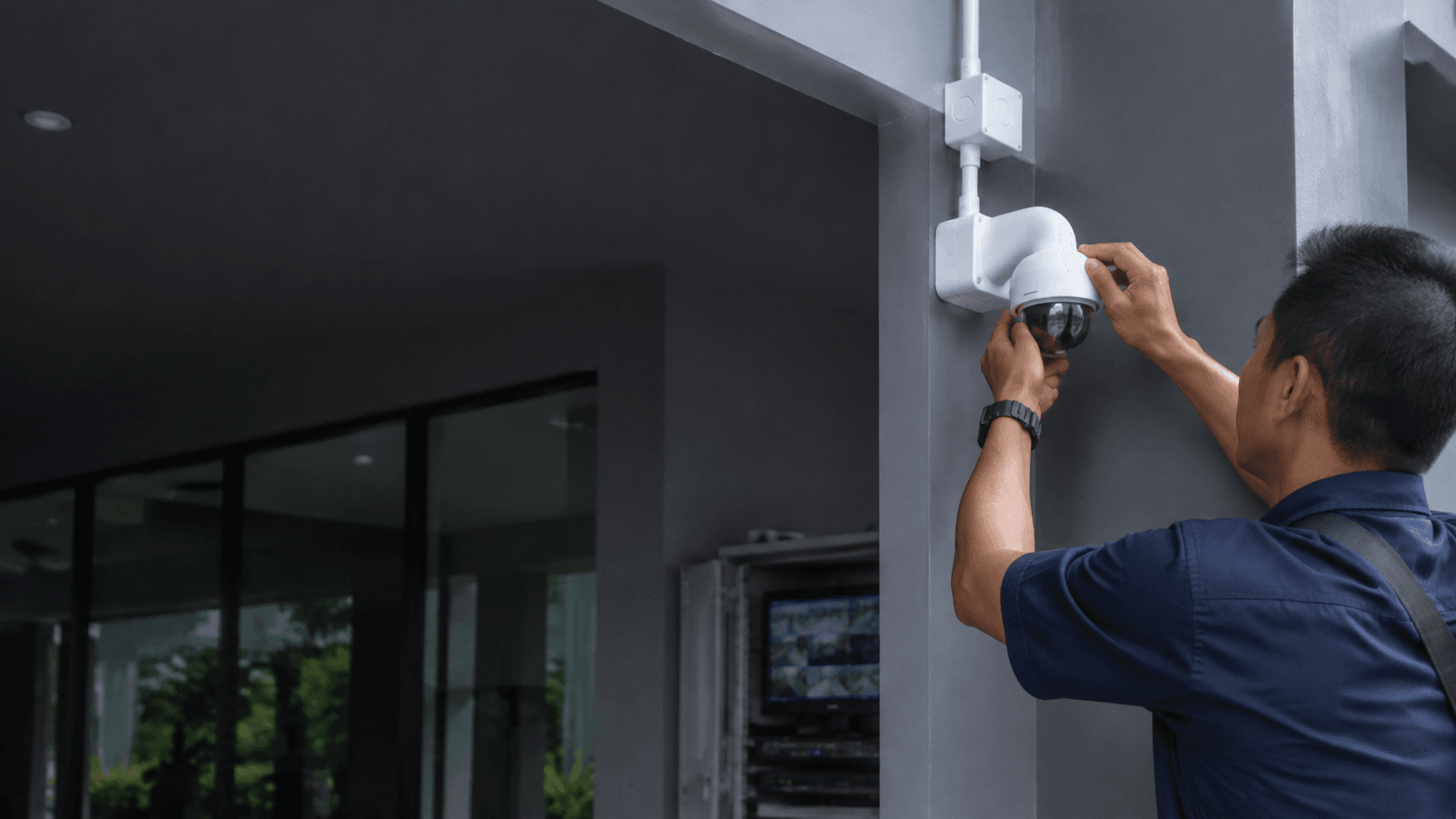
The phrase best cctv camera describes a decision, not a single product. A camera that suits a shophouse entrance in Kuching may be the wrong choice for a factory yard in Bintulu, because the deciding factors are the site, the lighting, the recording setup and the support behind the installation. This guide sets out how Eyonic approaches that decision, using its own project record and installation process as the reference.
Best CCTV Camera Choices Depend on the Site
Site conditions decide more than brand preference does. A camera needs a clear view of the area that matters, a mounting point that can be reached for service, and a cable route that can be installed without damaging the building. Those three conditions vary enormously between a terrace house, a retail shop and an industrial yard.
Eyonic's CCTV service covers planning, supply and installation of monitoring systems with camera placement, recording and remote viewing for homes, offices, shops and industrial sites. That scope matters because placement and recording configuration are decided together. A camera pointed at the right area but recorded at the wrong settings produces footage that is difficult to use later.
Two practical questions shape the shortlist before any model is discussed. First, what needs to be seen: a face at the gate, a vehicle plate at the entrance, or general movement across a compound. Second, who needs to view it and from where, since remote viewing depends on the network available at the site.
What Separates a Good CCTV Camera From a Poor Fit
A good fit covers the required area under the lighting that actually exists at night, records reliably, and can be serviced without scaffolding or dismantling. A poor fit looks acceptable on paper but fails on one of those points.
Common mismatches include a camera aimed at a gate that is lit only by passing headlights, a mounting height that makes cleaning the lens impractical, and a recording configuration that overwrites footage before anyone reviews it. Each of these is a planning issue rather than a product fault, which is why the site survey comes before the proposal.
Budget is part of the fit. Eyonic's published Hikvision CCTV package is priced at RM 1,599 and covers camera supply and setup, basic recording configuration, and mobile viewing handover. Larger projects sit in a different range: the Kuching Immigration Office work carried an approximate budget of RM 12,000 to RM 28,000, and the KTA Sarawak Sdn Bhd office project carried an approximate budget of RM 8,000 to RM 18,000. Those figures describe project scale, not camera specifications.
CCTV Camera Placement and Lighting Checks
Placement is the step where most installations are won or lost. The camera has to see the thing that matters, and the light has to allow it. Eyonic recommends checking actual lighting conditions before confirming placement for ColorVu-style cameras, because low-light performance depends on what is really present at the site rather than what the area looks like during a daytime visit.
A lighting check at the actual operating hours is more useful than a daytime walkthrough. Areas lit by a single wall lamp, areas lit only by vehicle headlights, and areas that are genuinely dark each call for a different placement decision. Reflective surfaces such as polished floors, glass doors and wet tarmac can also affect what a camera records.
Placement also has to respect the building. Cable routes, mounting surfaces and power availability constrain where a camera can go, and a position that is easy to install but hard to service creates a long-term cost. The table below shows how placement priorities were organised on one Eyonic project.
| Area type | What the placement needed to support |
|---|---|
| Arrival flow | Visibility of people entering and moving through the arrival area |
| Staff areas | Coverage of internal working areas used by office staff |
| Visitor movement | Coverage of routes used by members of the public |
| Daily operation | Dependable recording across normal working hours |
The same logic applies at smaller scale. A shop may prioritise the counter and the entrance; a home may prioritise the gate and the car porch. The area list comes first, and the camera positions follow from it.
How Eyonic Plans a CCTV Camera Installation
Eyonic's installation process runs through four stages, and each one produces something the next stage depends on. Skipping the survey usually means revising the proposal later, and skipping the handover usually means the system is used less than it should be.
- Site survey. The site is reviewed for areas to cover, lighting at operating hours, mounting positions, cable routes and network availability.
- System proposal. The survey findings are turned into a proposed system covering camera placement, recording and remote viewing.
- Installation. Cameras, cabling and recording equipment are installed and configured according to the agreed proposal.
- Handover. Recording configuration and mobile viewing are explained so the people running the site can use the system day to day.
The handover stage is where remote viewing is set up and explained. Remote viewing depends on the internet connection at the site, so it is worth confirming that connection before installation rather than after. Recording configuration is also settled at this point: how long footage is kept, and which events are treated as important.
For sites that need more than cameras, Eyonic also supplies and installs alarm systems, autogate systems, keyphone intercom systems and Starlink internet, each published at RM 1,599 for the corresponding package. Combining these on one site can simplify cabling and support, though it also means the planning stage has more to coordinate.
CCTV Camera Project Evidence in Sarawak
Eyonic's project record is concentrated in Sarawak, and it is the clearest available evidence of how the company works. The Kuching Immigration Office project provided practical support for a public office, focused on arrival flow, staff areas, visitor movement and dependable daily operation. Public buildings bring constraints that homes do not: visitor traffic is continuous, staff areas need coverage without disrupting work, and the system has to keep running through normal office hours.
The KTA Sarawak Sdn Bhd project covered an engineering consultancy office in Kuching, supporting staff movement, visitor handling, tidy cabling and clearer daily site control. Tidy cabling is a practical requirement rather than a cosmetic one, since poorly routed cable is harder to maintain and more likely to be disturbed.
Both projects share a pattern. The work started from how the site is used, not from a product list. That is the main difference between this approach and a brand ranking: a ranking tells a reader which camera other people bought, while a site-led plan tells a reader which camera position will actually cover the gate.
Coverage should be stated honestly. The published project evidence is Sarawak-based, and no Malaysia-wide coverage claim is supported by it. Readers outside Sarawak should confirm service availability before planning around it.
CCTV Camera Questions Buyers Ask Before Installing
Does the camera choice or the placement matter more
Placement usually matters more, because a well-placed camera with modest capability outperforms a capable camera pointed at the wrong area. The two are decided together during the site survey.
How is lighting assessed before installation
By checking the actual conditions at the hours the site operates, rather than relying on a daytime impression. Eyonic recommends this check specifically before confirming placement for ColorVu-style cameras.
What does the RM 1 599 package include
The published Hikvision CCTV package at RM 1,599 covers camera supply and setup, basic recording configuration, and mobile viewing handover. It is a starting point for a small installation rather than a specification for every site.
Can cameras be added to an existing system
That depends on the existing recording equipment and cabling, which the site survey is intended to establish. The survey exists precisely to answer this kind of question before any commitment is made.
Who handles the installation
Eyonic plans, supplies and installs the system. Eric Yong founded Eyonic Security Systems and has worked in the industry for more than ten years, with experience in technical installation of digital security solutions for commercial businesses in Sarawak.
Readers comparing options can narrow the field quickly by listing the areas that need coverage, checking the lighting at those areas after dark, and confirming what the recording setup will retain. Those three answers do more to identify a suitable CCTV camera than any brand list, because they describe the site the camera has to work in.
Share your location, property type and required system with Eyonic on WhatsApp at +60 11-5111 7959 for the next practical step.