
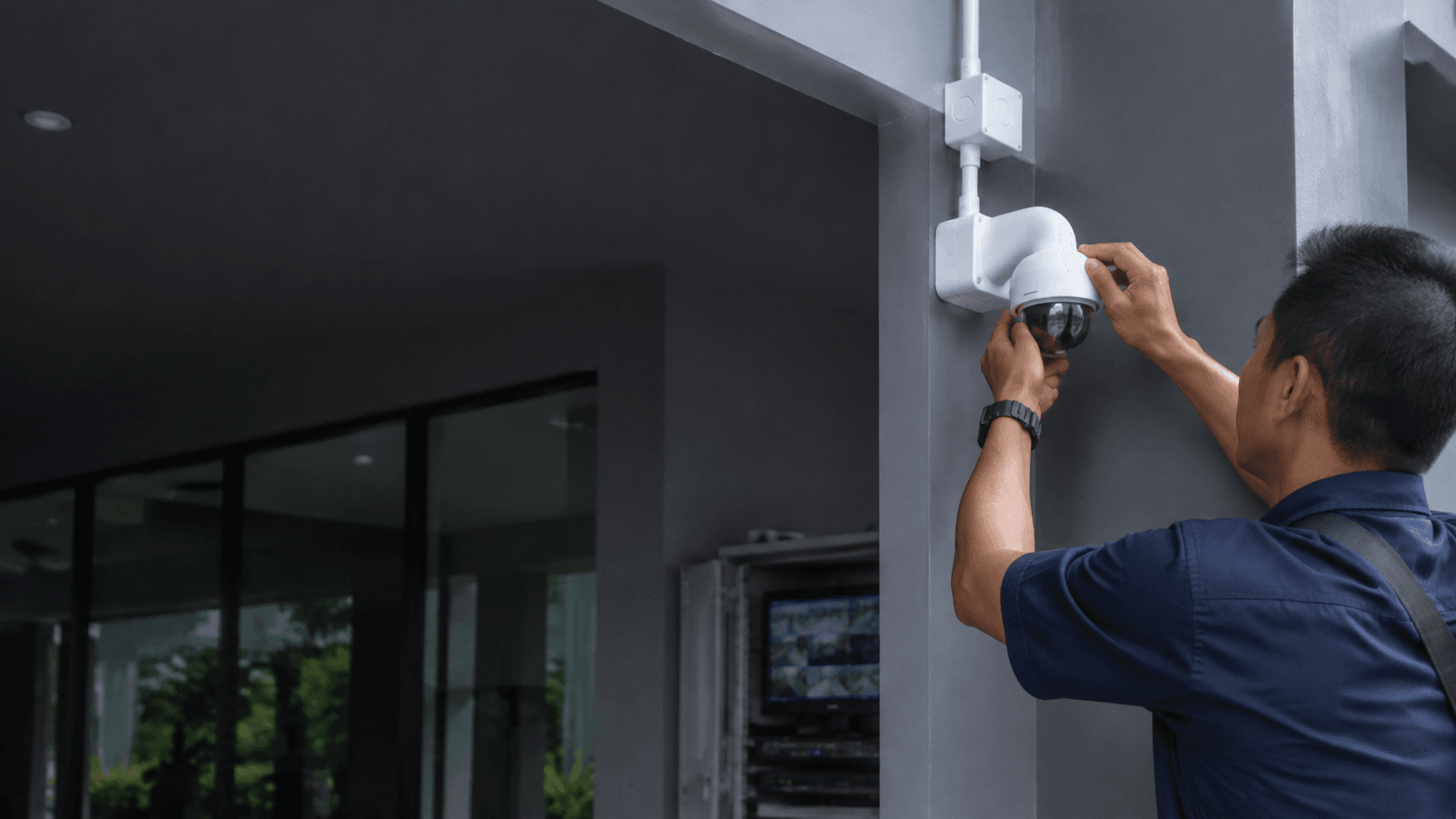
The label matters less than the job the camera has to do. A two megapixel sensor produces roughly two million pixels of image data per frame, which is the same order of detail as 1080p. That is enough to see who crossed a gate, which vehicle entered a yard, or whether a door was left open, provided the camera is close enough to the subject and the scene has usable light.
What it will not do is turn a wide, distant view into a close-up. Detail falls away as the subject moves further from the lens, and no amount of recorder configuration recovers it. That single constraint shapes most of the decisions below.
Hikvision 2mp: What Matters Before You Choose
Resolution describes how much picture information the sensor captures. Two megapixels spread across a wide field of view gives each object fewer pixels than the same two megapixels concentrated on a narrow field of view. A camera aimed at a single entrance therefore shows more usable detail than the same camera aimed across an open car park.
This is why two sites with identical Hikvision 2mp hardware can produce very different footage. The difference is not the camera model. It is how much of the scene each pixel has to cover.
Compression and storage sit alongside resolution. A recorder has to hold footage for a set number of days, and the number of cameras, the resolution and the retention period together determine how much storage the system needs. Raising any one of those three increases the demand on the other two.
Where two megapixels stops being enough
Two megapixels struggles when the requirement is to read a number plate at distance, identify a face across a large open area, or monitor a long perimeter from a single point. Those jobs need either more pixels on the subject or a narrower view that brings the subject closer. Neither is a fault in the camera; both are limits of the resolution class.
Where a 2 megapixel camera fits best
The strongest fit is a defined area with a predictable approach path. Entrances, reception desks, shop counters, gateways, corridors, loading bays and staff-only doors all give a camera a short distance to work across, which is where two megapixels performs at its best.
Smaller premises also benefit. A home, a single shop lot or a small office rarely needs the storage and bandwidth that higher-resolution cameras demand, and a two megapixel system keeps the recorder, the hard drive and the network simpler as a result.
Larger or more complex sites are not excluded, but they usually need a mix. A practical layout might place Hikvision 2mp cameras on doors and counters while reserving higher-resolution units for wide perimeter views. Eyonic's own project work reflects that kind of thinking: the Kuching Immigration Office installation focused on arrival flow, staff areas, visitor movement and dependable daily operation rather than on covering everything from one vantage point.
Matching the camera to the question being asked
Before choosing a resolution, it helps to write down what the footage needs to answer. "Did someone enter after hours?" is a different requirement from "which of these two similar vehicles left at 3pm?" The first is comfortably within two megapixels. The second may not be, depending on distance.
Lighting, lens and placement checks before confirming
Light is the variable most often underestimated. A camera that performs well in daylight can behave very differently after dark, and the gap between a well-lit entrance and an unlit back lane is wider than the gap between most camera models.
Eyonic's guidance on ColorVu-style cameras is to check actual lighting conditions before confirming placement. The same discipline applies to any Hikvision 2mp position: observe the scene at the hours that matter, not just during a daytime survey.
Lens choice and placement work together with light. A narrower lens concentrates detail on a smaller area; a wider lens covers more ground with less detail per object. Height and angle matter too, since a camera mounted too high looks down at heads rather than faces, and a camera pointed into a light source loses contrast across the frame.
Practical checks before confirming a position include:
- Whether the area is lit at night, and by what
- How close the nearest likely subject passes to the lens
- Whether glare, reflective surfaces or strong backlight fall in the frame
- Whether the mounting point is reachable for service without special access
- Whether cabling can run tidily to that point
Recorder, storage and remote viewing considerations
A camera is one part of a system. The recorder determines how many cameras can be connected, how footage is stored and how it is reviewed. Storage capacity determines how far back the recordings reach. Remote viewing determines whether the footage is useful when nobody is on site.
These three are linked. Adding cameras, raising resolution or extending retention all increase storage demand, and a recorder that is undersized for the camera count will limit the system regardless of how good the cameras are.
Remote viewing depends on the network at the premises as much as on the recorder. A stable connection and a sensible upload path matter more than the app itself. Handover should include confirming that live and recorded footage can actually be reached from a phone before the installer leaves.
Compatibility is the other practical constraint. Cameras, recorder and viewing software need to work together, and mixing brands or generations can create gaps that only appear after installation. Keeping the camera and recorder within one ecosystem avoids most of that risk.
Getting a setup surveyed and installed
Resolution decisions are easier to make on site than on paper. A survey establishes where cameras can be mounted, what light is available at each point, how cabling will run and what the recorder needs to handle. Eyonic's CCTV installation process follows a defined sequence:
- Site survey
- System proposal
- Installation
- Handover
The survey comes first because placement decisions depend on the building, not on a product list. The proposal then sets out what will be supplied and installed. Installation follows, and handover covers the recording configuration and mobile viewing setup so the system is usable from day one.
Eyonic's Hikvision CCTV Package is listed at RM 1,599 and covers camera supply and setup, basic recording configuration and mobile viewing handover. That figure describes the package as published, not a quotation for a specific site, since camera count, cable runs and recorder size vary with the property.
For larger or more complex work, project budgets give a sense of scale. The Kuching Immigration Office project carried an approximate budget of RM 12,000 to RM 28,000, and the KTA Sarawak Sdn Bhd office project carried an approximate budget of RM 8,000 to RM 18,000. Both were office environments in Kuching with different coverage demands from a standard residential installation.
Questions that come up before installation
Is two megapixels still worth choosing? For entrances, counters, corridors and defined approach paths, yes. The resolution class remains a practical fit where the subject passes reasonably close to the lens.
Can a two megapixel system be expanded later? That depends on the recorder's channel capacity and the storage headroom left after the first installation. Planning for spare channels at the survey stage avoids replacing the recorder later.
Does resolution alone determine image quality? No. Light, lens choice, mounting height and angle all affect what the footage actually shows, and a well-placed two megapixel camera can outperform a poorly placed higher-resolution one.
What should be confirmed at handover? That recording is running, that retention matches expectations, and that live and recorded footage can be viewed remotely on the devices the site actually uses.
Share your location, property type and required system with Eyonic on WhatsApp at +60 11-5111 7959 for the next practical step.