
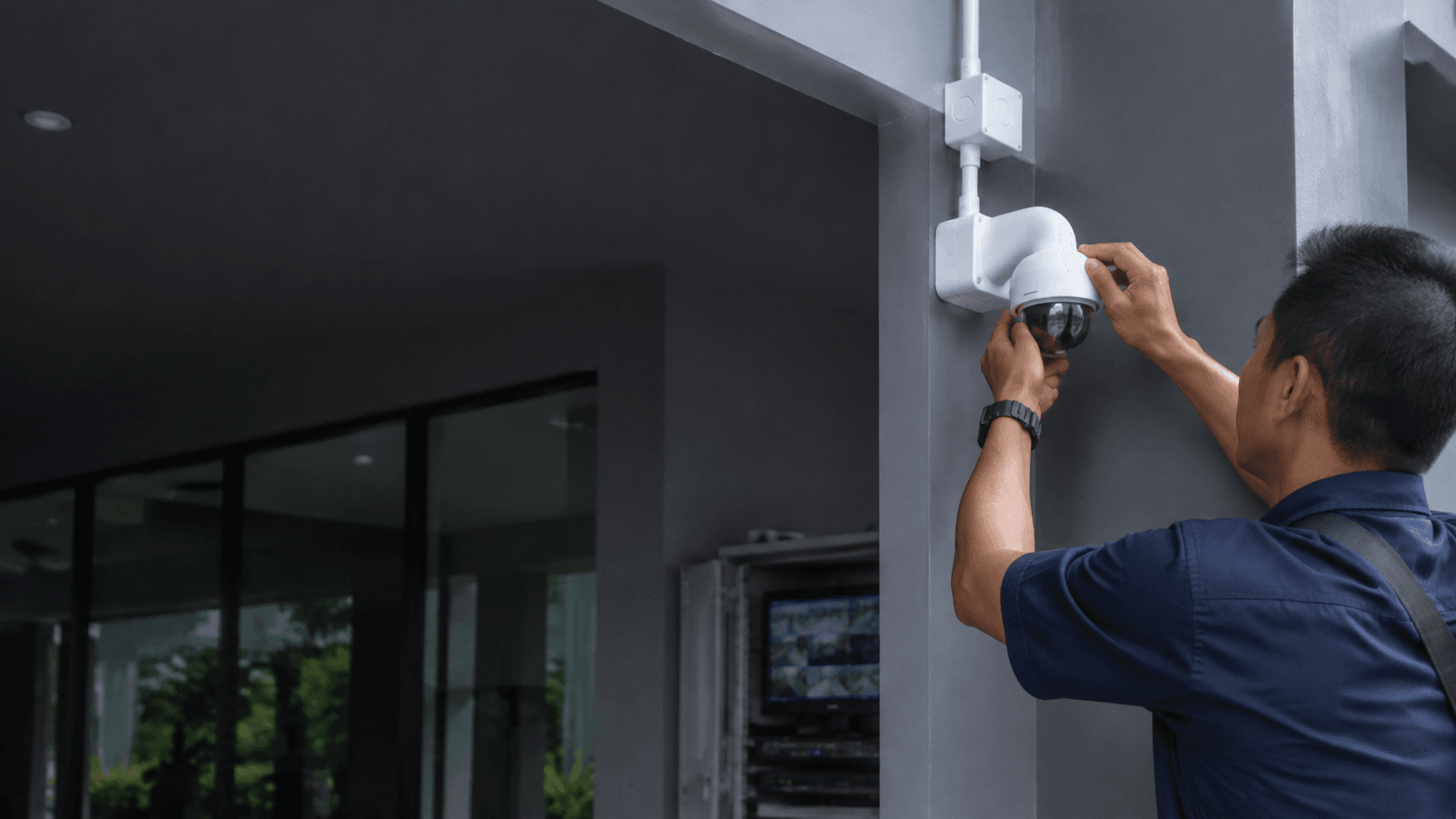
The term ip dvr covers two related things: a digital video recorder that can accept IP cameras, and the network settings that let that recorder be reached from a browser, a mobile app, or a video management program. Most confusion around the phrase comes from mixing those two ideas. A recorder that stores footage locally is one subject; the address that identifies it on a network is another.
Recorders that accept IP cameras fall into a few practical groups. A conventional DVR is built around analog camera inputs, often BNC connectors, and may add a limited number of IP channels on top. A hybrid recorder, sometimes sold as an XVR, keeps analog channels and IP channels in the same box. An NVR drops analog inputs and works with IP cameras only. The group a site needs depends on what cameras already exist, how many channels are required, and whether the cabling can be reused.
Ip Dvr. What Matters Before Choosing
Three constraints decide most installations: camera type, channel count, and network layout. A site with existing analog cabling can often keep that cable and add a hybrid recorder, while a site starting fresh usually has more freedom to choose IP cameras and an NVR. Channel count matters because IP channels consume more bandwidth and storage than analog channels at the same resolution.
Network layout matters just as much. A recorder needs a stable address on the local network so that phones, computers, and browsers can reach it. If the address changes, remote viewing breaks until someone finds the new one. That single detail explains why so many searches about ip dvr setups end up being about addressing rather than about recording.
What is ip dvr?
In everyday use, the phrase describes a recorder that works with IP cameras. Strictly, a DVR digitises and stores video, while an NVR receives video that is already digital from IP cameras. Recorders sold as hybrid or XVR bridge the two by accepting analog and IP cameras together. The label on the box matters less than which cameras the recorder can actually add and record.
Choosing the Right Ip Dvr
The decision sequence below follows the order that avoids rework. Each step removes an option before money is committed.
- Confirm which cameras are already installed and whether they use BNC or Ethernet connections.
- Count the channels needed now, then add room for at least one or two more.
- Check whether the recorder supports the camera protocol in use, such as ONVIF for third-party IP cameras.
- Decide where recordings will be stored and how long they must be kept.
- Plan the network. recorder address, switch or router ports, and how remote viewing will be reached.
- Confirm who will maintain the system and how firmware and passwords will be managed.
Compatibility is the step most often skipped. A recorder may list IP channels but still refuse a specific camera brand unless ONVIF is enabled on the camera and the recorder supports it. Checking that before purchase avoids a recorder that records analog channels happily and leaves the IP channels empty.
Hybrid, analog, and IP-only recorders compared
| Recorder type | Camera inputs | Best fit | Main trade-off |
|---|---|---|---|
| Analog DVR | BNC analog cameras | Sites reusing existing coax cable | Limited or no IP camera support |
| Hybrid DVR / XVR | Analog plus some IP channels | Mixed sites upgrading gradually | IP channel count is usually capped |
| NVR | IP cameras only | New installations with network cabling | Existing analog cameras cannot be reused |
Storage and retention follow from the same decision. More channels, higher resolution, and continuous recording all increase the disk space required. A recorder that meets a channel count on paper can still fall short if the retention period is longer than the installed drive supports.
How To Find The IP Address Of Your Security Camera Recorder
The address is normally visible from the recorder itself, from the router, or from the software used to view the cameras. Working from the recorder is usually fastest because it does not depend on knowing the network layout in advance.
- Connect a monitor and mouse to the recorder and open the main menu.
- Open the network settings, often labelled Network, TCP/IP, or Configuration.
- Read the IPv4 address shown there. It is the recorder's address on the local network.
- If the recorder is set to obtain an address automatically, note whether it is DHCP or fixed.
- Enter that address in a browser on the same network, or add the recorder to the viewing app.
- If the address is unknown, check the router's client list for the recorder's name or MAC address.
Two addresses are often confused. The local address, such as one beginning with 192.168, works only inside the same network. The public address is what an internet connection presents to the outside world, and it is not the recorder's own address. Remote viewing normally relies on the recorder's local address plus a forwarding rule, a manufacturer service, or a peer-to-peer connection rather than on the public address alone.
Default addresses vary by brand and are printed in the recorder's manual. A recorder that has been reset may return to its default address, which can put it on a different subnet from the rest of the network and make it unreachable until the address is corrected.
When the recorder cannot be found
Common causes are a subnet mismatch, a changed DHCP lease, a disabled network port, or a firewall blocking the connection. Checking the recorder's own network screen first separates a recorder problem from a network problem. If the recorder shows an address but a browser cannot reach it, the issue is usually on the network side rather than in the recorder.
Practical Considerations for Systems
Security of the recorder deserves the same attention as camera placement. A recorder reachable from the internet should use a changed default password, current firmware, and a connection method that does not expose the device directly. Separating the camera network from the general office or home network limits what a compromised device can reach.
Placement and lighting affect what the recording is worth. Checking actual lighting conditions before confirming camera positions avoids installing a camera whose footage is unusable at night. The same logic applies to the recorder: it needs ventilation, a stable power supply, and a location that staff can reach without disturbing the site.
Maintenance is modest but not optional. Firmware updates, password changes when staff leave, and periodic checks that recordings are still being written prevent the situation where a system appears to work until footage is needed.
Where professional installation fits
Eyonic Sdn Bhd plans, supplies, and installs CCTV and ELV systems in Sarawak, with a process built around site survey, system proposal, installation, and handover. The company's Kuching Immigration Office project covered arrival flow, staff areas, visitor movement, and dependable daily operation, and its KTA Sarawak Sdn Bhd project covered staff movement, visitor handling, tidy cabling, and clearer daily site control. Founder Eric Yong has worked in technical installation of digital security solutions for commercial businesses in Sarawak for more than 10 years.
Published package pricing starts at RM 1,599 for a Hikvision CCTV package covering camera supply and setup, basic recording configuration, and mobile viewing handover. Comparable RM 1,599 packages are listed for a Hikvision alarm system and an autogate package. Larger commercial work sits in a different range: the Kuching Immigration Office project carried an approximate budget of RM 12,000 to RM 28,000, and the KTA Sarawak Sdn Bhd project an approximate budget of RM 8,000 to RM 18,000.
Making an Informed Choice About
The right answer depends on what already exists. A site with working analog cameras and coax cable usually gets the most value from a hybrid recorder that keeps those cameras and adds IP channels where they matter. A new site with network cabling is usually better served by IP cameras and an NVR, because the recorder and cameras then share one addressing and management model.
For any site, the practical checks are the same: confirm camera compatibility before buying, plan the recorder's address so remote viewing stays stable, size storage against the required retention period, and secure the recorder as carefully as the cameras. Those four items decide whether an ip dvr system stays useful after the first month.
Where the work involves multiple buildings, public areas, or staff and visitor movement, a site survey before purchase is the step that prevents mismatched equipment. Sharing the location, property type, and required system with Eyonic on WhatsApp at +60 11-5111 7959 is one way to start that conversation.