
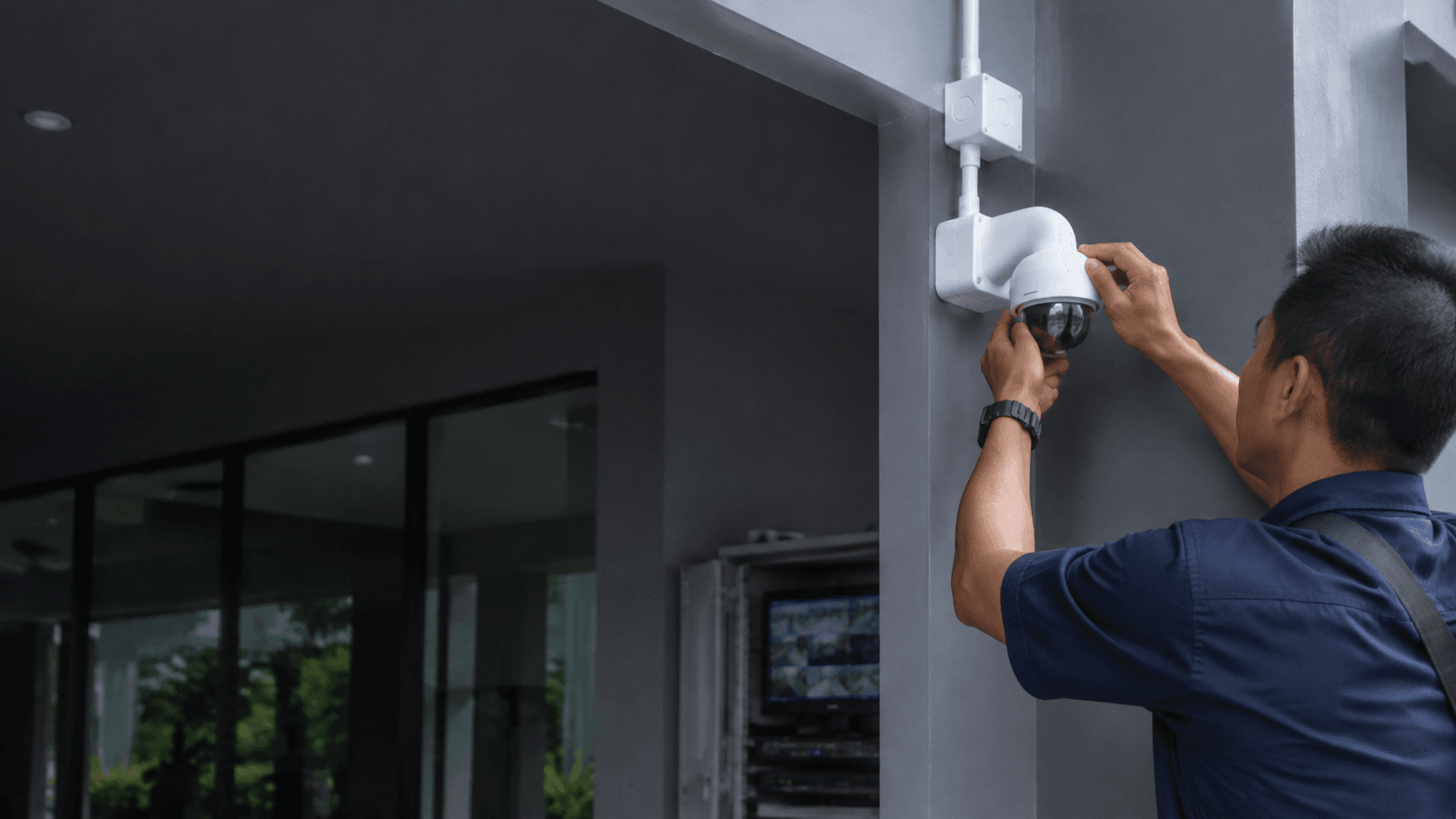
The exact-match query tapo outdoor camera describes a category rather than one model. TP-Link sells several outdoor models under the Tapo name, and the differences that matter most to a Malaysian buyer are power source, Wi-Fi reach, weather exposure and where recordings are kept.
Eyonic Sdn Bhd plans, supplies and installs monitoring systems with camera placement, recording and remote viewing for homes, offices, shops and industrial sites in Sarawak. That work is mostly wired CCTV, so this guide explains where a Tapo Outdoor Camera fits and where it does not.
Tapo Outdoor Camera. What Malaysian Buyers Should Know
A Tapo Outdoor Camera is a consumer-grade Wi-Fi camera built for exterior mounting. It is sold as a retail product, which means the buyer usually handles setup, mounting and troubleshooting rather than receiving a designed system with a recording hub and structured cabling.
That distinction shapes everything else. A retail camera solves a specific viewing problem quickly. A designed CCTV system solves a coverage problem across a whole property, with recording that survives a camera being removed.
Three practical questions decide most purchases:
- Confirm the power source at the exact mounting point, whether that is a nearby outdoor socket, a battery model, or a solar panel.
- Test Wi-Fi signal strength at the mounting height, not inside the house, because exterior walls and distance reduce usable signal.
- Check the mounting surface and angle, since a camera aimed at a wall or a bright light source produces poor footage regardless of resolution.
- Decide where recordings are stored, because local microSD storage sits inside the camera and cloud storage depends on a subscription.
- Review who needs access, since shared app access and multiple users change how a camera should be configured.
- Confirm the property's own constraints, including landlord permission, wiring routes and whether the location is a home, shop or office.
These checks matter more than model names. A camera that cannot hold a stable connection or reach power will underperform no matter how good its specifications look on a product page.
What a Tapo Outdoor Camera Covers
Coverage depends on placement and lens type, not on the brand alone. A fixed camera covers one view. A pan and tilt model can sweep a wider area but only sees one direction at a time, so it can miss movement elsewhere while it is turned away.
Typical uses include a front gate, a driveway, a back door, a side lane between terrace houses, and a small shop entrance. These are single-view problems where one camera answers a specific question about who approached and when.
Coverage weakens in predictable situations. A camera mounted too high shows the tops of heads rather than faces. A camera facing a strong light source loses detail in the shadowed area. A camera covering a wide open compound at night reaches the limit of its illumination before it reaches the edge of the frame.
Eyonic recommends checking actual lighting conditions before confirming placement for ColorVu-style cameras, and the same discipline applies to any outdoor camera. Night performance is a site condition, not a brochure figure.
Power, Network and Weather Conditions
Power is the first constraint. Outdoor cameras generally draw from a nearby socket, an internal battery, or a solar panel paired with a battery. A socket means a weather-protected outdoor outlet within cable reach. A battery model removes that requirement but adds a charging routine. Solar reduces charging frequency but depends on how much direct sun the mounting point receives across the year.
Network is the second constraint. Wi-Fi cameras need usable signal at the mounting point, and signal measured indoors is not a reliable guide to signal at an exterior wall. Distance, wall thickness, metal roofing and neighbouring networks all reduce throughput. A camera that streams poorly will also record poorly if it depends on the same link.
Weather is the third constraint. Outdoor cameras are built to withstand rain and dust, and manufacturers publish weather-resistance ratings for their models. Those ratings describe the camera body, not the cable joint, the plug or the mounting bracket. Water entering a connection point causes failures that a camera rating does not prevent.
Storage sits alongside these three. Local microSD storage keeps recordings in the camera, which is simple and avoids ongoing cost, but the footage leaves with the camera if it is taken. Cloud storage keeps footage off-site but depends on a subscription and a working internet link. Neither option is universally better; the choice follows what the recordings need to prove.
Tapo Outdoor Camera Compared With Wired CCTV
The honest comparison is not brand against brand. It is retail Wi-Fi camera against designed CCTV system, and the two solve different problems.
A Tapo Outdoor Camera suits a household or small premises that needs one or two views, has usable Wi-Fi at the mounting point, and wants to check footage from a phone without a recording hub. Setup is usually a single afternoon, and there is no central recorder to house.
A wired CCTV system suits a property that needs continuous coverage across several areas, recording that continues when a camera is disabled, and cabling that is planned rather than improvised. It costs more upfront and takes longer to install, but it scales to a whole building.
Eyonic's CCTV installation process runs through site survey, system proposal, installation and handover. That sequence exists because placement decisions made before installation are cheaper to correct than placement decisions made after. A survey also surfaces the constraints a buyer cannot see from a product listing, such as where cable can actually run and which corners are genuinely blind.
Completed work shows the same pattern. Eyonic supported a public office in Kuching focused on arrival flow, staff areas, visitor movement and dependable daily operation, and supported engineering consultancy sites in Kuching with staff movement, visitor handling, tidy cabling and clearer daily site control. Both are multi-area coverage problems rather than single-camera problems.
Where a Tapo Outdoor Camera fits well, it fits very well. Where a property needs coverage of an entrance, a loading area, a perimeter and an internal corridor at the same time, a single retail camera will not carry that load.
Installation and Placement Checks
Placement decides footage quality more than any specification. A camera at the right height, aimed at the right angle, with light behind it rather than in front of it, produces usable evidence. A camera in the wrong position produces clips that cannot identify anyone.
Height is a common mistake. Mounting very high protects the camera from reach but angles the lens down onto heads and caps. Mounting at a height that captures faces at the distance people actually approach is usually more useful than mounting out of reach.
Aim matters too. A camera pointed along a wall or into a reflective surface wastes most of its field of view. A camera pointed at a gate or doorway captures the moment that matters.
Lighting is the third check. A camera facing a bright sky, a streetlight or a reflective surface will expose for the bright area and lose the darker area. Testing the view at the times of day that matter, rather than at midday, reveals problems before the camera is fixed in place.
Cabling and mounting surfaces complete the picture. A camera needs a route for power if it is not battery powered, and a surface that holds the bracket securely through wind and rain. Tidy cabling is not cosmetic; exposed joints are where water gets in.
Questions Before Buying a Tapo Outdoor Camera
Does a Tapo Outdoor Camera need a subscription? Not necessarily. Local microSD storage is a common option, and cloud storage is a separate service. The right answer depends on whether footage needs to survive the camera being removed.
Can it work without Wi-Fi? Wi-Fi is the connection method for these cameras, so a usable signal at the mounting point is a practical requirement. Where signal is weak, the placement or the network needs to change before the camera does.
Is it suitable for a shop or office? It can cover a specific entrance or counter view. A business that needs several views, continuous recording and footage that survives tampering is usually better served by a designed system.
What should be confirmed before buying? The power source at the mounting point, the Wi-Fi signal at that height, the lighting at the times that matter, and where recordings will be stored. Those four answers determine whether the camera will do the job.
Who can install it in Sarawak? Eyonic Sdn Bhd plans, supplies and installs monitoring systems with camera placement, recording and remote viewing for homes, offices, shops and industrial sites. Share the location, property type and required system with Eyonic on WhatsApp at +60 11-5111 7959 for the next practical step.