
The exact-match query kwikset entry door locks describes a lock function rather than a single product. Kwikset's own keyed entry page explains the arrangement plainly: a keyed cylinder faces the outside of the home, a thumbturn sits on the interior, and the door can be locked from inside with a push button or from outside with a key. That description is the clearest available definition of the category, and it separates keyed entry from privacy locks, passage sets, and electronic keyless models.
Because the term covers a function, the practical question is not which single lock to buy but which product family delivers that function on a given door. Kwikset sells the function across knobs, levers, handlesets, and deadbolts, and the same exterior keyway logic applies to each.
Kwikset Entry Door Locks. What Matters Before Choosing
Three things decide whether a keyed entry product suits a door: the door's existing bore and preparation, whether the household wants a keyed cylinder at all, and how the lock will be re-keyed or managed over time. Kwikset's product overview organises its catalogue by category and by function, which reflects how buyers actually narrow the field.
Keyed entry is an exterior-door function. It is not intended for bedroom or bathroom doors, where privacy functions apply, and it is not the same as a passage set, which has no locking mechanism. A door that already has a standard bore can usually accept a keyed entry knob, lever, or deadbolt without new carpentry, while a door with no preparation needs boring before any cylinder fits.
Handlesets differ from standalone knobs and levers because they pair a handle with an integrated deadbolt. Kwikset describes handlesets as ideal for front entries precisely because they combine a secure deadbolt with a handle in one unit. That makes them a natural fit for a main entrance where a single coordinated piece of hardware is preferred over a separate handle and deadbolt.
Keyed entry versus keyless entry
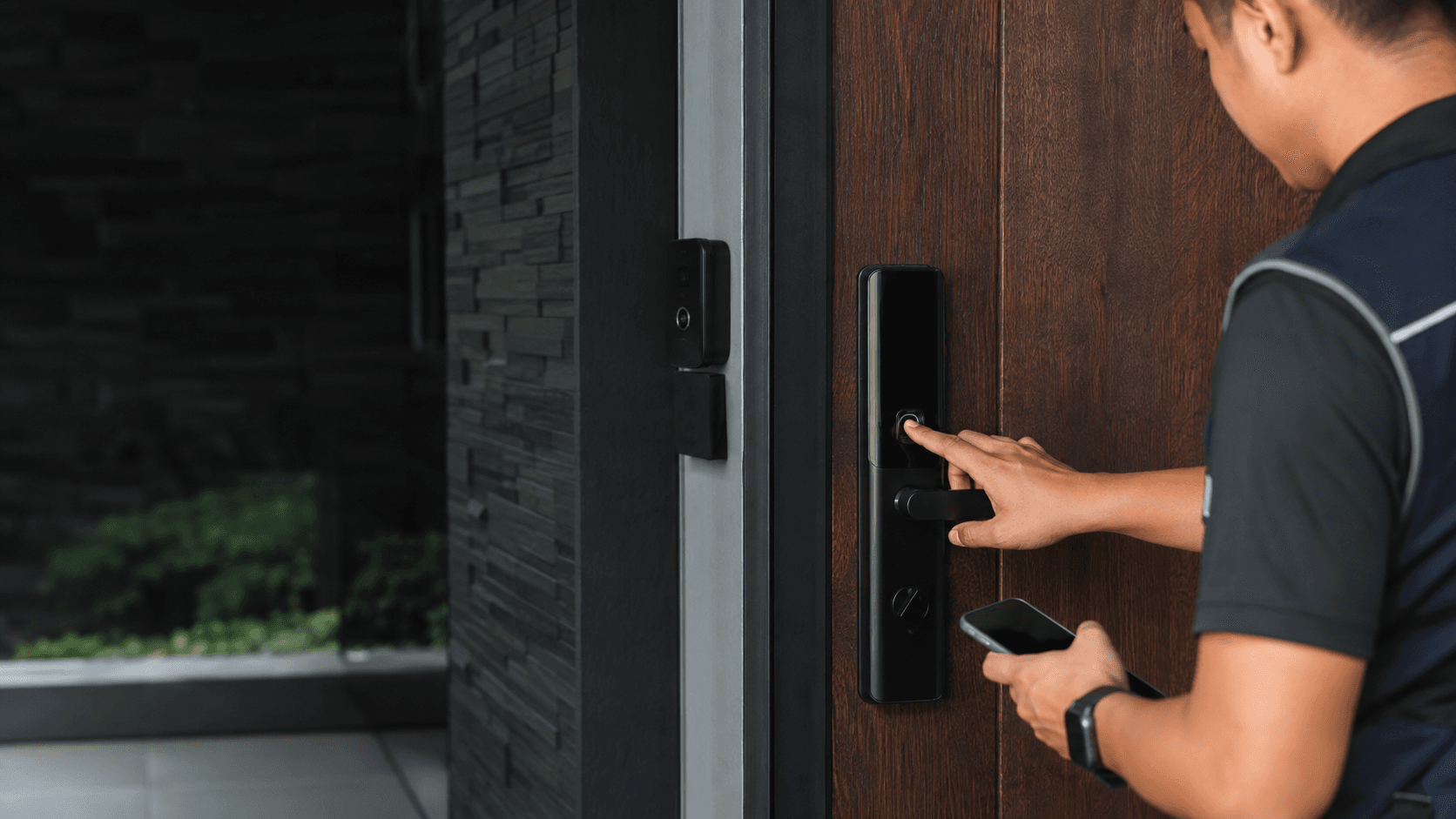
Kwikset also sells keyless electronic locks, including touchscreen and electronic deadbolt models, and its keyless entry page notes that these can be opened with a smartphone or a code rather than a physical key. The trade-off is straightforward. A keyed cylinder depends on a physical key that can be copied, lost, or lent, while an electronic lock depends on power, codes, and app or keypad access. Some households want both, which is why combination products exist.
For a rental or a property with frequent turnover, the re-keying question matters more than the finish. Kwikset's SmartKey re-key technology appears across its product range and is designed to let a cylinder be re-keyed to a new key without removing the lock from the door. That is a genuine operational difference for landlords and property managers, not a cosmetic one.
Choosing the Right Kwikset Entry Door Locks
A short sequence keeps the decision grounded in the door rather than the showroom display.
- Confirm the door is an exterior door and that keyed entry is the correct function for it.
- Measure the existing bore and backset, or confirm the door is unprepared and will need boring.
- Decide between a standalone knob or lever, a handleset with an integrated deadbolt, or an electronic keyless model.
- Check whether the chosen product uses SmartKey re-key technology if key changes are likely.
- Match the finish and trim to the rest of the door hardware so the entrance reads as one design.
- Confirm the strike plate and latch align with the existing frame before final tightening.
Steps two and six cause the most installation problems. A lock that fits the bore but misses the strike will not latch cleanly, and a handleset with an integrated deadbolt needs both the handle and the deadbolt bore to line up with the frame.
What is kwikset entry door locks?
Kwikset entry door locks is the category name for exterior locking hardware that uses a keyed cylinder on the outside and an interior thumbturn or push button. The phrase describes a function, so the same term covers a keyed knob, a keyed lever, a keyed handleset, and a keyed deadbolt. Kwikset's keyed entry page is the reference point for that definition, and it is the page that most clearly separates keyed entry from other lock functions.
That distinction matters when searching a catalogue. Filtering by function rather than by product type returns every keyed entry option at once, which is faster than browsing knobs, then levers, then handlesets separately.
Keyed Entry Products and How They Differ
Kwikset's catalogue spans door locks, door hardware, smart locks, and SmartKey technology, and the keyed entry function appears across several of those groups. The differences between them are mostly about form and about whether the deadbolt is separate or integrated.
| Product type | Locking arrangement | Typical fit |
|---|---|---|
| Keyed entry knob or lever | Keyed cylinder outside, thumbturn or push button inside | Exterior doors where a separate deadbolt is already present or not required |
| Handleset | Handle plus integrated deadbolt in one unit | Front entries where a coordinated handle and deadbolt are preferred |
| Keyed deadbolt | Keyed cylinder outside, thumbturn inside, no handle | Doors that already have a handle or knob and need locking only |
| Electronic keyless lock | Keypad, touchscreen, or app access instead of a key | Entries where code or smartphone access is preferred over a physical key |
The table is a decision aid, not a specification sheet. The right row depends on what is already on the door and whether the household wants to carry a key.
Where SmartKey re-keying changes the calculation
SmartKey re-key technology is one of the few features that alters long-term ownership rather than day-one appearance. A cylinder that can be re-keyed to a new key without removal is useful after a tenant moves out, after a key is lost, or after a renovation crew has held a copy. Kwikset presents SmartKey Security as a core part of its range, and it appears across multiple product families rather than being limited to one line.
The constraint is that re-keying still requires a compatible key blank and a deliberate procedure. It is not automatic, and it does not replace the need to physically secure a property during a turnover.
Practical Considerations for
Door condition is the most common reason a keyed entry lock disappoints. A door that has swollen, dropped, or been re-hung may not align with the strike even when the lock itself is correct. Checking the door's swing and latch alignment before purchase avoids most of that frustration.
Finish is the second consideration. Kwikset offers multiple styles ranging from traditional to modern across its handleset collections, and mixing finishes on the same entrance is visually obvious. Matching the keyed entry hardware to the existing hinges and any adjacent hardware keeps the entrance coherent.
Security expectations deserve an honest note. A keyed entry lock controls access through one door. It does not monitor the property, record who arrives, or alert anyone when a door is opened. Households that want that layer usually pair door hardware with a separate monitoring or alarm system, which is a different category of product with its own planning requirements.
Where door hardware fits alongside a wider security setup
In Sarawak, Eyonic Sdn Bhd plans, supplies, and installs monitoring systems with camera placement, recording, and remote viewing for homes, offices, shops, and industrial sites. The company's product reviews note that smart locks work best when door condition, user roles, and a backup entry method are reviewed before installation, and that for business use the choice between a standalone smart lock and an access-control panel is worth checking first.
That review point applies directly to keyed entry hardware. A single keyed lock on a home entrance is a simple decision. A keyed or electronic lock on an office door that many people use is a different problem, because permissions, backup access, and audit needs all change the answer. Eyonic's completed work includes the Kuching Immigration Office project, which focused on arrival flow, staff areas, visitor movement, and dependable daily operation, and the KTA Sarawak Sdn Bhd project, which supported staff movement, visitor handling, and tidy cabling in a Kuching office.
For readers weighing door hardware as part of a broader setup, the useful comparison is between what a lock does and what a monitoring system does. A lock decides who can open a door. A camera or alarm system records or reports what happens around it. Neither substitutes for the other.
Making an Informed Choice About
The decision narrows quickly once the door and the household are known. An exterior door that already has a deadbolt usually needs only a keyed knob or lever. A front entrance that needs both a handle and a deadbolt is a handleset case. A property where keys change hands often benefits from SmartKey re-keying. A property where codes and remote access matter more than keys points toward an electronic model instead.
Buyers in Malaysia should also confirm availability and finish options locally before committing to a specific collection, since catalogue breadth does not always match in-store stock. Checking the actual product on the door, rather than only in a listing, remains the most reliable step.
Where door hardware is one part of a larger security plan, Eyonic can advise on how it fits with monitoring, alarms, or access control. Share your location, property type and required system with Eyonic on WhatsApp at +60 11-5111 7959 for the next practical step.