
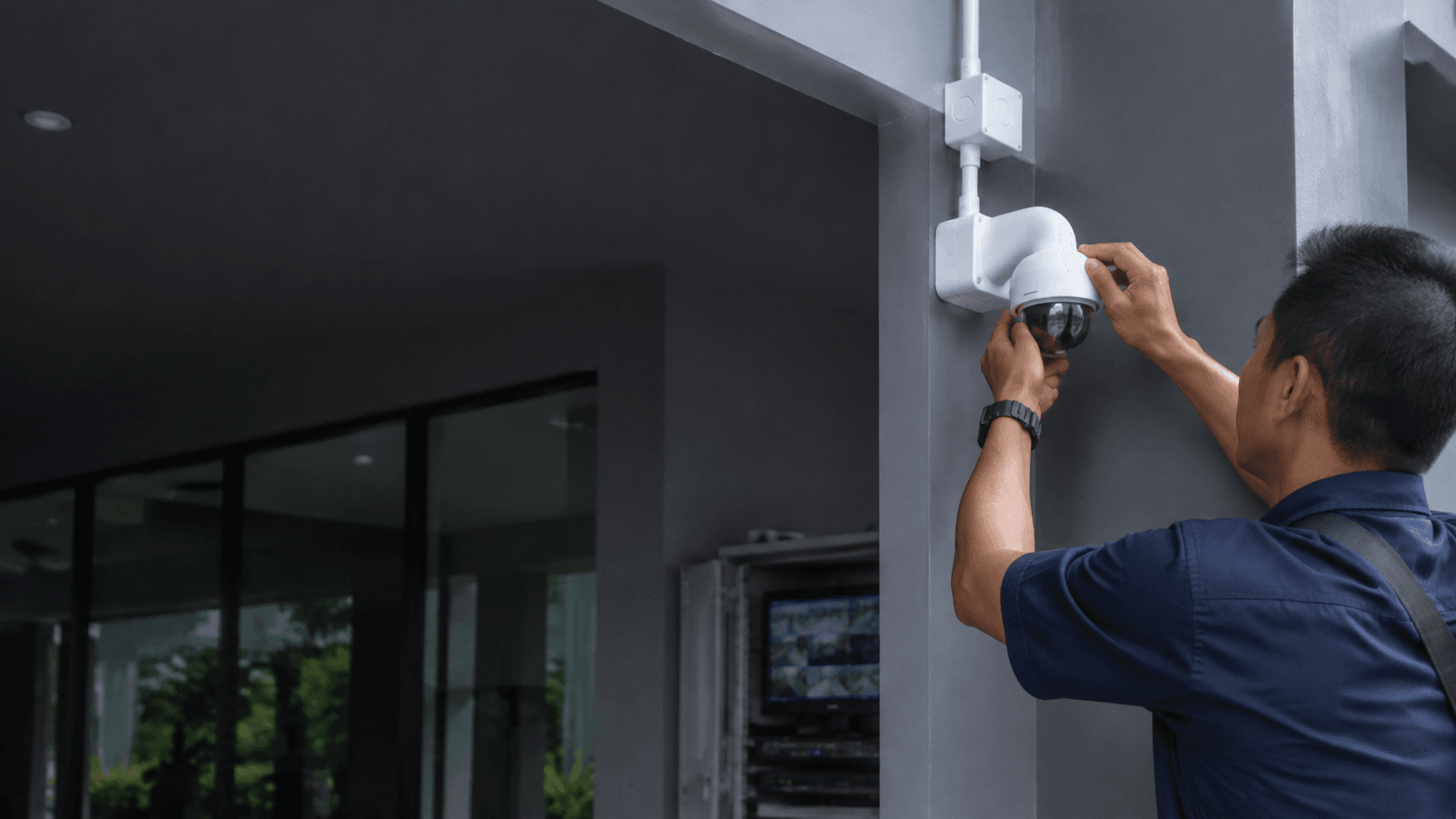
Outdoor coverage is the part of a home security system that most often gets decided by guesswork. A camera bought first and positioned later tends to watch a wall, a tree, or the inside of its own bracket. The order that works is the reverse: walk the property, decide what each position must see, then choose equipment that suits the light and the mounting point.
Home Security Systems With Outdoor Cameras: What Matters Before You Choose
Coverage is not the same as having cameras. A house has a small number of predictable approach routes, and each one has a different job.
The main entry is usually the front gate or car porch, where the useful frame shows a person approaching and a vehicle arriving. The side and rear of the house carry the routes that are least visible from inside, which is why they are often the first positions a household wants covered. A back door, a service yard, or a lane behind the property each create their own sightline, and a camera aimed at one rarely covers another.
What a position must deliver is a usable image at the moment something happens, not a wide decorative view. That means the frame has to include the approach, not just the point of arrival, and the recording has to be retrievable afterwards. Eyonic plans, supplies and installs monitoring systems with camera placement, recording and remote viewing for homes, offices, shops and industrial sites, which keeps those three decisions in one scope rather than three separate purchases.
Two constraints shape almost every house. The first is where a cable or power source can actually reach, because a position with no practical route for power and signal is not a position. The second is what the household needs to see day to day, since a system that is difficult to operate stops being used.
How a site survey decides camera placement
A site survey is the step that converts a general wish for outdoor cameras into specific mounting points. It is also the step that most often changes the plan.
The survey looks at the property rather than the product list. Approach routes, boundary lines, existing lighting, roof and eave structure, and the places where cabling can run tidily all affect where a camera can go and what it will see. A position that looks obvious on a floor plan can turn out to face a neighbour's wall, catch a passing road, or sit where no cable can reach without visible surface trunking.
Placement also decides how many cameras a house genuinely needs. Two well-chosen positions can cover a front approach and a rear route; adding a third camera that duplicates an existing view adds cost without adding information. The survey is where that trade-off gets settled, before anything is ordered.
Eyonic's CCTV installation process includes site survey, system proposal, installation, and handover, so the placement decision is made on site and then written into a proposal rather than agreed verbally and adjusted during fitting.
Lighting conditions before confirming a camera position
Light is the factor that most often invalidates an otherwise sensible camera position. A spot that looks well lit at midday can be almost black at the hour when coverage matters most.
Eyonic recommends checking actual lighting conditions before confirming placement for ColorVu-style cameras. That check is practical rather than technical: observe the position at night, note whether a porch light, street lamp or neighbouring light spills into the frame, and confirm whether the camera's own illumination would be doing the work. A position facing a bright light source produces glare and silhouette; a position in deep shadow with no ambient light needs a different approach entirely.
The same check applies to reflections. Glass, polished car bodies and wet ground can bounce light back into a lens, and a camera aimed across a shiny surface at night can return a less useful image than one aimed along the approach instead. Confirming lighting before the bracket goes up avoids re-drilling a wall later.
A numbered walkthrough from survey to handover
The sequence below follows the four stages Eyonic uses for CCTV installation work. Each stage produces something the next one depends on.
- Site survey. The property is walked to identify approach routes, boundary lines, existing lighting, mounting options and practical cable paths. This is where the number of cameras and their rough positions are decided.
- System proposal. The survey findings are turned into a written proposal covering camera positions, recording, remote viewing and the equipment that suits the property. The proposal is the point where scope and cost are agreed before any work starts.
- Installation. Cameras are mounted at the confirmed positions, cabling is run, and the recorder and network settings are configured so recording and remote viewing work as intended.
- Handover. The household is shown how to view live footage, find recorded clips and use the system day to day, with the setup tested before the job is treated as complete.
Handover is the stage that decides whether the system is actually used. A recorder full of footage that nobody can retrieve is not coverage. The handover step is where remote viewing is confirmed on the household's own devices and where questions about daily operation get answered while the installer is still on site.
Where the evidence stops and what still needs checking
Several details that appear on most outdoor camera pages cannot be stated here, because the available evidence does not cover them. Camera resolution, night-vision range, field of view, weather rating, storage capacity and warranty terms are not documented for any specific outdoor camera in the material behind this page, so no figures are given.
The same applies to running costs. No subscription or monitoring fee for a home system is documented, and no installation timeline, cable length or camera count per house type is stated. Malaysian requirements covering recording, signage or data protection are also outside the available evidence, so any such question needs a direct answer rather than an assumption.
What is documented is the shape of the work. Eyonic completed a project for the Kuching Immigration Office, focused on arrival flow, staff areas, visitor movement and dependable daily operation, and a separate project for KTA Sarawak Sdn Bhd covering staff movement, visitor handling and tidy cabling at an office in Kuching. Both are commercial sites rather than houses, but they show the same planning logic that applies to a home: decide what each position must see, then install so the system runs reliably every day.
For a house in Sarawak, the practical next step is a survey rather than a shopping list. Share the location, property type and the system required with Eyonic on WhatsApp at +60 11-5111 7959, and the placement and lighting questions can be settled against the actual property.