
Automatic Sliding Driveway Gates Installation: What Matters Before You Choose
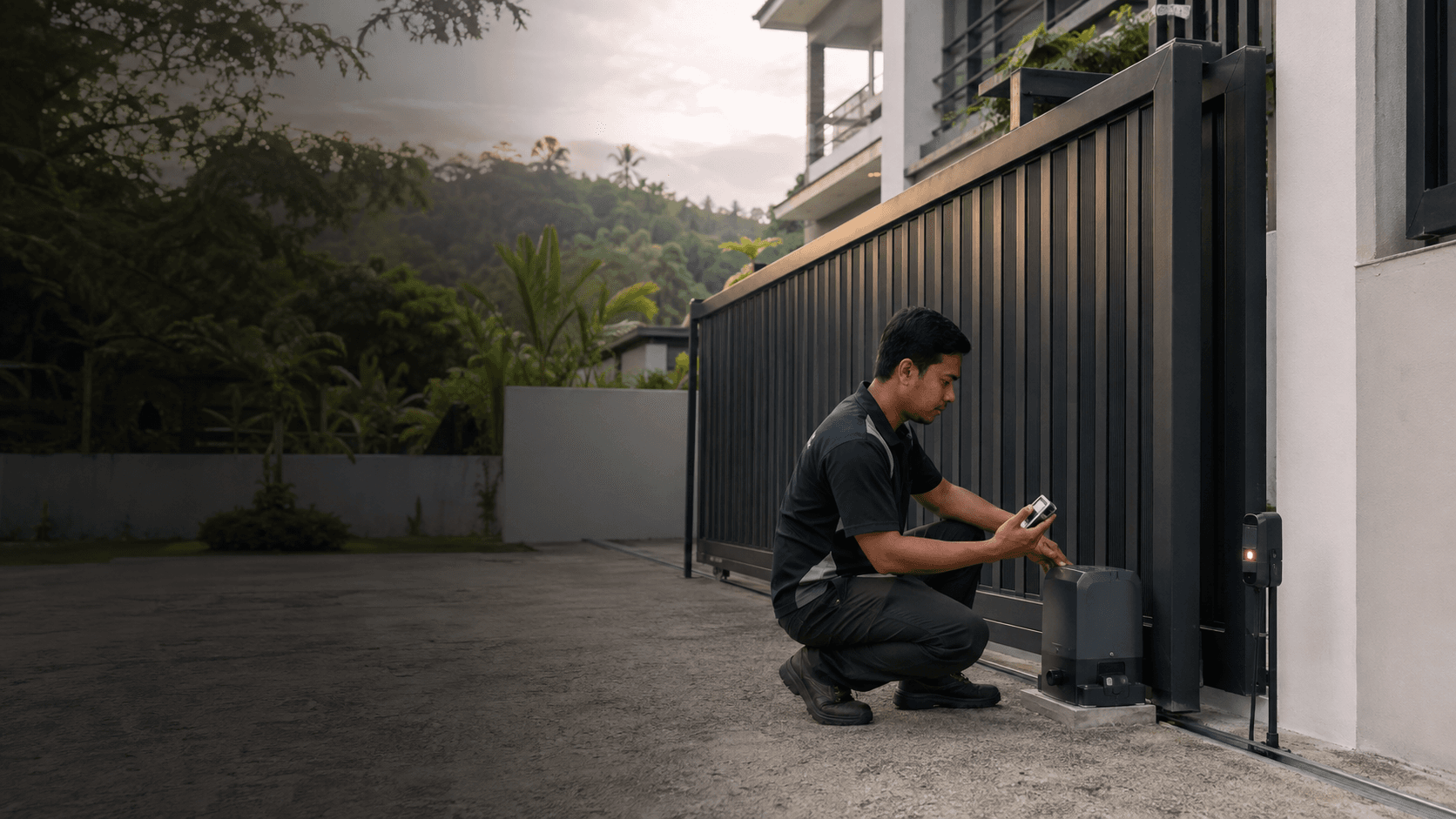
Automatic sliding driveway gates installation differs from swing gate work because the gate panel moves sideways along a track or cantilever system rather than opening outward. This makes the approach valuable for driveways where a swing gate would need too much clearance. Before committing to automatic sliding driveway gates installation, property owners should confirm the available lateral space, the gate's weight, and the power source at the gate location.
The decision sequence below reflects the practical order that installers and suppliers commonly follow when planning automatic sliding driveway gates installation.
- Measure the driveway opening width and the available slide-back space beside the gate.
- Confirm the ground slope and surface condition where the track or cantilever posts will sit.
- Select a gate material and panel weight that the operator can move reliably.
- Choose an operator type based on gate weight, usage frequency, and available power.
- Arrange a site survey to verify clearances, safety sensor placement, and access control needs.
Choosing the Right Automatic Sliding Driveway Gates Installation
The main decision in automatic sliding driveway gates installation is whether a track-based or cantilever system fits the site. Track slide gates run on a ground rail and suit flat, level driveways. Cantilever slide gates use a counterbalance system with posts and rollers, so no ground track is needed; this makes them a better fit for driveways where a rail would collect debris or create a trip hazard.
Gate material affects both cost and long-term performance. Steel and wrought iron offer strength and a traditional look but require rust protection. Aluminum resists corrosion and weighs less, which can reduce the operator size needed. Wood provides privacy but needs more maintenance in humid climates. Vinyl is low-maintenance but less common for heavy automated panels.
The operator is the mechanical heart of automatic sliding driveway gates installation. Residential operators typically handle gates up to a certain weight range, while light commercial units manage heavier panels and more frequent cycles. Solar-ready operators suit remote locations without convenient mains power, though battery backup and panel sizing must be planned properly.
What Is Automatic Sliding Driveway Gates Installation?
Automatic sliding driveway gates installation refers to the process of fitting a motorised gate that opens horizontally along a track or cantilever system. The work involves mounting the gate panel, installing the operator and its control board, running power and safety wiring, and configuring access devices such as remotes, keypads, or intercoms. A complete installation also includes safety features like photo beams and edge sensors to stop the gate if something blocks its path.
For properties in Sarawak, Eyonic Sdn Bhd provides autogate installation services alongside its CCTV and alarm system work. The company's approach to security installations follows a clear sequence: site survey, system proposal, installation, and handover. This same practical structure applies to gate automation projects, where site conditions determine the right equipment and placement.
Automatic Sliding Driveway Gates — Costs and Considerations
The cost of automatic sliding driveway gates installation varies widely based on gate size, material, operator quality, and site preparation. Eyonic lists an autogate package at RM 1599, which provides a baseline for basic automation work in the Malaysian market. More complex installations with heavier gates, longer runs, or additional access control will cost more.
Material costs differ noticeably. A basic steel panel is generally the most economical option, while aluminium, wood, and wrought iron sit at higher price points. The operator adds another significant portion of the total. Higher-end operators include features like soft start and stop, battery backup, and smart home integration, all of which raise the price.
Site preparation can add unexpected expense. A sloping driveway may require a stepped track or a cantilever design. Poor drainage near the track can lead to premature wear. Long cable runs from the power source to the gate increase labour and material costs. These factors explain why a site survey before automatic sliding driveway gates installation is essential for accurate budgeting.
Practical Considerations for Automatic Sliding Driveway Gates Installation
Site Survey and Planning
A proper site survey is the first practical step in automatic sliding driveway gates installation. The surveyor checks the driveway width, the available space for the gate to slide into, the ground conditions, and the proximity of power. Eyonic's installation process for security systems begins with a site survey, and gate automation follows the same logic. Without accurate site measurements, the wrong gate size or operator type can be specified.
Power and Backup
Automatic sliding driveway gates installation requires a reliable power source at the gate location. Mains power is the standard choice, but solar-powered systems work where running cable is impractical. Battery backup ensures the gate remains operable during power outages, which matters for security-conscious properties. The operator's power consumption and the frequency of use determine the battery capacity needed.
Safety Features
Safety is a critical part of automatic sliding driveway gates installation. Photo beams detect obstructions in the gate's path and reverse the motion. Edge sensors stop the gate on contact. Warning lights and audible alarms alert people nearby when the gate moves. These features are not optional extras; they are essential for preventing injury to pedestrians, children, and pets.
Access Control Integration
Automatic sliding driveway gates installation often includes access control devices beyond the basic remote. Keypads allow entry without a remote. Intercom systems let occupants verify visitors before opening the gate. Smart locks and access-control panels can be integrated for business use, though the right choice depends on user roles and backup methods. Eyonic's experience with keyphone intercom and access control installations supports this integrated approach.
Maintenance Requirements
Sliding gates need regular maintenance to operate reliably. Track-based systems require cleaning to remove debris that can block the rollers. Cantilever systems need periodic checks on the rollers and posts. The operator benefits from annual inspection of the motor, gears, and safety sensors. In humid or coastal environments, rust protection on steel components is a recurring task.
Making an Informed Choice About
Automatic sliding driveway gates installation is a practical upgrade for properties where a swing gate would not work well. The sliding mechanism saves space, handles sloped driveways better, and provides a secure, automated entrance. The key is matching the gate type, material, and operator to the specific site conditions.
Property owners in Sarawak considering automatic sliding driveway gates installation should weigh the initial cost against the long-term benefits of security and convenience. A basic autogate package from Eyonic starts at RM 1599, but the final price depends on the gate panel, operator, and site work required. The company's completed projects, such as the Kuching Immigration Office and KTA Sarawak Sdn Bhd, demonstrate experience with practical security installations for public and commercial sites.
The most reliable path forward is a site survey that confirms the measurements, power availability, and safety requirements before any equipment is purchased. This prevents costly mistakes and ensures the automatic sliding driveway gates installation matches the property's actual needs. Sharing the location, property type, and required system with a qualified installer is the next practical step toward a gate that operates safely and dependably for years.