
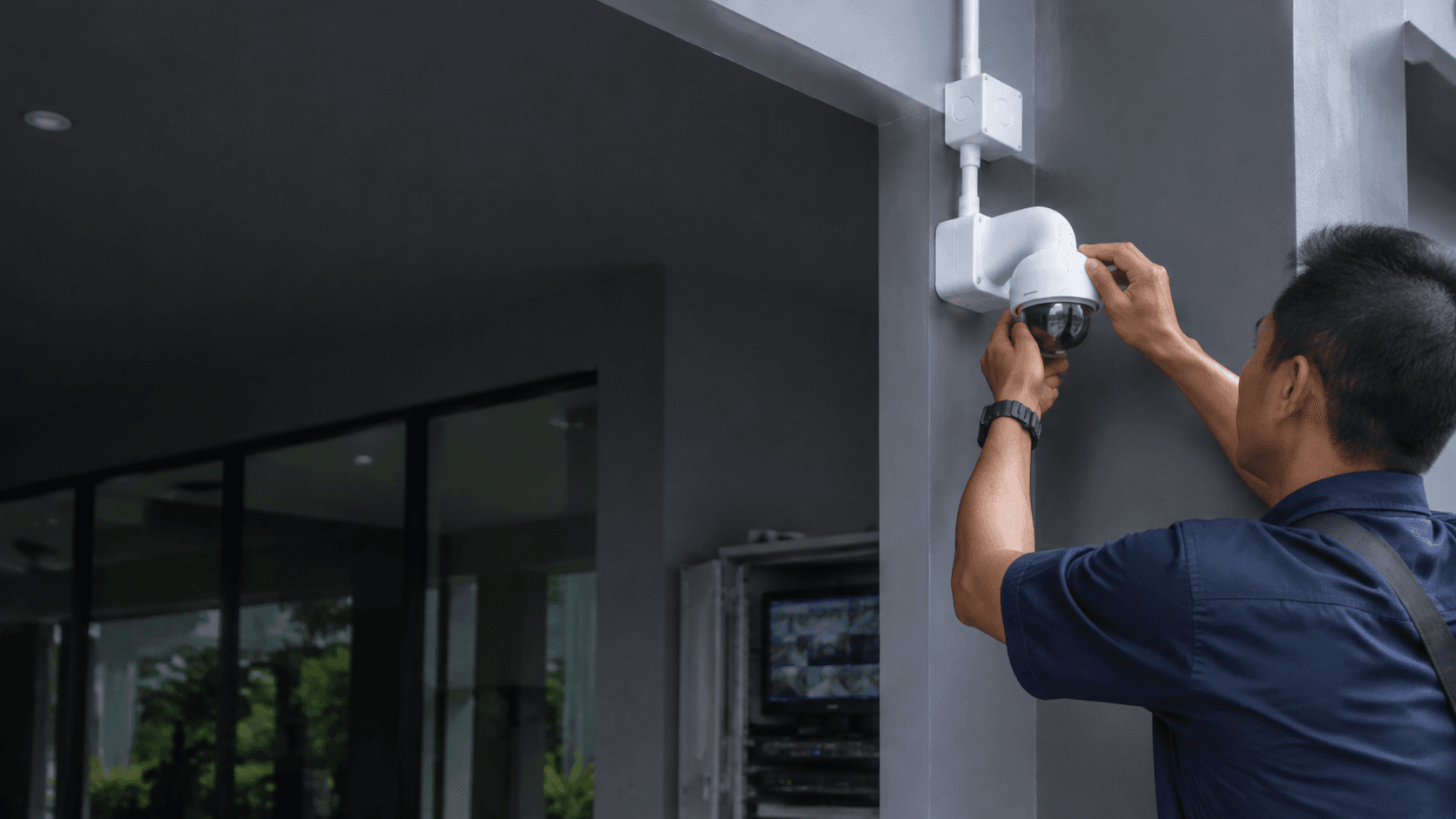
How CCTV Installation Works in Malaysia
CCTV installation in Malaysia is not a single visit to mount cameras. The work starts before any drilling happens, with an assessment of the actual property. Eyonic's documented process for CCTV installation covers four stages: site survey, system proposal, installation, and handover. That sequence keeps the final system aligned with the building rather than forcing a generic kit into place.
The site survey determines where cameras can see what matters. For a ColorVu-style camera, Eyonic recommends checking actual lighting conditions before confirming placement, because low-light performance depends on the real environment, not the brochure. A camera aimed at a bright sign or a shaded walkway will capture different detail than the same model mounted elsewhere.
After the survey comes the system proposal. This stage translates the physical findings into a concrete plan: which cameras, where the network video recorder (NVR) sits, how cabling runs, and how remote viewing will work. The proposal is the point where expectations about coverage and cost are set before installation begins.
The CCTV Installation Process from Survey to Handover
The practical flow of a professional CCTV installation follows a repeatable order. Each step depends on the one before it, so skipping the survey usually creates problems later.
- Site survey to map entry points, blind spots, lighting, and cable routes.
- System proposal covering camera models, NVR placement, and recording needs.
- Installation of cameras, cabling, and recording equipment with tidy routing.
- Handover with remote viewing setup and a walkthrough of daily operation.
The handover stage matters more than most buyers expect. A system that records but cannot be viewed remotely, or one where the owner does not know how to check footage, fails its purpose. Eyonic's approach to CCTV installation includes making the system usable after the team leaves the site.
What Professional CCTV Installation Includes
A professional CCTV installation covers more than camera mounting. The scope typically includes camera placement, NVR setup, and remote viewing configuration, which are the three functions that make a monitoring system useful. Placement decides what is captured, the NVR decides how it is stored, and remote viewing decides whether the owner can actually use the footage.
Remote viewing is a common point of confusion. Many buyers assume any camera can stream to a phone without setup. In practice, the NVR must be configured, the network must allow access, and the viewing app must be linked to the recorder. That configuration is part of the installation work, not an automatic feature.
For businesses, the requirements shift. A shop needs coverage of the counter and exits. An office needs staff areas and visitor handling. Eyonic's completed project for the Kuching Immigration Office focused on arrival flow, staff areas, visitor movement, and dependable daily operation, which shows how CCTV installation adapts to a public building's specific traffic patterns.
CCTV Installation for Homes and Businesses
CCTV installation serves different purposes depending on the property type. Homes typically need coverage of entrances, driveways, and common areas, with recording that supports remote checking. Businesses need systems that handle staff movement, visitor handling, and daily operational demands, often with more cameras and longer recording retention.
Eyonic plans, supplies, and installs monitoring systems for homes, offices, shops, and industrial sites. The company's project for KTA Sarawak Sdn Bhd, an engineering consultancy, needed a practical office setup in Kuching to support staff movement, visitor handling, tidy cabling, and clearer daily site control. That project illustrates how CCTV installation for a professional office goes beyond simple theft deterrence into operational visibility.
Industrial sites add another layer. Larger areas mean more cameras, longer cable runs, and careful NVR sizing. A warehouse with racking creates sightline challenges that a survey must resolve before installation begins.
Why Eyonic Handles CCTV Installation in Sarawak
Eyonic operates in Sarawak with a focus on practical, user-friendly security systems. The company's founder, Eric Yong, has more than 10 years in the industry and experience in technical installation of digital security solutions for commercial businesses in Sarawak. That local experience matters because building types, lighting conditions, and security concerns vary across the region.
The CCTV installation work is grounded in real projects rather than generic promises. Eyonic completed a project for the Kuching Immigration Office with an approximate budget of RM 12,000 to RM 28,000, and a project for KTA Sarawak Sdn Bhd with an approximate budget of RM 8,000 to RM 18,000. These figures show the range that different property types require, not a fixed price list.
Eyonic also supplies related systems that often pair with CCTV installation. The company offers alarm system installation, autogate installation, keyphone intercom installation, and Starlink internet installation in Sarawak. A complete security setup might combine cameras with an alarm or access control, and having one provider for the full scope simplifies maintenance.
CCTV Installation Cost and Packages in Malaysia
CCTV installation cost in Malaysia depends on the number of cameras, the type of equipment, and the complexity of the site. Eyonic lists a Hikvision CCTV package at RM 1599, which serves as an entry point for a basic system. Larger projects scale from there based on coverage needs.
The Kuching Immigration Office project budget of RM 12,000 to RM 28,000 shows how a public building with multiple zones and dependable operation requirements drives cost upward. The KTA Sarawak project at RM 8,000 to RM 18,000 reflects a professional office needing staff movement coverage and tidy cabling. These ranges give a realistic picture of what CCTV installation costs when the scope goes beyond a few cameras.
Pricing transparency matters because many providers hide costs until the survey. Eyonic's published package price and project ranges let property owners compare before committing. The actual quote depends on the site survey, since camera placement and cable routes vary by building.
Choosing a Reliable Provider
Selecting a CCTV installation provider requires checking whether the company can handle the full process, not just mount cameras. A reliable provider conducts a site survey, proposes a system that fits the property, installs with tidy cabling, and hands over a system the owner can operate. Eyonic's documented process covers all four stages.
Ask about remote viewing during the proposal. Some installers deliver a system that records locally but leaves remote access unconfigured, which defeats a major benefit of modern CCTV. Confirm that the NVR setup includes phone or computer access before the installer leaves.
For businesses, check whether the provider has experience with similar property types. Eyonic's work for the Kuching Immigration Office and KTA Sarawak Sdn Bhd demonstrates experience with public offices and engineering consultancies. A provider with relevant project history is more likely to anticipate the operational demands of a specific building.
Share the location, property type, and required system with Eyonic on WhatsApp at +60 11-5111 7959 to move from planning to the next practical step in CCTV installation.