
The exact model matters less than the match between recorder, cameras and the way a site is actually used. A 5MP recorder is a mid-range option: sharper than 1080p, cheaper than an 8MP system, and dependent on cameras and cabling that can carry the signal.
What a 5MP recorder does in a CCTV system
A DVR sits between the cameras and the screen. Cameras send video down coax or network cable, the recorder encodes and stores it, and playback or live view is pulled from the recorder rather than the camera.
The "5MP" label describes the recording resolution the unit is built around, not a guarantee about every channel. A recorder may accept higher-resolution cameras on some inputs while encoding at a lower rate, and the number of channels that can run at full resolution at once varies by model. That is why the honest answer to "will this record at 5MP everywhere" is: confirm it against the specific unit's datasheet before committing.
Two practical consequences follow. First, a 5MP recorder paired with 2MP cameras still records at 2MP — the recorder does not upgrade the camera. Second, a 5MP recorder paired with 5MP cameras may still fall short if the encoding budget is shared across too many channels.
Channel count, camera type and recording behaviour
Channel count is the number of camera inputs the recorder accepts. Common configurations run from 4 channels up to 16 and beyond, and the count should be chosen with spare capacity rather than exactly matching the cameras planned today.
Camera type is the second constraint. Hikvision Turbo HD recorders are commonly described as supporting multiple signal types on the same inputs, which allows older analogue cameras and newer higher-resolution cameras to coexist. The specific mix supported depends on the model, so a compatibility check belongs before purchase, not after.
Recording behaviour is the third. Frame rate, compression and motion-based recording all affect how much detail is captured and how long footage is retained. Higher resolution and higher frame rates consume storage faster, so retention expectations should be set alongside resolution rather than separately.
Where a 5MP DVR suits Malaysian homes, shops and offices
A 5MP recorder fits situations where faces, plates or product movement need to be clearer than 1080p allows, but where an 8MP system would be disproportionate in cost or storage demand.
For a terrace house or shoplot, a small channel count covering entry points, a gate and a counter is usually enough. For a shop with a till area and a stockroom, the value comes from placement rather than raw resolution — a 5MP camera pointed at the wrong angle records a sharper version of nothing useful.
For offices, the pattern Eyonic applied at the Kuching Immigration Office is instructive: the focus was arrival flow, staff areas, visitor movement and dependable daily operation rather than maximum resolution everywhere. A similar logic applies to smaller commercial sites, where coverage of movement and access points matters more than uniform high resolution.
Industrial and larger sites tend to need more channels and longer retention, which pushes storage and encoding capacity higher. In those cases the recorder choice follows the camera plan, not the other way around.
Installation steps Eyonic follows from survey to handover
Eyonic's CCTV installation process runs through four stages, and each one produces something the next stage depends on.
- Site survey. The property is reviewed for camera positions, lighting conditions, cable routes and where the recorder will sit. Eyonic recommends checking actual lighting conditions before confirming placement, particularly for cameras chosen for low-light colour performance.
- System proposal. The survey findings are turned into a proposed camera layout, recorder specification and recording configuration, so the channel count and resolution match the site rather than a catalogue.
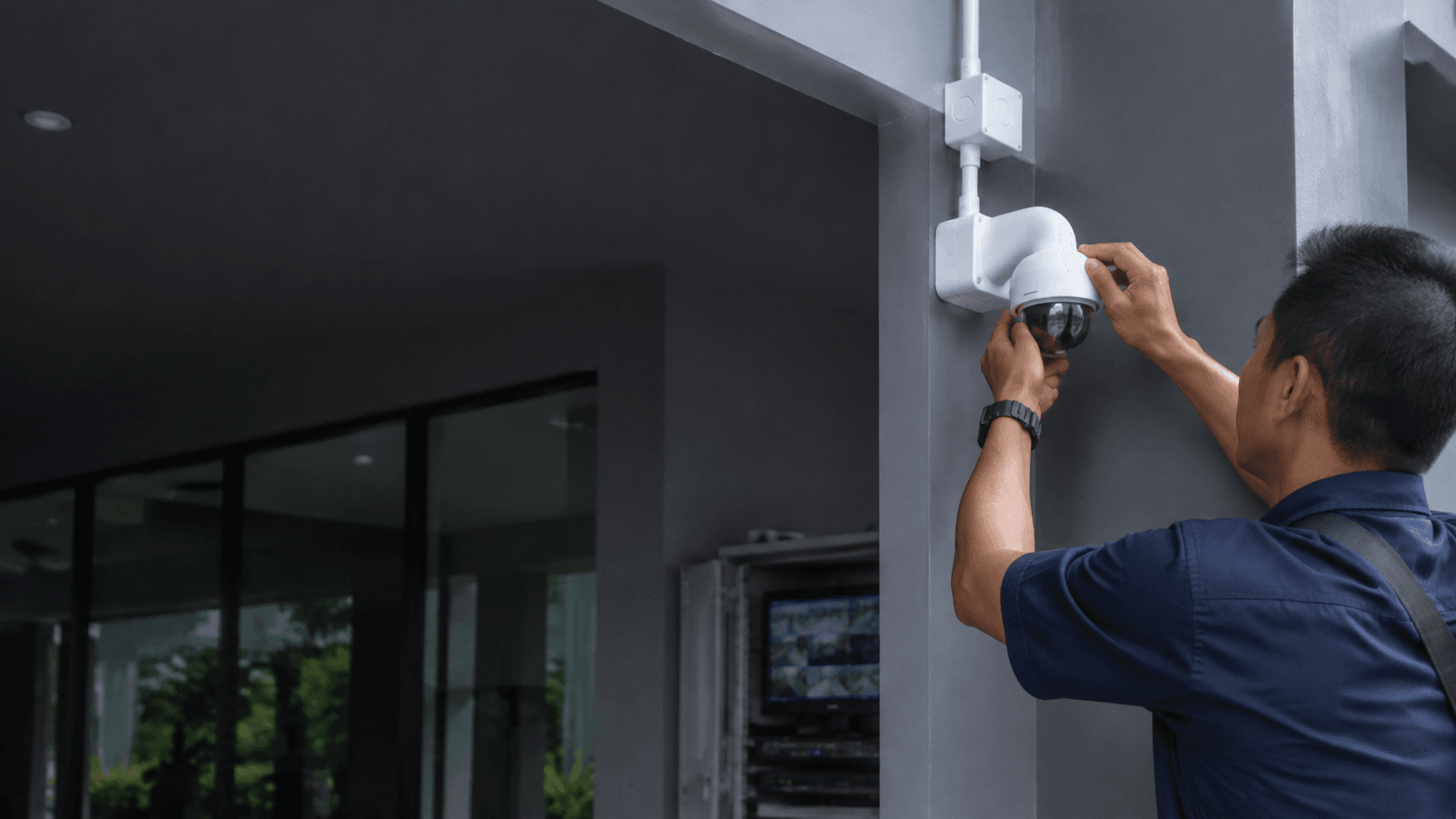
- Installation. Cameras are mounted, cabling is run, and the recorder is configured for recording, storage and remote viewing.
- Handover. Live view, playback and mobile access are demonstrated, and the user is shown how to check footage and manage basic settings.
The survey stage is where most mismatches are caught. A recorder that looks suitable on paper can be wrong for a site once cable runs, lighting and camera positions are known.
Practical checks before confirming a unit
Several questions are worth settling before a recorder is ordered.
Camera compatibility. Confirm which camera models the recorder accepts and at what resolution each input can record. A compatibility list tied to specific models is more useful than a general claim of support.
Simultaneous recording behaviour. Ask whether all channels record at 5MP at once, or whether the unit shares encoding capacity across channels. This is the single most common gap between expectation and result.
Storage and retention. Decide how many days of footage need to be kept, then size the hard drive accordingly. Retention is a function of resolution, frame rate, compression and the number of active channels, so it cannot be fixed without those inputs.
Remote viewing. Confirm the mobile app and network setup work with the property's internet connection, and that the person who will use it can actually operate it.
Expansion. Leave spare channels and storage headroom. Adding cameras later is far cheaper than replacing the recorder.
What a Hikvision 5mp Dvr costs in Malaysia
Eyonic publishes a Hikvision CCTV Package at RM 1,599, covering camera supply and setup, basic recording configuration and mobile viewing handover. That figure describes a package rather than a standalone recorder, and it should be treated as a starting reference rather than a quotation for a specific site.
Larger projects scale with channel count, camera count and cabling. Eyonic's completed Kuching Immigration Office project sat in an approximate budget range of RM 12,000 to RM 28,000, and the KTA Sarawak Sdn Bhd office project sat in an approximate range of RM 8,000 to RM 18,000. Both figures describe project-level work, not a single recorder.
Who can confirm the fit on site
Specification sheets describe what a recorder can do in ideal conditions. A site survey describes what it will do at a specific property, with specific cameras, cable lengths and lighting.
Eyonic Sdn Bhd is a security system supplier in Sarawak working across CCTV and ELV systems, with planning, supply and installation for homes, offices, shops and industrial sites. Eric Yong, the founder, has worked in the industry for more than ten years, with a focus on technical installation of digital security solutions for commercial businesses in Sarawak.
For a property in Sarawak, the practical next step is to share the location, property type and required system with Eyonic on WhatsApp at +60 11-5111 7959, so the recorder and camera plan can be checked against the site rather than against a listing.