
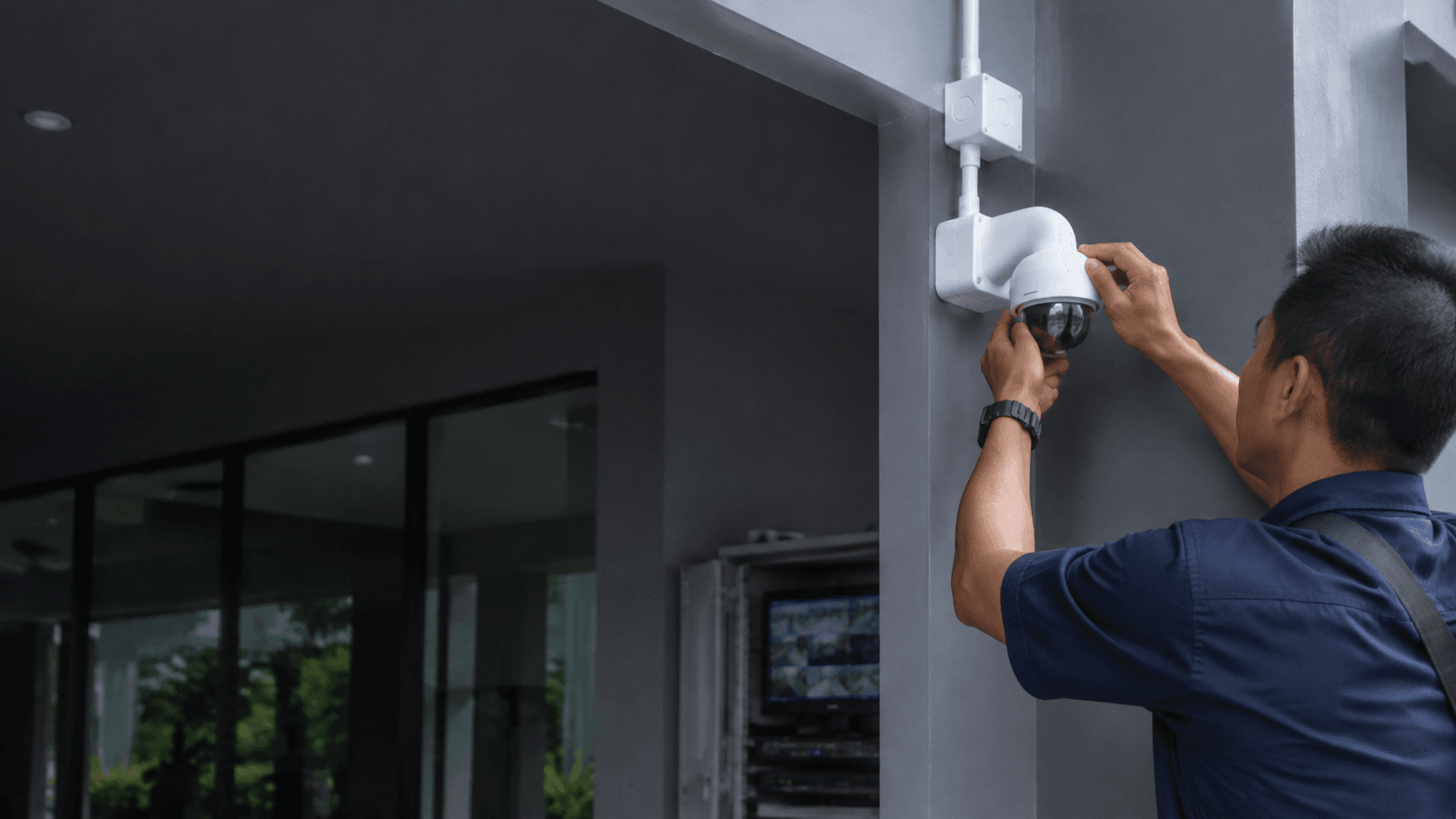
The term surfaces in two very different places online. One is a crowd-sourced camera database that lists connection URLs for a handful of models. The other is a product listing that presents EZ-IP as a Dahua sub-label. Neither source is an official manufacturer page, so the honest position is that Ez Ip Camera is best understood as a label attached to network cameras, not as a verified brand identity.
That distinction matters for anyone in Malaysia trying to buy, connect, or support one. A network camera is only as useful as the recording, viewing, and cabling around it, and those parts are decided locally, not by the name on the housing.
Ez Ip Camera naming and where it sits among network cameras
A network camera sends video over an IP connection rather than a coaxial analogue signal. That single design choice is what makes remote viewing, recording to a network video recorder, and software-based playback possible. The Ez Ip Camera label sits inside that category.
What the label does not settle is ownership. The competitor set shows the term used by a camera URL database, a video analytics vendor, and a UK product category page that attributes EZ-IP models to Dahua. Those are three different framings of the same string, and none of them is a manufacturer specification sheet. Treat any claim about who makes an Ez Ip Camera as unverified until an official product page or manual confirms it.
For a buyer, the practical consequence is simple. The model number on the box, the firmware it runs, and the documentation that ships with it matter far more than the family name. A camera with no manual and no firmware source is a support risk regardless of how it is labelled.
Why the naming ambiguity affects support
Support depends on being able to identify the exact model. When a family name is used loosely across listings, two cameras sold under similar wording can have different firmware, different default credentials, and different streaming paths. Recording the model number, the firmware version, and the seller's contact at handover removes most of that ambiguity later.
Connection basics readers usually need before setup
Connection is where most of the practical questions sit. The competitor pages cluster around streaming URLs, default credentials, and video management software, which reflects what people actually struggle with.
A typical connection sequence looks like this:
- Confirm the camera's IP address, either from the router's client list or from the discovery function in the recording software.
- Open the camera's web interface in a browser on the same network and sign in with the credentials supplied or set at first login.
- Change the default password before the camera is exposed to any wider network.
- Add the camera to the recorder or viewing software, selecting the correct stream and port.
- Verify live view, then verify playback from recorded footage rather than assuming recording is running.
- Test remote viewing from outside the local network before the installation is signed off.
Steps four and five are the ones most often skipped. A camera that shows live video but writes nothing to storage looks identical on a phone screen until someone needs the footage.
Streaming paths and credentials
Network cameras commonly expose a real-time streaming path on port 554, and many also offer an HTTP path. The exact address string varies by model and firmware, which is why databases that publish per-model URLs exist. Where a camera supports ONVIF, that standard gives recording software a manufacturer-independent way to discover and configure it, which reduces dependence on a single vendor's app.
Default credentials are a known weak point across the category. Changing them at commissioning is basic hygiene, not an optional extra.
What to check before choosing an Ez Ip Camera for a site
Camera choice follows the site, not the other way round. Eyonic's installation process begins with a site survey and a system proposal before any installation work, which reflects the same order of operations.
Lighting is the first thing to verify. Eyonic advises checking actual lighting conditions before confirming placement for ColorVu-style cameras, because a position that looks adequate in daylight can behave differently after dark. The same logic applies to any camera being considered for a specific spot.
Coverage intent comes next. A camera aimed at an entrance, a counter, or a vehicle route is doing a different job from one covering a wide open yard, and the placement, height, and lens choice follow from that. Cabling routes, power availability, and whether the recorder can be reached for maintenance all constrain the final layout.
For sites in Sarawak, humidity, rain exposure, and the distance between buildings are practical constraints that affect housing choice and cable runs. None of these are resolved by the camera's family name.
Where the evidence stops
No verified specification, resolution, port list, protocol support, price, or warranty for Ez Ip Camera is available in the supplied material. Any figure quoted for those items should be treated as unconfirmed until it comes from an official source.
Practical installation and handover considerations
Installation quality shows up months later, not on the day of fitting. Tidy cabling, labelled runs, and a recorder that is accessible for service all reduce the cost of the first fault.
Handover is the point where a system either becomes usable or stays a mystery. Eyonic's process includes handover as a defined stage, and the Kuching Immigration Office project illustrates the kind of environment where dependable daily operation matters: arrival flow, staff areas, and visitor movement all depend on the system working without someone troubleshooting it each morning.
The KTA Sarawak Sdn Bhd project points to a similar pattern in an office setting, where staff movement, visitor handling, tidy cabling, and clearer daily site control were the stated needs. In both cases the requirement was operational, not a specification list.
For a smaller site, the equivalent checklist is shorter but the same shape: confirm what needs to be seen, confirm what needs to be recorded and for how long, confirm who will review footage and on what device, then confirm the system does all of that before the installer leaves.
Recording retention and remote viewing
Retention is a decision, not a default. The number of cameras, the resolution they record at, and the number of days of footage required together determine storage size. Remote viewing then depends on the site's internet connection and on how the recorder is exposed to the outside network, which is a security decision as much as a convenience one.
Questions readers ask about
Is Ez Ip Camera a brand? The supplied evidence does not confirm a manufacturer. The term appears in connection databases and in a product listing that attributes EZ-IP models to Dahua, so the label is best treated as a family name until an official source confirms ownership.
Can an Ez Ip Camera work with third-party recording software? That depends on whether the specific model supports ONVIF and on whether its streaming path is documented. Where both are present, manufacturer-independent software can usually discover and record the camera.
What should be confirmed before purchase? The exact model number, the firmware source, the streaming and protocol support, and the seller's support route. Without those, a camera can be difficult to integrate or replace.
Does the camera name affect installation cost? Not directly. Cost follows camera count, cable runs, recorder capacity, and site conditions. Eyonic's published package pricing starts at RM 1,599 for a Hikvision CCTV package covering camera supply and setup, basic recording configuration, and mobile viewing handover, with alarm and autogate packages at the same figure.
Who can install and support a system in Sarawak? Eyonic Sdn Bhd plans, supplies, and installs monitoring systems with camera placement, recording, and remote viewing for homes, offices, shops, and industrial sites, and its founder Eric Yong has worked in technical installation of digital security solutions for commercial businesses in Sarawak for more than 10 years.
Share your location, property type and required system with Eyonic on WhatsApp at +60 11-5111 7959 for the next practical step.