
The exact-match query hikvision acusense nvr describes a family of network video recorders rather than a single box. Hikvision lists AcuSense recorders across its Pro Series and K-Series, and the same detection logic also appears in the AcuSense camera range. Buyers in Malaysia usually meet the term while comparing channel counts, PoE ports and storage options, so the useful work is matching a recorder to the site instead of chasing the largest model number.
Hikvision AcuSense NVR. What Matters Before Choosing
AcuSense is Hikvision's name for deep-learning classification that separates human and vehicle targets from other movement. On a recorder, that classification reduces the number of irrelevant events stored and pushed to a phone. The practical benefit is fewer clips to review after a long weekend, not sharper video.
Three constraints decide most purchases:
- Channel count and PoE budget — how many cameras the recorder accepts and how many it can power directly.
- Storage and retention — how many drive bays the unit holds and how many days of footage the site needs.
- Camera pairing — whether existing cameras already perform AcuSense detection or rely on the recorder to do it.
Hikvision's own product pages group AcuSense recorders under the Pro Series, while the K-Series material describes plug-and-play NVRs with AcuSense analytics and independent PoE network interfaces. Those two groupings matter because they carry different port counts and bandwidth ceilings.
Choosing the Right Hikvision Acusense Nvr
A recorder is sized by the site, not by the catalogue. A shophouse with four cameras and a factory perimeter with sixteen cameras need different chassis, different drive counts and different bandwidth headroom.
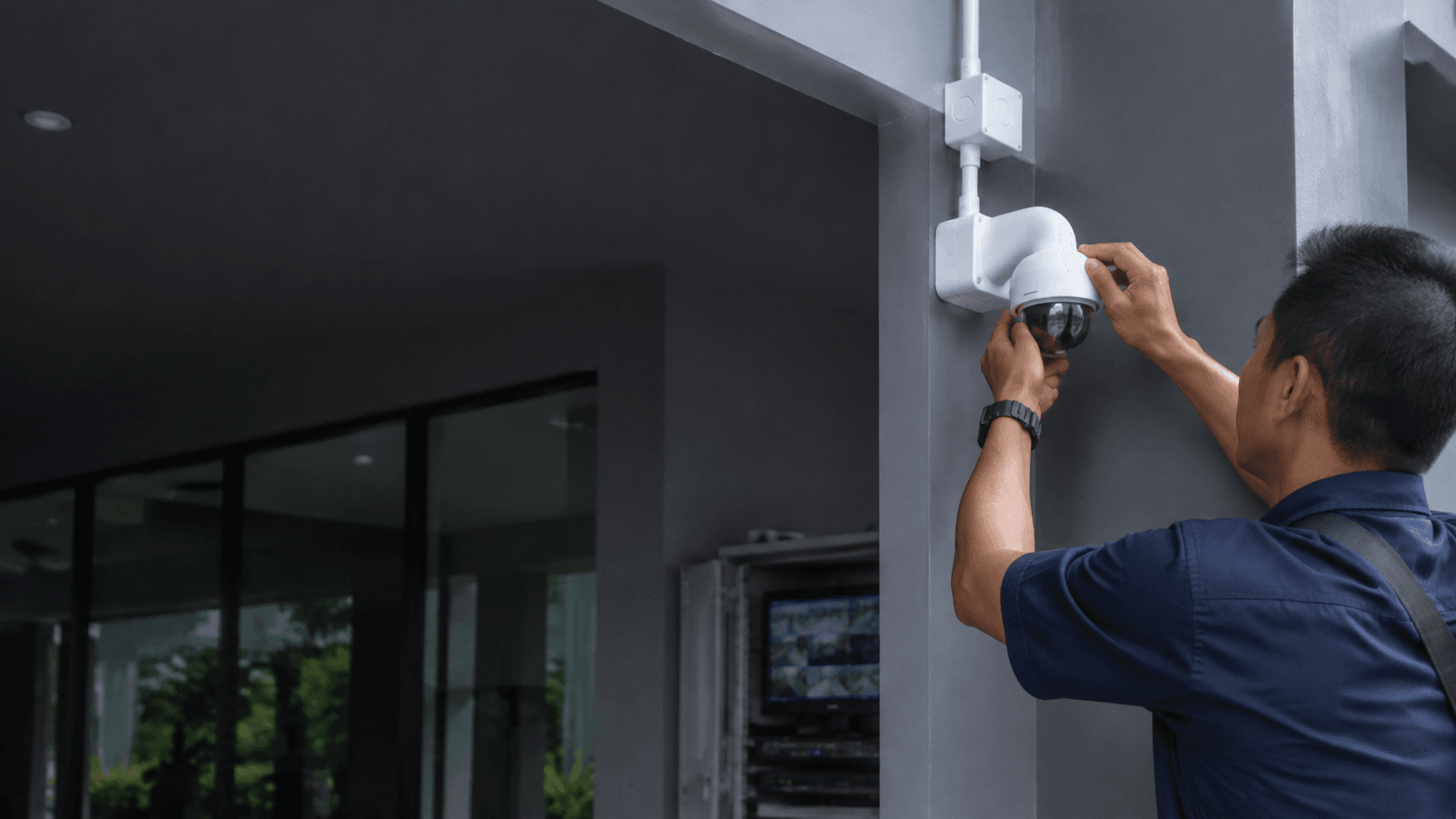
Eyonic's installation process runs through site survey, system proposal, installation and handover, which is the sequence that surfaces channel and cabling limits before hardware is ordered. The Kuching Immigration Office project shows the same logic applied to a public building, where arrival flow, staff areas and visitor movement shaped the design rather than a fixed package.
What is hikvision acusense nvr?
A Hikvision AcuSense NVR is a network video recorder that stores IP camera streams and applies deep-learning classification to distinguish people and vehicles from other motion. Some models perform that classification on the recorder; others rely on AcuSense cameras to send already-filtered events.
The distinction changes cost and wiring. Recorder-side detection lets older or non-AcuSense cameras benefit from filtering, but it consumes recorder processing. Camera-side detection spreads the load and usually produces cleaner event metadata, at the cost of replacing cameras.
Pro Series With AcuSense - Network Video Recorders
Hikvision's Pro Series page describes NVRs with advanced codecs for bandwidth and storage efficiency, with AcuSense technology available for intelligent target detection. Codec efficiency is not a marketing extra: it directly determines how many days of footage fit on the installed drives.
For a site recording continuously, a more efficient codec can extend retention without adding a drive. For a site recording on motion only, the gain is smaller because fewer frames are stored in the first place.
K-Series NVRs with AcuSense
Hikvision's K-Series material describes plug-and-play NVRs with AcuSense analytics, independent PoE network interfaces and stated incoming bandwidth figures. Plug-and-play matters on small sites where cameras connect directly to recorder ports and no separate PoE switch is planned.
The trade-off is scale. A recorder with a fixed PoE port count cannot grow past that count without a second switch, and the incoming bandwidth ceiling limits how many high-resolution streams the unit can accept at once.
Practical Considerations for Hikvision Acusense Nvr
Detection quality depends on the scene as much as the hardware. A camera aimed at a busy road will generate vehicle events all day; the same camera aimed at a gate generates a handful. Placement decides whether AcuSense filtering is useful or merely noisy.
Lighting is the second constraint. Eyonic advises checking actual lighting conditions before confirming placement for ColorVu-style cameras, and the same check applies to any camera feeding an AcuSense recorder. A detection that works in daylight can behave differently under sodium street lighting or in a covered car park.
Storage planning follows from retention. Recording continuously at high resolution fills drives far faster than recording on classified events, so the choice between the two modes should be made before the drive count is fixed.
AcuSense Series Network Cameras
Hikvision's AcuSense camera range carries the same classification at the camera level. Pairing AcuSense cameras with a compatible recorder keeps detection close to the source and reduces the processing the recorder must perform.
Mixing AcuSense and non-AcuSense cameras on one recorder is common. The recorder still stores every stream, but only the AcuSense-equipped channels contribute classified events, so event lists can look inconsistent across channels unless the design accounts for it.
. Smart Security Solutions with Deep Learning AI
Deep-learning classification is the feature that separates this range from a plain recorder. The recorder still performs the ordinary job of writing streams to disk and serving playback; classification sits on top of that.
That layering explains why a recorder upgrade alone does not always improve results. If cameras are poorly placed or the scene is cluttered, classification has less to work with, and the event list stays long.
Making an Informed Choice About
The decision usually comes down to three questions: how many cameras the site will realistically run within two years, how many days of footage must be retained, and whether detection should sit in the cameras or the recorder.
Eyonic's published packages start at RM 1,599 for a Hikvision CCTV package covering camera supply and setup, basic recording configuration and mobile viewing handover. Larger projects sit well above that: the Kuching Immigration Office work carried an approximate budget of RM 12,000 to RM 28,000, and the KTA Sarawak Sdn Bhd office project sat between RM 8,000 and RM 18,000. Those figures show the spread between a small shop setup and a multi-area site.
For sites in Sarawak, the practical next step is a survey that confirms camera positions, cabling routes and lighting before a recorder model is fixed. Share the location, property type and required system with Eyonic on WhatsApp at +60 11-5111 7959.