
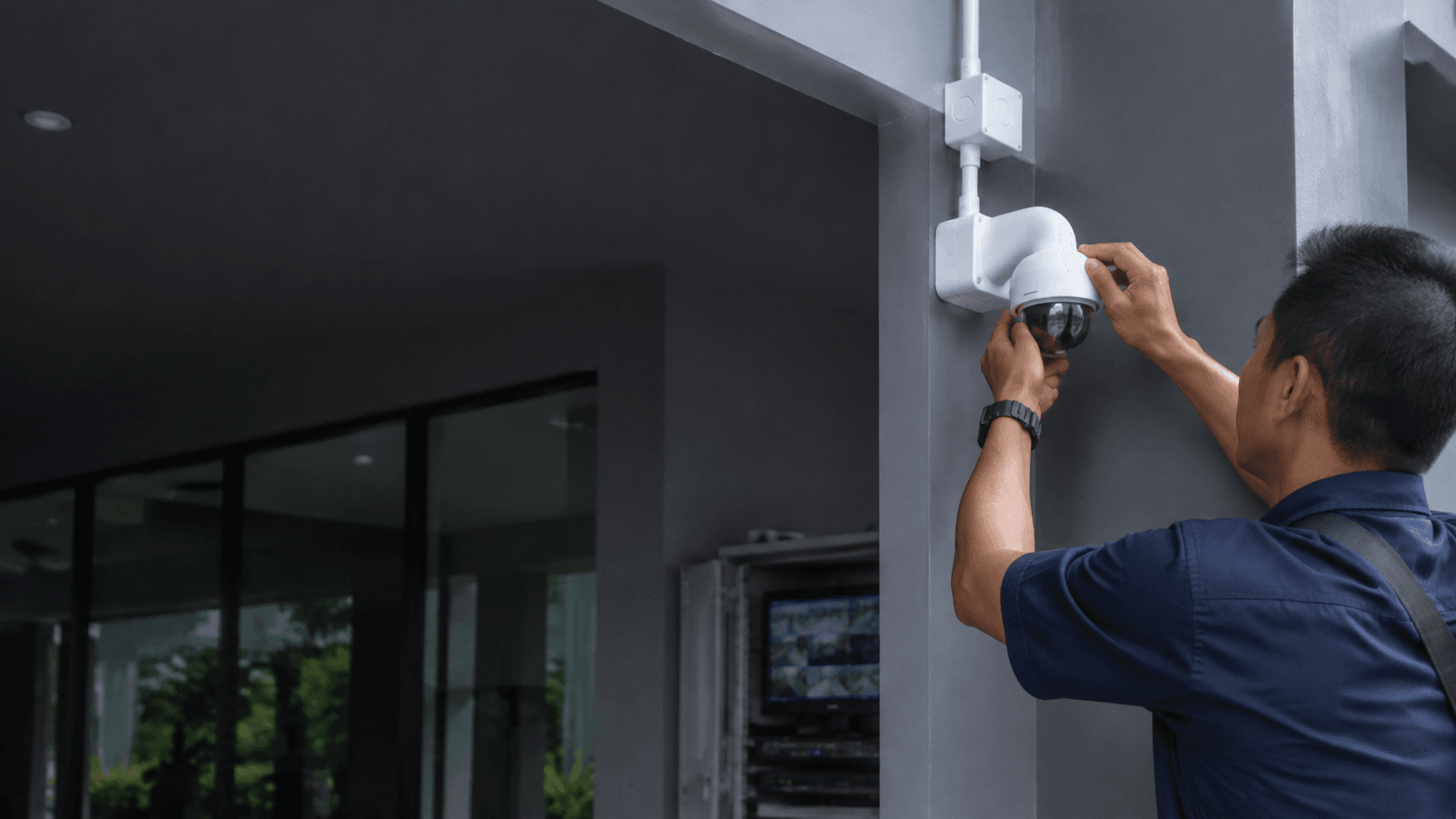
The exact model that suits a gate, lobby or shopfront depends on lighting, distance and how the footage will be recorded and viewed. Hikvision's own product pages organise the range into Turbo HD, ColorVu and network cameras, but they do not cover site selection or local installation. That gap is where a Sarawak buyer needs practical guidance rather than another product index.
Hikvision HD Camera. What the Range Covers
Hikvision groups its HD cameras into three broad families, and each family answers a different site problem. Turbo HD cameras are described by Hikvision as analog cameras that bring picture quality and smart features to analog infrastructure. Network cameras are the IP-based line, designed for video security and business intelligence use. ColorVu sits within the Turbo HD range as a low-light option, and Hikvision markets it around night vision detail.
Those three families matter because they change what has to be replaced on site. A property already wired for analog can often move to Turbo HD without a full cabling overhaul. A site that wants IP-level integration needs network cameras and the supporting network and recording setup. ColorVu is a lighting decision as much as a camera decision, because its benefit shows up in dark or unevenly lit areas.
What the range does not tell a buyer is which family fits a specific gate, lobby or shopfront. That answer comes from the site, not the catalogue.
Turbo HD, ColorVu and Network Options
Turbo HD is the analog route. It suits properties where existing coaxial cabling can be reused, which keeps the installation scope smaller than a full IP rebuild. Hikvision positions Turbo HD as bringing smart features into analog environments, so the appeal is capability without replacing every cable run.
ColorVu is the low-light route. Hikvision describes it as upgrading night vision with true-to-life detail, and the practical question is whether the site actually has the lighting conditions that make that useful. Eyonic's own review guidance is to check actual lighting conditions before confirming placement, because a ColorVu camera placed where light behaves differently than assumed will not deliver the expected result.
Network cameras are the IP route. They suit sites that want recording, remote viewing and system integration handled over a network, and they pair with an NVR setup. The trade-off is that IP usually means more planning around cabling, network capacity and recording hardware than an analog upgrade.
None of these three is universally better. A small shopfront with existing coax and modest lighting needs may be well served by Turbo HD. A dark perimeter where identifying a person matters may justify ColorVu. A multi-area site with several viewing points and remote access requirements usually points toward network cameras and a properly sized NVR.
How a Hikvision HD Camera Is Chosen for a Site
Selection starts with the site survey, not the camera list. Eyonic's installation process runs through site survey, system proposal, installation and handover, and the survey is what turns a general camera preference into a specific placement plan.
- Site survey. the property is inspected for entry points, coverage gaps, lighting behaviour and existing cabling.
- System proposal. the camera family, placement and recording approach are set out based on what the survey found.
- Installation. cameras, recording equipment and viewing access are installed and configured.
- Handover. recording, playback and mobile viewing are explained and tested with the people who will use them.
Camera placement is the step that decides whether footage is usable. A camera aimed at a gate needs to capture the approach and the face, not just the vehicle roof. A lobby camera needs to cover the entry path and the waiting area without pointing into a light source. A shopfront camera needs to hold detail at the counter and along the frontage.
Lighting conditions are the second constraint. A position that looks well lit during a daytime survey can behave differently at night, especially where street lighting, signage or reflective surfaces sit inside the frame. Checking the actual lighting before confirming placement is the difference between a camera that records something identifiable and one that records a bright smear.
Recording and viewing come next. NVR setup determines how long footage is retained and how it is searched. Remote viewing determines whether the owner can check the property from a phone, and it depends on the network available at the site. Both are decided during planning, not after the cameras are on the wall.
Where Each Option Fits
A home with a single gate and a small compound usually needs fewer cameras and simpler recording than a commercial site. An office with staff and visitor movement needs coverage of entrances and shared areas. A shop needs counter and frontage coverage. An industrial site needs wider coverage across yards and access points, where camera count and placement planning matter more than any single model choice.
Eyonic's project work reflects that spread. The Kuching Immigration Office project focused on arrival flow, staff areas, visitor movement and dependable daily operation. The KTA Sarawak Sdn Bhd project supported staff movement, visitor handling, tidy cabling and clearer daily site control. Both are examples of coverage being shaped by how a site is actually used.
Hikvision HD Camera Installation in Sarawak
Installation in Sarawak follows the same four-stage process regardless of property type, but the site conditions change what each stage involves. Cabling routes, ceiling access, power availability and network reach all affect how long the work takes and how tidy the result is.
Eyonic Sdn Bhd is based in Sarawak and works across homes, offices, shops and industrial sites, with planning, supply and installation handled as one scope. That matters because a camera bought separately from its installation often ends up placed for convenience rather than coverage.
The handover stage is where most installations succeed or fail in daily use. Recording configuration, playback and mobile viewing need to be tested with the people who will actually operate the system. A system that records correctly but cannot be reviewed by its users does not solve the original problem.
Eric Yong, founder of Eyonic Security Systems, has worked in the industry for more than 10 years and is experienced in technical installation of digital security solutions for commercial businesses in Sarawak.
What a Hikvision HD Camera Project Costs
Camera pricing depends on the family chosen, the number of cameras, the recording setup and the installation scope, so a single per-camera figure would be misleading. What is documented is the package and project level.
Eyonic's Hikvision CCTV Package is RM 1,599 and covers camera supply and setup, basic recording configuration and mobile viewing handover. That package is the entry point for a straightforward installation.
Larger projects scale with coverage. The Kuching Immigration Office project carried an approximate budget of RM 12,000 to RM 28,000. The KTA Sarawak Sdn Bhd project carried an approximate budget of RM 8,000 to RM 18,000. Both figures reflect multi-area commercial coverage rather than a single camera.
The main cost drivers are camera count, whether existing cabling can be reused, the recording hardware required, and how much cabling and containment work the site needs. A property with accessible routes and existing coax sits at the lower end. A site needing new cable runs across multiple buildings sits at the upper end.
Questions Before Ordering
Most ordering mistakes come from deciding the camera before deciding the coverage. The questions below are the ones that change the answer.
Does the site need Turbo HD ColorVu or network cameras
Turbo HD suits properties with usable analog cabling. ColorVu suits dark or unevenly lit areas where night detail matters. Network cameras suit sites that need IP integration, larger camera counts or more flexible remote viewing. The site survey determines which applies.
How many cameras are needed
Camera count follows coverage, not budget. Each entry point, approach, counter and shared area is assessed for whether one camera can hold usable detail or whether two angles are required. A single camera covering too wide an area often produces footage that identifies nothing.
Can the system be viewed remotely
Remote viewing is part of the setup and is included in the handover stage. It depends on the network available at the property, which is checked during planning.
What happens after installation
Handover covers recording, playback and mobile viewing, tested with the system's users. Any question about warranty or after-sales terms should be confirmed directly with the supplier before ordering, since terms are not published in the material referenced here.
For a site in Sarawak, the practical next step is a survey rather than a product decision. Share the location, property type and required system with Eyonic on WhatsApp at +60 11-5111 7959.