
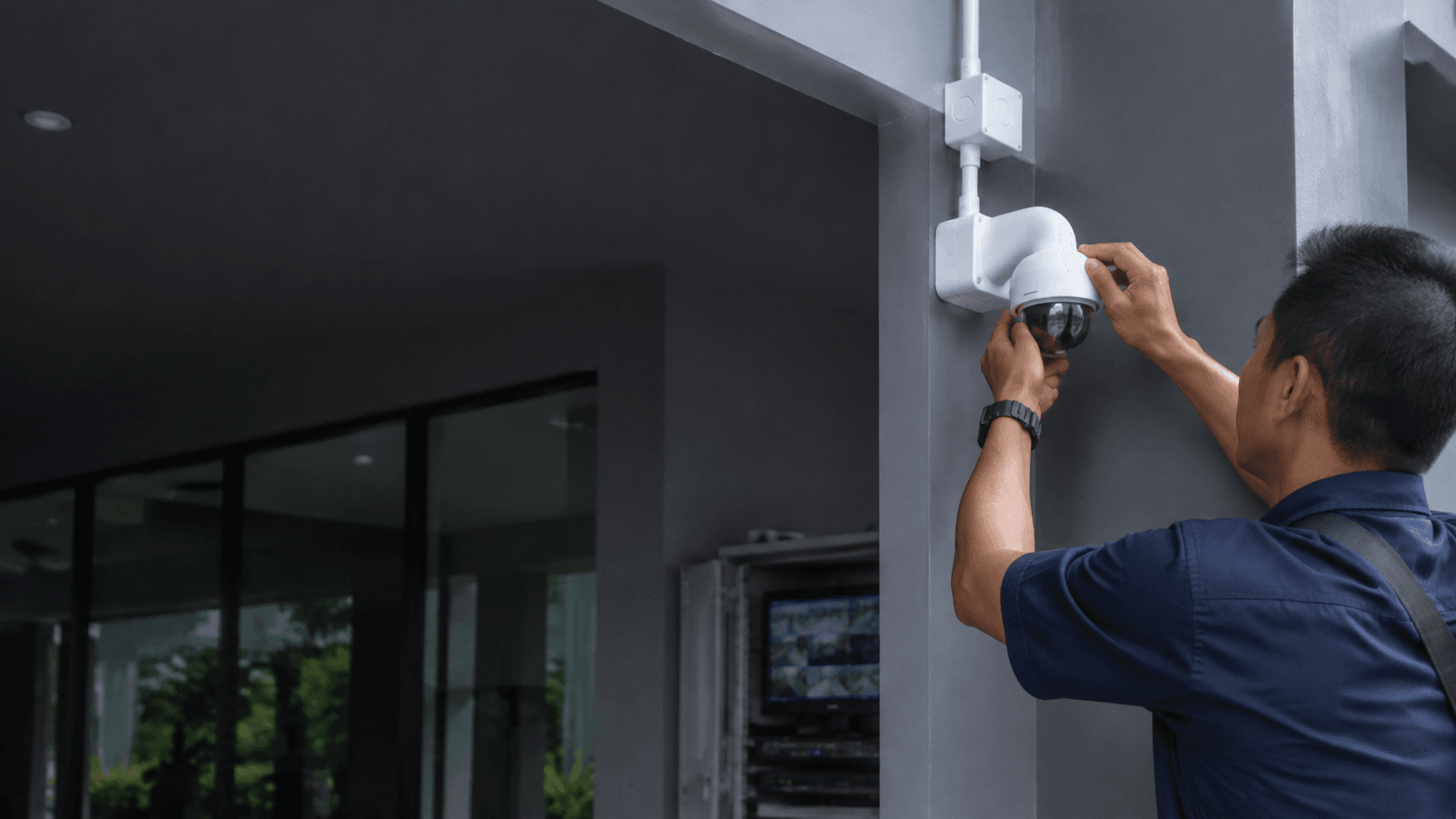
The exact-match query nvr cctv describes a recorder that sits at the centre of an IP camera system. Unlike an analog setup, the recorder receives video as data over a network rather than as a signal over coaxial cable. That single design difference shapes how cameras are powered, how footage is stored, and how the system grows when a site adds more coverage.
Eyonic Sdn Bhd is a security system supplier in Sarawak, Malaysia, working across CCTV and ELV systems. The company's founder, Eric Yong, has been in the industry for more than 10 years and is experienced in technical installation of digital security solutions for commercial businesses in Sarawak.
Nvr Cctv. What the Recorder Does in a Camera System
The recorder is the part of the system that turns live camera feeds into stored, searchable video. IP cameras capture the scene and send the video stream across a network connection to the recorder, which writes it to storage and makes it available for playback and remote viewing.
Because the video arrives as network data, the recorder also handles the tasks that a purely analog recorder cannot: managing camera connections, organising recordings by time and camera, and serving footage to a phone or computer over the internet. Remote viewing is one of the services Eyonic lists alongside camera placement and NVR setup, which reflects how central playback access has become to everyday use.
A practical consequence is that the recorder and the cameras are not interchangeable parts. The recorder has to accept the cameras connected to it, and the network between them has to carry the video reliably. That is why a site survey comes before hardware selection rather than after.
Where the recorder physically sits
Recorders are typically installed in a secure, ventilated indoor position where cabling can be routed tidily and where the unit is not exposed to weather or casual interference. The Kuching Immigration Office project that Eyonic completed focused on arrival flow, staff areas, visitor movement and dependable daily operation, which illustrates how recorder placement follows the operational layout of a building rather than a single fixed rule.
How an Nvr Cctv Setup Connects Cameras, Network, and Storage
An IP camera system has three layers: the cameras that capture, the network that carries the video, and the recorder with storage that keeps it. Each layer has its own constraints, and a weak point in any one of them shows up as dropped recordings or slow playback.
Power over Ethernet, commonly shortened to PoE, is the arrangement that lets a single cable carry both power and data to a camera. Where PoE is used, camera installation avoids a separate power run to each position, which simplifies cabling and reduces the number of points that can fail. Where PoE is not used, each camera needs its own power arrangement, and that changes both the cabling plan and the cost of adding a camera later.
Storage is the layer buyers underestimate most often. Recording continuously, recording only on motion, and recording at higher image quality all consume storage at different rates, so retention length is a decision that has to be made alongside camera count rather than after installation. No verified channel counts, storage capacities or retention periods for specific NVR models are available here, so those figures should be confirmed against the actual hardware proposed for a site.
Why the network matters more than the box
A recorder is only as useful as the network feeding it. Cable runs that are too long, switches that cannot handle the video traffic, and unstable internet connections for remote viewing all degrade the experience even when the recorder itself is capable. For sites spread across multiple buildings or floors, the network design is often the larger part of the work.
Nvr Cctv Compared With a DVR Recorder
The comparison between an NVR and a DVR comes down to the camera technology each one is built around. A DVR works with analog cameras and receives video over coaxial cable. An NVR works with IP cameras and receives video over a network connection.
That difference produces practical trade-offs. Analog systems built around a DVR can be a straightforward path where existing coaxial cabling is already in place and the goal is to replace or extend an older setup. IP systems built around an NVR tend to suit sites where cabling is being installed fresh, where higher image detail is wanted, or where the system is expected to grow and integrate with other network-based services.
Neither choice is universally better. The deciding factors are usually the state of existing cabling, the number of camera positions required, how the footage will be reviewed day to day, and whether the site expects to add coverage over time. A site with good existing coaxial runs and a modest camera count may find an analog recorder adequate; a site planning structured cabling and future expansion is usually better served by an IP approach.
Hybrid situations
Some sites sit between the two. A building may already have analog cameras in working order while new areas are wired for IP. In those cases the recorder choice has to account for both, and the honest answer is that the mix determines the hardware rather than the other way around. This is one of the reasons a survey precedes a proposal.
What Eyonic Checks Before Recommending an System
Eyonic's CCTV work covers planning, supply and installation, with camera placement, recording and remote viewing as the core deliverables. The checks that precede a recommendation are practical rather than theoretical.
Lighting is one of them. Eyonic recommends checking actual lighting conditions before confirming placement for ColorVu-style cameras, because a position that looks adequate during a daytime visit can behave very differently after dark. Confirming the real light level at each proposed camera position prevents a placement that has to be redone.
Coverage intent is another. A recorder and camera set chosen for a shop entrance has different requirements from one covering an industrial yard or a multi-floor office. The Kuching Immigration Office project centred on arrival flow, staff areas and visitor movement, and the KTA Sarawak Sdn Bhd project centred on staff movement, visitor handling, tidy cabling and clearer daily site control. Both show the same pattern. the camera plan follows what the site actually needs to see.
Cabling and recorder position round out the assessment. Tidy cabling is not cosmetic; it affects how easily a system can be maintained and extended. Recorder placement affects ventilation, physical security and how straightforward future service will be.
What cannot be confirmed in advance
Some details depend on the hardware finally selected. Specific NVR models, channel counts and storage configurations are not fixed until the proposal stage, and no verified pricing for an NVR-only package is available here. Eyonic's published packages cover a Hikvision CCTV package, a Hikvision alarm system and an autogate package, each at RM 1,599, and those scopes are not the same as an NVR-specific installation.
Installation Steps From Survey to Handover
Eyonic's CCTV installation process follows four stages. The sequence matters because each stage depends on the information gathered in the one before it.
- Site survey, where the property is assessed for camera positions, lighting, cabling routes and recorder placement.
- System proposal, where the survey findings are turned into a recommended camera and recorder configuration.
- Installation, where cameras, cabling and the recorder are fitted and configured.
- Handover, where recording and remote viewing are set up and explained so the system can be used from day one.
The handover stage is where remote viewing is confirmed working on the devices the site will actually use. A system that records correctly but cannot be reviewed conveniently tends to go unused, which defeats the purpose of the installation.
What changes the timeline
Site size, the number of camera positions, whether cabling already exists, and whether work has to happen around operating hours all affect how long an installation takes. A single-storey shop and a multi-building industrial site are not comparable jobs even when the camera count is similar.
Questions Buyers Ask Before Deciding
Several questions come up repeatedly before a decision is made, and they tend to be about fit rather than features.
Is an NVR necessary, or would a DVR do? It depends on the cameras. IP cameras need a network recorder; analog cameras need a DVR. If the site is being cabled fresh, the IP route is usually the more future-proof choice. If working analog cabling already exists, a DVR can be the more economical path.
How much storage is needed? That depends on camera count, image quality, whether recording is continuous or motion-triggered, and how many days of footage must be retained. These figures should be confirmed against the specific hardware proposed, because no verified capacity or retention values are available here.
Can footage be viewed remotely? Yes, remote viewing is part of the setup Eyonic provides, and it is confirmed during handover. The quality of that experience depends on the site's internet connection as much as on the recorder.
Can the system be expanded later? IP systems generally accommodate additional cameras more easily than analog ones, provided the recorder and network can support the extra load. That headroom is worth discussing during the proposal stage rather than after installation.
What about lighting at night? Actual lighting conditions should be checked before camera placement is confirmed, particularly for cameras chosen for low-light performance. A daytime walkthrough alone is not enough to judge this.
For sites in Sarawak weighing an NVR-based system, sharing the location, property type and required system with Eyonic on WhatsApp at +60 11-5111 7959 is the practical next step, since the recommendation depends on the site rather than on a standard package.