
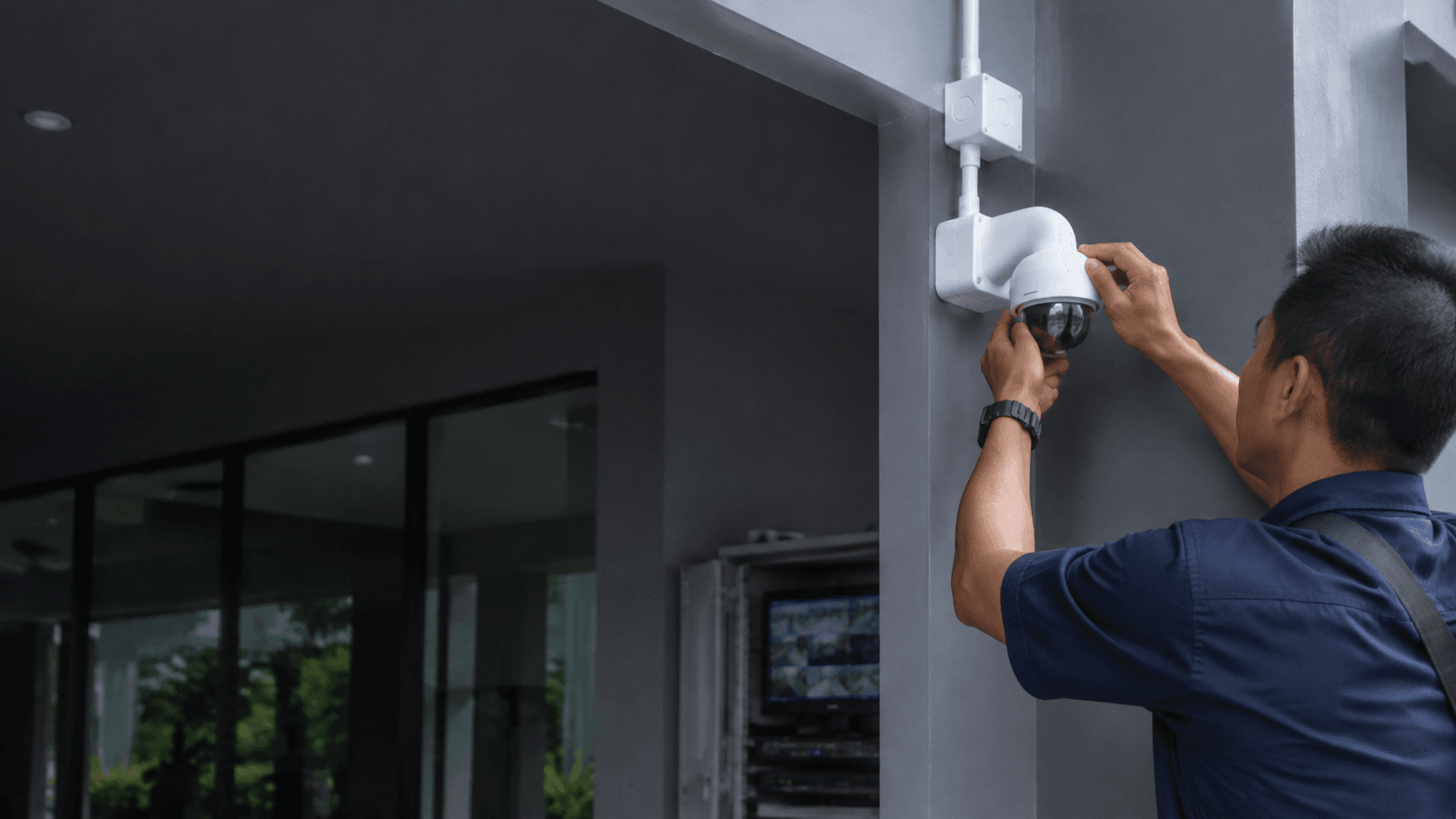
The exact-match query 4k cctv system describes a package rather than a single box. It covers cameras, a recorder, the cabling between them, the way footage is stored, and the way someone actually watches it afterwards. In Malaysia, and especially in Sarawak, the difference between a system that works and one that frustrates usually comes down to planning before installation, not the badge on the camera.
Eyonic Sdn Bhd plans, supplies and installs monitoring systems with camera placement, recording and remote viewing for homes, offices, shops and industrial sites. The company is based in Sarawak and works on both residential and commercial properties, including government and engineering consultancy clients.
What a 4k cctv system covers in a working property
A 4k cctv system is a complete chain, not a camera count. Each link has to hold up.
The camera captures the scene. The recorder stores what the camera sends. The cabling or network carries the signal and the power. The viewing layer, usually a phone app or a monitor, is how anyone actually uses the footage. If any one of those four links is weak, the rest of the system is wasted.
Coverage decisions matter more than resolution claims. A camera pointed at a blank wall records a blank wall in high detail. A camera positioned to catch an approach path, a doorway, a counter or a gate records something useful. That is why placement is treated as a design decision rather than an installation afterthought.
Recording and remote viewing are the two functions most property owners actually rely on day to day. Recording answers what happened. Remote viewing answers what is happening now. Both depend on the recorder being set up correctly and on the network path being stable.
How Eyonic plans a 4k cctv system before any camera is mounted
Eyonic's CCTV installation process runs through four stages: site survey, system proposal, installation, and handover. The order matters, because each stage removes guesswork from the next.
- Site survey. The property is walked and the actual conditions are recorded, including entry points, sightlines, existing cabling routes and lighting.
- System proposal. Camera positions, recorder location and viewing setup are proposed against what the survey found, not against a generic package.
- Installation. Cameras, recorder and cabling are installed to the agreed layout.
- Handover. The system is tested and the people who will use it are shown how recording and remote viewing work.
The survey stage is where most problems are prevented. A property with a long driveway, a covered walkway or a shopfront facing afternoon sun presents different constraints from a standard office corridor. Those constraints are easier to design around than to correct later.
Lighting is checked before placement is confirmed. Eyonic recommends checking actual lighting conditions before confirming placement for ColorVu-style cameras, because a position that looks correct in daylight can behave differently once the site's real evening light is taken into account. This is a placement check, not a performance promise.
Why the proposal stage is not a quotation exercise
A proposal that only lists hardware leaves the hard decisions unresolved. The useful version of a proposal states where each camera goes, what it is expected to cover, where the recorder sits, and how the footage will be viewed. Those four answers are what a property owner is actually buying.
Where a 4k cctv system fits: homes, offices, shops and industrial sites
Eyonic plans, supplies and installs monitoring systems for homes, offices, shops and industrial sites. The same four-stage process applies across all four, but the priorities shift.
For a home, the usual concerns are the gate, the car porch and the main entrance. Coverage tends to be modest and the viewing setup matters most, because household members need to check the property from a phone without technical fuss.
For an office, staff movement and visitor handling drive the layout. The KTA Sarawak Sdn Bhd project is an example of this pattern: a practical office setup in Kuching to support staff movement, visitor handling, tidy cabling and clearer daily site control. Tidy cabling is not cosmetic in an office. It affects how easily the system can be maintained and extended.
For a shop, the counter, the entrance and any stock area carry the most weight. Footage that shows a transaction clearly is more useful than footage that shows a wide, empty floor.
For an industrial site, the perimeter and the movement of vehicles and people between zones tend to matter more than interior detail. These sites also tend to have longer cable runs and harsher conditions, which is why the survey stage carries more weight there than anywhere else.
Lighting, placement and daily operation after handover
Handover is where a 4k cctv system stops being an installation and starts being a tool. If the people who need the footage cannot find it, the system has not been finished.
Daily operation usually comes down to three habits. Checking that recording is running. Knowing how to pull up a specific time and camera. Knowing who to contact when something looks wrong. Those three habits are worth more than any additional feature.
Placement decisions made during the survey continue to matter after handover. A camera that catches glare from a light source, or that looks directly into a neighbouring property, creates problems that no amount of resolution fixes. Reviewing the live view at different times of day, shortly after installation, is a practical way to catch those issues while they are still easy to adjust.
Remote viewing depends on the property's internet connection being available and stable. Where connectivity is unreliable, that constraint belongs in the planning conversation rather than being discovered after handover.
What the Kuching Immigration Office project shows about public-building coverage
The Kuching Immigration Office project is the clearest local example of how coverage priorities differ in a public building. The work focused on arrival flow, staff areas, visitor movement and dependable daily operation.
Those four areas are not the same as a residential checklist. Arrival flow means the path people take as they enter. Visitor movement means the areas the public passes through. Staff areas are separate from both. Dependable daily operation is the requirement that ties them together, because a public office cannot afford a system that needs constant attention.
The approximate budget for that type of work was RM 12,000 to RM 28,000. That figure belongs to the Kuching Immigration Office project and describes that scope of work, not a 4k cctv system in general. A smaller property will sit well below it, and a larger or more complex site can sit above it.
The KTA Sarawak Sdn Bhd project carried an approximate budget of RM 8,000 to RM 18,000 for a practical office setup in Kuching. Read together, the two projects show that budget tracks scope, site conditions and the number of areas that need coverage, rather than the label on the camera.
Costs packages and the next practical step
Eyonic publishes three packages at RM 1,599 each. The Hikvision CCTV Package covers camera supply and setup, basic recording configuration and mobile viewing handover. The Hikvision Alarm System covers a control panel and sensors, siren and zone setup, and user testing and handover. The Autogate Package covers motor recommendation, remote-control setup, and safety testing and handover.
These are entry-level packages. They are a useful reference point for what a basic, properly handed-over installation involves, and they are not a quotation for a 4k cctv system across a larger property. A site with multiple buildings, long cable runs or a public-facing function will need a proposal built from the survey.
Three things shape the cost of any installation: how many areas need coverage, how difficult the cable routes are, and how much configuration the viewing and recording setup requires. A property with easy routes and a small number of coverage points sits at the lower end. A property with difficult routes, multiple zones or a requirement for tidy, documented cabling sits higher.
For the next practical step, share the location, property type and required system with Eyonic on WhatsApp at +60 11-5111 7959. Those three details are enough to start a useful conversation about what the site actually needs.