
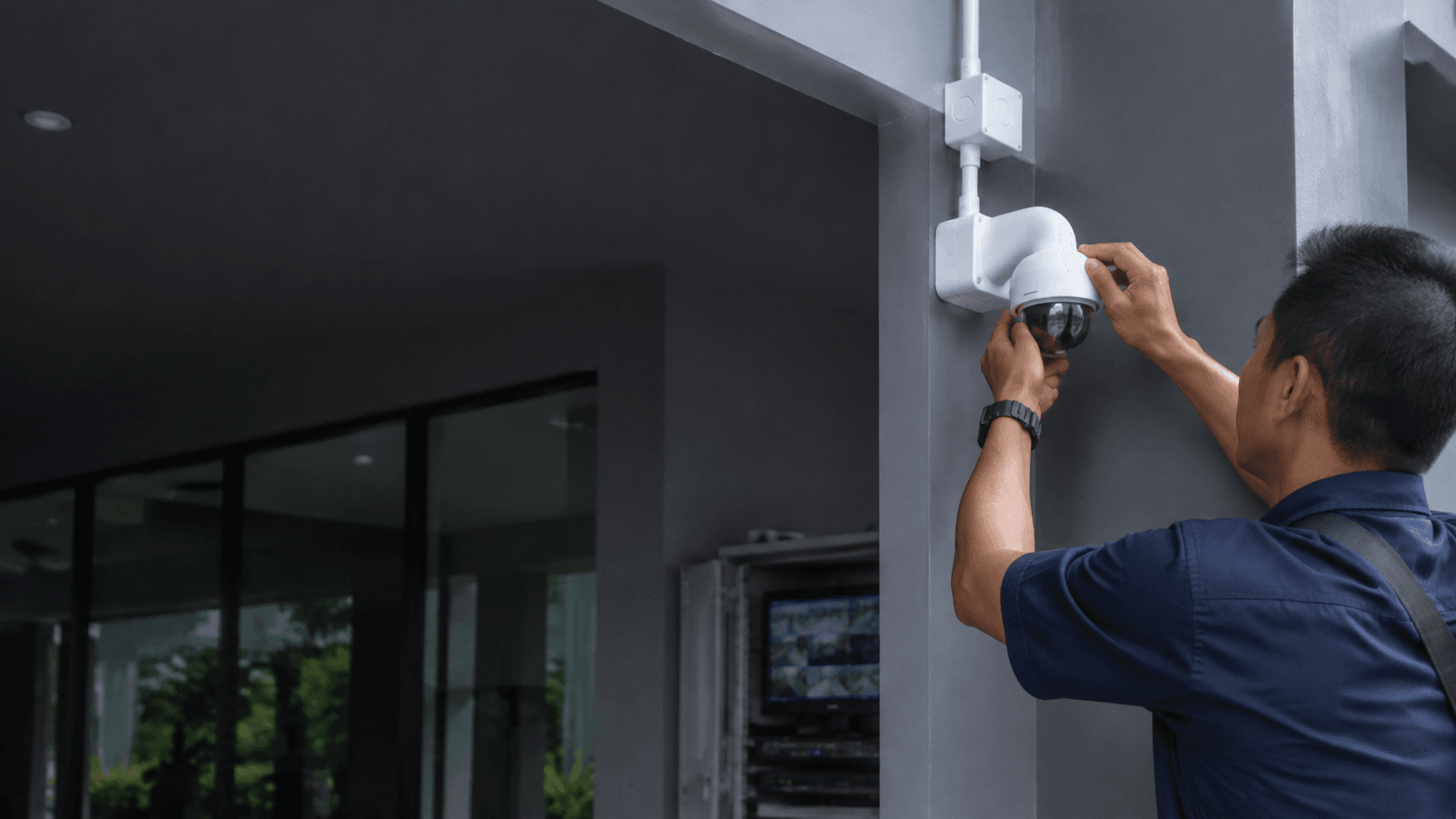
Dahua Technology runs a distribution partner structure, and buyers in Malaysia usually meet it through a local supplier rather than the manufacturer directly. The useful question is not who sells Dahua equipment, but who remains accountable after the boxes arrive — for configuration, for a failed unit, and for the person standing on site when a camera needs repositioning.
What a Dahua distributor supplies beyond boxes
A distributor's job starts with the product line and ends with the paperwork. Dahua's own partner pages separate distribution partners from other channel roles, which reflects how the supply chain is organised: distributors hold stock and move volume, while installers and integrators handle the site.
For a Malaysian buyer, the practical list of what should come with a Dahua order looks like this:
- Confirm the exact model and the firmware region, because the same camera family can ship with different regional firmware and default language settings.
- Confirm stock availability and lead time before committing to an installation date.
- Confirm warranty terms and, more importantly, who handles a claim — the seller, the manufacturer, or a third party.
- Confirm whether installation and configuration are included or quoted separately.
- Confirm handover, including remote viewing setup and who holds the account credentials.
Items two and three are where most frustration originates. A cheap unit with a three-week lead time can cost more than a slightly dearer one that arrives this week, because the installation crew has already been scheduled. Warranty is the same calculation in slower motion: a warranty that requires the buyer to ship a faulty camera overseas is not the same product as a warranty handled locally.
How Dahua stock reaches a Malaysian site
Dahua equipment typically moves through a chain: manufacturer to regional distribution, then to a local supplier or systems house, then to the site. Each handover is a point where model numbers can drift, firmware can differ, and accountability can thin out.
In Sarawak, that chain usually ends with a supplier who both holds or sources the stock and sends a team to install it. Eyonic Sdn Bhd works this way for CCTV and ELV systems across Kuching and wider Sarawak, planning, supplying and installing monitoring systems with camera placement, recording and remote viewing for homes, offices, shops and industrial sites. The company's documented process runs through site survey, system proposal, installation and handover.
That sequence matters for Dahua orders because camera placement is decided on site, not in a catalogue. A distributor who only ships boxes cannot tell a buyer that the proposed position faces a bright window, or that the cable run is longer than the quoted drum allows. A supplier who installs can.
Checking authenticity, warranty and support before ordering
Counterfeit and grey-market surveillance equipment is a documented problem in this category, and the competitor set includes pages built specifically around distributor verification. The checks below are the ones that actually change outcomes.
Ask for the model number in writing before payment, then compare it against Dahua's own published product documentation. Model numbers that do not appear in Dahua's catalogue are the clearest warning sign available to a buyer.
Ask what happens if a unit fails in month eight. A workable answer names who inspects the unit, who decides whether it is repaired or replaced, and roughly how long the site is without coverage. An unworkable answer is a warranty period with no process attached.
Ask whether configuration is included. A recorder that arrives with default settings and no remote viewing is technically delivered and practically useless. Remote viewing setup and NVR configuration are the two tasks that most often get left to the buyer by pure box-movers.
Ask about the firmware region. Regional firmware affects default language, available features and update paths, and mismatches surface later as update failures rather than as anything visible at handover.
Where a Dahua distributor fits alongside installation work
Supply and installation are separate skills, and the split matters most on sites with existing cabling, multiple buildings, or a mix of camera generations.
On a straightforward shop or office fit-out, one supplier handling both is usually simpler: one point of contact, one warranty conversation, one team that already knows where the cable runs. On larger or phased sites, a buyer may source Dahua hardware through a distributor and engage a separate installer. That arrangement works, but it needs the warranty boundary agreed in writing first, because a fault could otherwise be attributed to the hardware by the installer and to the installation by the supplier.
Eyonic's project record shows the kind of site where this boundary is tested. The Kuching Immigration Office project covered arrival flow, staff areas, visitor movement and dependable daily operation, with an approximate budget of RM 12,000 to RM 28,000 for that type of work. A public office cannot absorb a camera outage during operating hours, so the support arrangement matters as much as the hardware choice. A separate project for KTA Sarawak Sdn Bhd covered staff movement, visitor handling, tidy cabling and clearer daily site control, with an approximate budget of RM 8,000 to RM 18,000.
Lighting is the other variable that a distributor cannot resolve from a warehouse. Eyonic's own guidance on ColorVu-style cameras is to check actual lighting conditions before confirming placement, because a position that looks adequate in daylight can behave differently after dark. That check belongs to the site survey, not the order form.
Questions to settle before confirming a Dahua order
Most disputes trace back to something that was never written down. Settling these points before payment removes the ambiguity.
Who owns the account? Remote viewing usually depends on an account tied to a phone number or email address. If the installer registers it, the buyer may not control it later. Decide at handover who holds the credentials.
What is the recording retention? Retention depends on camera count, resolution, frame rate and hard drive capacity. A buyer who wants thirty days of footage needs the storage sized for it, and that calculation should appear in the proposal rather than being discovered after commissioning.
What happens at the end of the warranty period? Some suppliers offer continuing support; others do not. Knowing which applies avoids a surprise when the first out-of-warranty fault appears.
Is the site ready for the installation? Power points, cable routes and mounting surfaces are usually the buyer's responsibility unless agreed otherwise. Confirming this prevents a crew arriving to find no route for the cable.
Eyonic's published packages for Hikvision CCTV, alarm systems and autogate work are priced at RM 1,599 each and include supply, setup and handover steps such as mobile viewing handover and user testing. Those packages illustrate the structure a Dahua order should follow even where the brand differs: hardware, configuration, testing and handover as one scope rather than four separate transactions.
For buyers comparing suppliers, the deciding factor is rarely the price of a single camera. It is whether the supplier can confirm the model, hold or source the stock, install it correctly, configure remote viewing, and still answer the phone when something fails. Share the location, property type and required system with Eyonic on WhatsApp at +60 11-5111 7959 to move from comparison to a site-specific answer.