
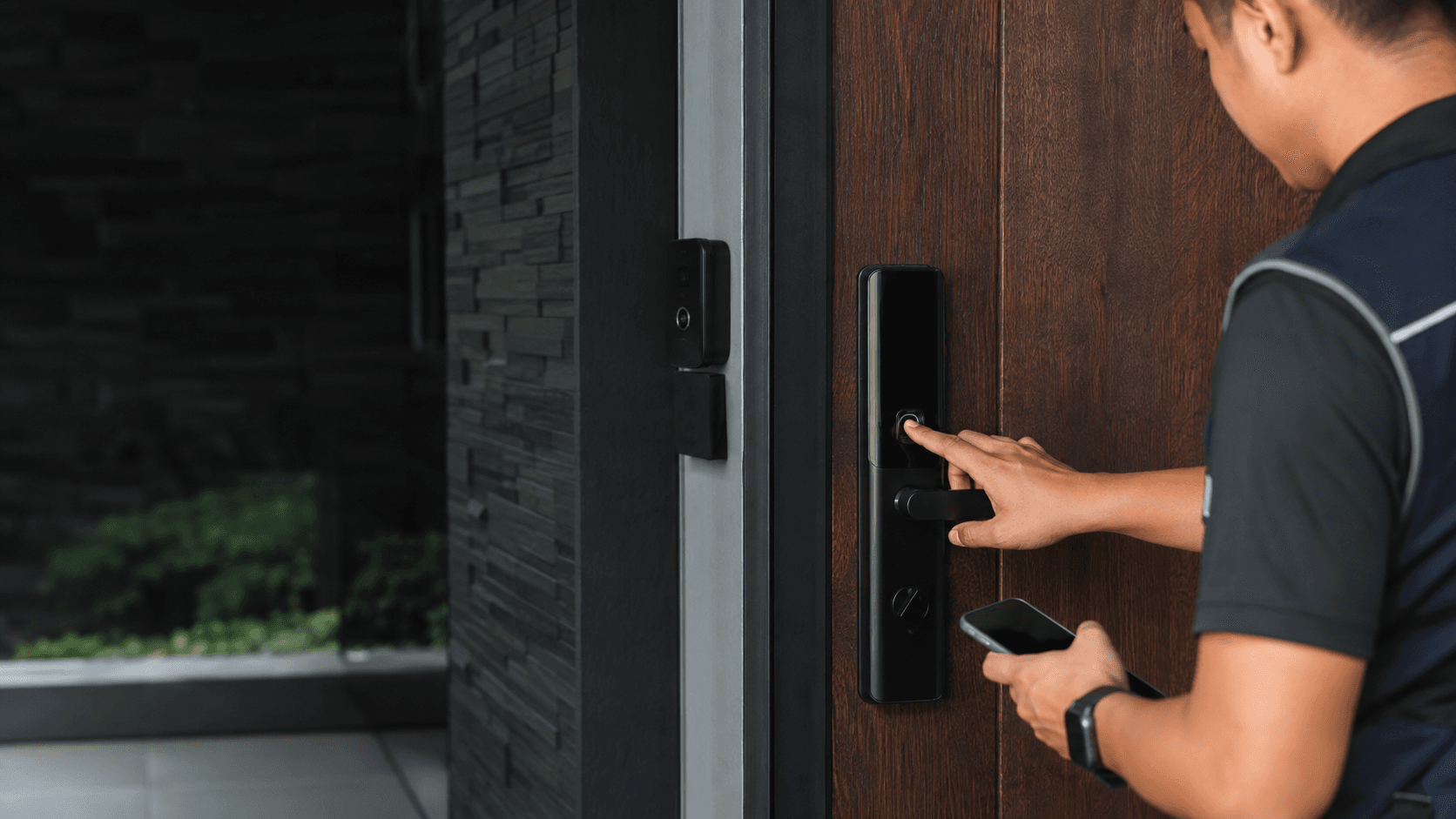
The exact-match query best front door locks with keypad is a comparison phrase, but the decision behind it is rarely about a brand ranking. It is about whether a specific door can carry a keypad lock, how many people need to pass through it, what happens when the battery or the network fails, and who surveys and installs the hardware. Eyonic Sdn Bhd, a security system supplier in Sarawak, treats smart lock door access as a controlled-convenience product rather than a standalone gadget, and its own product review guidance says smart locks work best when door condition, user roles and backup method are reviewed before installation.
That framing matters in Malaysia, where the same query is typed by a homeowner in Kuching replacing a worn deadbolt, by a shop owner managing staff entry, and by an office administrator handling visitors. Each of those readers needs a different answer, and none of them is served by a list of model names with no installation context.
Best Front Door Locks With Keypad: What Matters Before You Choose
A keypad lock changes who can enter and how that entry is recorded. Instead of cutting and distributing keys, the owner issues a code, and that code can be limited to one person, one time window, or one purpose. The practical gain is not convenience alone; it is the ability to withdraw access without changing the lock cylinder.
The trade-off is dependency. A keypad lock needs power, and most residential models rely on batteries. When those batteries are depleted and no mechanical key or secondary entry method exists, the door becomes the problem. This is why backup entry is a planning decision, not an afterthought, and why the review step matters more than the model number.
There is also a behavioural change that buyers underestimate. Households used to handing out a spare key must now decide who holds a permanent code, who receives a temporary one, and who can delete codes later. Without that decision, a keypad lock simply moves key management onto a screen.
Where a keypad lock fits well
Keypad entry suits a main door used by a small, known group: a family home, a rented unit with frequent tenant turnover, a shop with a handful of staff, or an office reception door where visitors are escorted. In each case the value comes from revoking access quickly and from not issuing physical keys.
Where it fits poorly
A door that is warped, swollen from moisture, or fitted with a non-standard mortise cut may not accept a keypad lock without additional carpentry. A door on a shared corridor with building management rules may also restrict what can be fitted. These are physical and administrative constraints, and they are settled by inspection rather than by reading specifications.
Door Condition and User Roles Before Choosing a Keypad Lock
Two checks decide most of the outcome. The first is the door itself. its material, thickness, existing cut-out, alignment, and whether it closes cleanly under its own weight. The second is the user list. how many people need routine entry, how many need occasional entry, and whether anyone needs entry outside normal hours.
For business use, Eyonic usually checks whether a standalone smart lock or an access-control panel is more appropriate. That distinction matters because a standalone lock manages one door for a small group, while an access-control panel manages multiple doors, multiple user groups, and a record of movement. Choosing the smaller option for a larger problem produces a system that works on day one and fails at month six.
Door condition also affects the installation method. A retrofit that reuses the existing bore is faster and less invasive than a full replacement, but it depends on the existing preparation matching the new hardware. Where it does not match, the honest answer is that the door needs preparation before the lock is fitted.
Questions that settle the choice
How many people need entry on a normal day? Does anyone need entry when the premises are closed? Is there a second door that should share the same access rules? Does the property have a manager, landlord, or building rule that limits modification? Each answer narrows the field faster than a feature comparison.
Access Methods, Backup Entry and Handover
Keypad entry is one access method among several. Depending on the hardware, entry may also be available by mechanical key, mobile app, card, or fingerprint. The useful question is not which method is most advanced but which method still works when the primary one does not.
Backup entry deserves the same attention as the primary method. A mechanical override key stored off-site, a second code held by a trusted person, or a secondary door with independent access all serve the same purpose: preventing a single failure from locking out the people who need to get in.
Handover is where most installations are quietly won or lost. Codes must be issued to the right people, default codes must be removed, and the person responsible for adding or deleting users must know how to do it. A lock that nobody can administer becomes a lock that gets bypassed.
What handover should cover
At minimum, handover should confirm that every default credential has been replaced, that each user has the access they need and nothing more, that the backup method has been tested, and that one named person knows how to manage users afterwards. Testing the backup method before the primary one fails is the difference between a plan and an assumption.
How Eyonic Plans a Keypad Lock Installation
Eyonic's installation process follows the same sequence used across its security work: site survey, system proposal, installation, and handover. The same four stages apply to smart lock door access, and the sequence exists because each stage removes a decision that would otherwise be guessed.
- Site survey. The door, frame, existing hardware, and closing behaviour are inspected, and the user list is discussed so the access requirement is known before hardware is proposed.
- System proposal. The recommendation covers whether a standalone smart lock or an access-control panel suits the site, along with the access methods and backup entry approach.
- Installation. The lock is fitted and configured, with user codes and permissions set according to the agreed roles.
- Handover. Access is tested, default credentials are removed, the backup method is verified, and the responsible person is shown how to manage users.
Eyonic has completed access-related work for the Kuching Immigration Office, where the requirement centred on arrival flow, staff areas, visitor movement, and dependable daily operation. That project is a useful illustration of the underlying principle: access planning starts with how people actually move through a door, not with the hardware on it.
Why the survey comes first
A survey answers questions that no product page can. Whether the existing bore can be reused, whether the door closes squarely enough for a lock to engage reliably, and whether the site needs one controlled door or several are all settled on site. Skipping that step shifts the risk onto the installation day.
Practical Next Step for a Keypad Lock Enquiry
The most useful information to prepare is the location, the property type, and the required system. With those three details, a supplier can say whether a keypad lock suits the door, whether a standalone lock or an access-control panel is the better fit, and what the installation would involve.
Eyonic can be reached on WhatsApp at +60 11-5111 7959 with the location, property type, and required system. For readers comparing options, the practical test is simple: if the door condition, the user list, and the backup entry method can all be answered, the choice of best front door locks with keypad becomes a shortlist rather than a guess. If any of those three is unknown, the survey is the next step, not the purchase.
Readers weighing best front door locks with keypad against a wider security setup should also consider how the door fits into the rest of the property. A keypad lock controls one opening; cameras, alarms, and intercoms cover the surrounding approach. Eyonic's broader work in CCTV, alarm, autogate, and keyphone intercom systems in Sarawak reflects that layered view, and its published packages for those systems start at RM 1,599. No equivalent published price exists for keypad lock supply or installation, so any figure for lock work should come from a survey-based proposal rather than an assumption.