
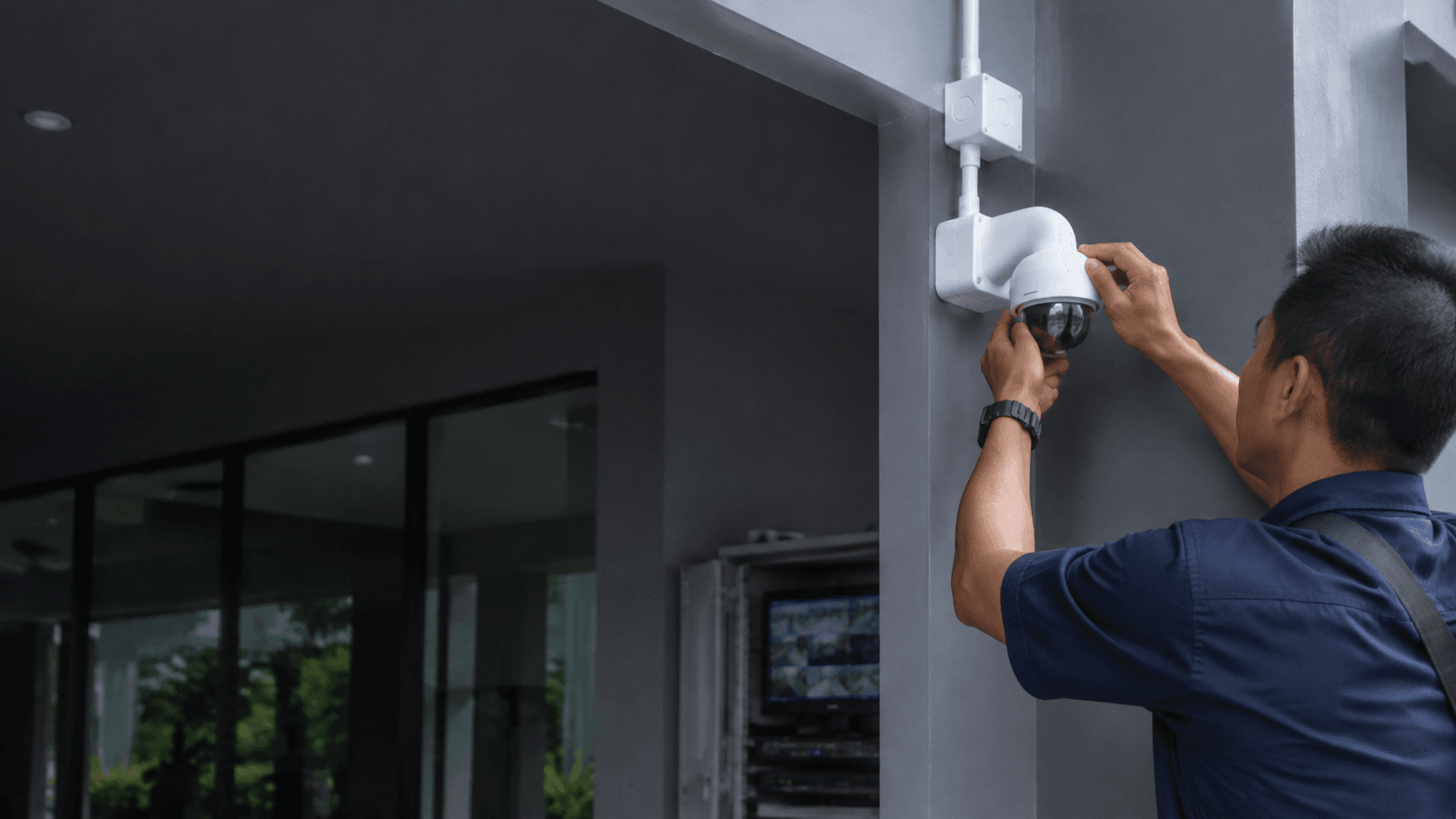
The phrase cheap cctv describes a price band, not a single product. What separates a workable budget system from a frustrating one is rarely the camera badge on the box. It is whether the recording path, the cabling, the lighting at each camera position and the handover were planned before anyone drilled a hole.
Eyonic Sdn Bhd is a security system supplier in Sarawak that plans, supplies and installs monitoring systems for homes, offices, shops and industrial sites. Its published installation process runs through site survey, system proposal, installation and handover, which is the sequence that keeps a low-cost build from turning into a rebuild.
Cheap Cctv. What Matters Before You Choose
Budget CCTV decisions collapse into four questions that have nothing to do with brand marketing. Where does the footage live, how is each camera powered, what does the scene actually look like at night, and who fixes it when a channel drops.
Storage is the first fork. A recorder with a hard drive keeps footage on site and needs no monthly fee, but the drive is a wear item and its capacity sets how far back the timeline reaches. Cloud storage moves that burden to a subscription, which is cheaper on day one and more expensive across three years. Neither is wrong; mixing them without deciding is.
Power and signal come second. Wired cameras need a cable run to each position, which is labour, and labour is where a cheap quote quietly becomes an expensive job. Wireless cameras avoid the cable but inherit Wi-Fi coverage problems, and a camera that drops off the network at 2am is not security.
Lighting is the third question and the one most often skipped. Eyonic advises checking actual lighting conditions before confirming placement for ColorVu-style cameras, because a camera that produces a colour image in a lit car park may produce something very different down an unlit side lane. The specification sheet describes the sensor; the site describes the result.
Finally, decide who owns the system after handover. A package that includes mobile viewing setup and a walkthrough of the recorder interface is worth more than a marginally cheaper box with no configuration.
Choosing the Right Cctv
Choosing well starts with matching the system to the property rather than to a price list. A terrace house, a shophouse and a warehouse have different camera counts, different cable routes and different recording retention needs.
- Define what needs to be seen. entry points, cash handling areas, stock rooms, vehicle access or staff and visitor movement.
- Walk the site at the hours that matter, including after dark, and note where light falls and where it does not.
- Count camera positions from those two lists rather than from a package tier.
- Choose the recording method, on-site recorder or cloud, and confirm how many days of footage must be retained.
- Confirm the cable route and who makes good after installation.
- Agree the handover. mobile viewing on the owner's phone, user accounts, and a test of playback.
That sequence is close to the process Eyonic publishes for its own installations, and it exists because the expensive mistakes happen at steps two and five, not at step three.
What is cctv?
CCTV is a camera system that sends video to a recorder or a cloud service so footage can be reviewed later. In a budget context the meaningful distinction is between a self-contained kit, where cameras and recorder ship together and are configured as a set, and a mixed build, where cameras from one brand meet a recorder from another. Self-contained kits are simpler and usually cheaper to commission. Mixed builds offer more choice but depend on protocol compatibility, and compatibility problems surface as missing channels rather than as error messages.
Best Cheap Home Security Cameras For 2026
Search results for the best cheap home security cameras for 2026 lean heavily on consumer Wi-Fi cameras from brands such as Wyze, Blink, Tapo and Reolink, and on subscription-free local recording. Those products are genuinely inexpensive and genuinely useful for watching a front gate or a pet. They are a different category from an installed CCTV system, and the difference shows up in three places.
Consumer cameras typically record to a memory card or a paid cloud plan, which means footage can be lost with the camera itself. Installed systems record to a recorder that is usually placed out of reach, so a stolen camera does not take the evidence with it. Consumer cameras also depend on household Wi-Fi and mains power at the camera position, while installed systems use dedicated cabling and a recorder that keeps running when the router does not.
For a rented flat or a single doorway, a consumer camera is often the correct answer. For a shop, an office or a house with multiple entry points, the installed route usually costs less per camera once the count rises, because the recorder, cabling and configuration are shared.
| Approach | Recording | Best fit | Main constraint |
|---|---|---|---|
| Consumer Wi-Fi camera | Memory card or cloud plan | Single doorway, rented property, quick setup | Depends on household Wi-Fi and power at the camera |
| Installed kit with recorder | On-site hard drive | Homes, shops and offices with several entry points | Requires cable routes and a survey before installation |
| Installed system with cloud option | Recorder plus subscription | Sites needing off-site copies of key footage | Recurring cost continues for the life of the system |
Eyonic's published Hikvision CCTV package covers camera supply and setup, basic recording configuration and mobile viewing handover at RM 1,599, which places a commissioned small system in the same order of magnitude as several consumer cameras bought separately.
Practical Considerations for Cctv
Cost control in CCTV comes from reducing labour and rework, not from reducing camera quality below the point where the footage is usable. A camera that cannot identify a face or a plate has produced nothing of value, whatever it cost.
Retention is a recurring theme. A recorder's drive fills according to camera count, resolution and motion activity, so a busy shop front and a quiet back lane on the same recorder will not hold the same number of days. Deciding the required retention before purchase is cheaper than adding a larger drive later.
Maintenance is the other practical constraint. Cameras on external walls collect dust, spider webs and water; connectors corrode; drives fail. A budget system with no plan for cleaning lenses and checking recordings is a system that quietly stops being useful months before anyone notices.
Scale is worth planning for even on a small job. Adding two cameras to a four-channel recorder is impossible without replacing the recorder, so a modest allowance for future channels often costs less than the upgrade it prevents.
For sites with more than cameras to consider, the same supplier handles alarm systems, autogate packages, keyphone intercoms and Starlink internet installation in Sarawak, which matters when a single contractor is responsible for the cabling and the handover.
Making an Informed Choice About Cctv
A defensible budget decision rests on a written scope rather than a price. The scope should name the camera positions, the recording method, the retention target, the cable route and the handover steps. With those fixed, competing quotes become comparable, and the cheapest one is no longer automatically the one with the smallest number.
Eyonic's completed work includes the Kuching Immigration Office, where the focus was arrival flow, staff areas, visitor movement and dependable daily operation, and KTA Sarawak Sdn Bhd, an engineering consultancy office in Kuching needing staff movement, visitor handling, tidy cabling and clearer daily site control. Both illustrate the same point. the camera count followed the movement pattern, not the other way round.
Where a site is small and the requirement is a single view, a consumer camera remains a reasonable purchase. Where the requirement involves multiple positions, a recorder, cabling and a handover, an installed package with a defined scope is usually the cheaper path across the life of the system, even when the initial figure is higher.
Share the location, property type and required system with Eyonic on WhatsApp at +60 11-5111 7959 for the next practical step.