
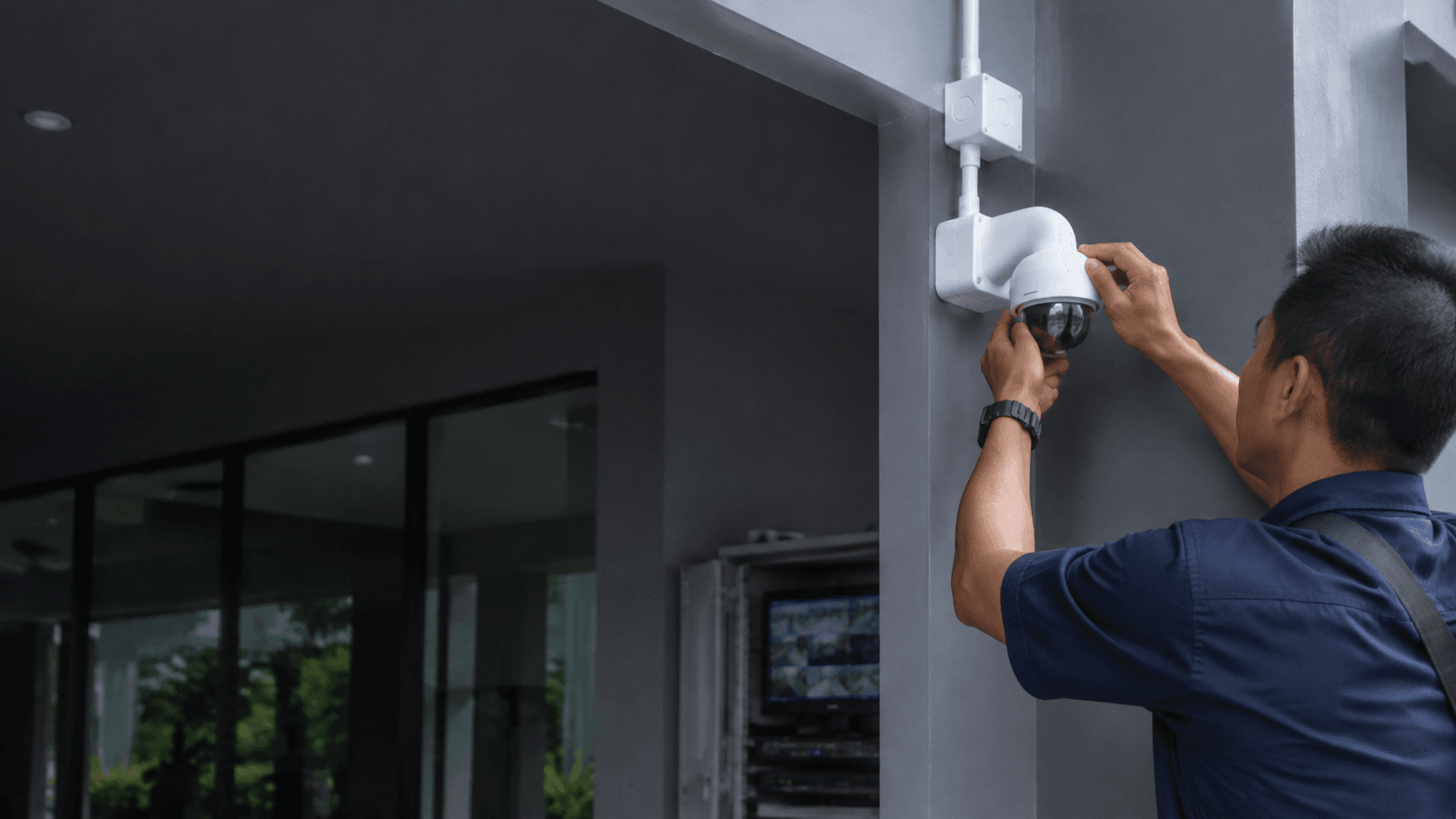
The exact-match query "video surveillance system" describes more than a box of cameras. It covers the survey that decides where cameras go, the recorder that stores footage, the network that carries it, the app that shows it, and the handover that leaves someone able to use it. In Malaysia, the practical difference between a system that works and one that frustrates is usually planning, not hardware.
Eyonic Sdn Bhd is a security system supplier in Sarawak that plans, supplies and installs monitoring systems with camera placement, recording and remote viewing. Its founder, Eric Yong, has worked in the industry for more than 10 years, with a focus on technical installation of digital security solutions for commercial businesses in Sarawak.
Video Surveillance System. What the Setup Covers
A complete setup has four working parts that must fit together: cameras, a recorder, a network path, and a viewing method. Cameras capture the scene. A recorder stores what they capture. The network carries video and power to where it is needed. The viewing method, usually a mobile app, decides whether anyone can actually check footage when it matters.
Eyonic's CCTV service covers camera placement, recording and remote viewing for homes, offices, shops and industrial sites. Those three items map onto the parts above, which is why placement decisions made early are hard to undo later.
Two project examples show how the parts change with the site. For the Kuching Immigration Office, the work focused on arrival flow, staff areas, visitor movement and dependable daily operation. For KTA Sarawak Sdn Bhd, an engineering consultancy, the requirement was a practical office setup in Kuching supporting staff movement, visitor handling, tidy cabling and clearer daily site control. Neither project was about buying the most cameras; both were about covering specific movement patterns.
What a video surveillance system is not
It is not a substitute for an alarm system, an autogate or an intercom, though these are often installed alongside each other. Eyonic supplies all four as separate packages, and each has its own handover: the alarm package covers control panel and sensors, siren and zone setup, and user testing; the autogate package covers motor recommendation, remote-control setup and safety testing.
How a Video Surveillance System Is Planned Before Installation
Eyonic's CCTV installation process runs through four stages: site survey, system proposal, installation, and handover. The order matters because each stage removes guesswork from the next one.
- Site survey. The property is reviewed on location so camera positions are chosen against real walls, real cable routes and real lighting rather than assumptions.
- System proposal. The survey findings become a proposed system covering camera positions, recording and remote viewing, so the scope is agreed before any drilling starts.
- Installation. Cameras, cabling and the recorder are installed and configured, including the recording setup and the mobile viewing connection.
- Handover. The system is tested and explained, so the people who will use it daily know how to view footage and what to do when something looks wrong.
The survey stage is where most problems are prevented. A camera position that looks obvious on a floor plan can turn out to face a blank wall, a reflective surface or a light source that washes out the image at night. Checking the site first means the proposal reflects the building, not a template.
Why the proposal stage is not a formality
A proposal fixes what is included before installation begins. That protects both sides. the installer knows the scope, and the property owner knows what the finished system is meant to do. It also surfaces constraints early, such as a location with no practical cable route or a boundary that needs coverage from an angle the building does not naturally provide.
Video Surveillance System Costs and Package Options in Malaysia
Eyonic publishes three packages at RM 1,599 each, and they cover different jobs rather than different quality tiers.
The Hikvision CCTV Package at RM 1,599 covers camera supply and setup, basic recording configuration, and mobile viewing handover. The Hikvision Alarm System at RM 1,599 covers a control panel and sensors, siren and zone setup, and user testing and handover. The Autogate Package at RM 1,599 covers motor recommendation, remote-control setup, and safety testing and handover.
Larger or more complex sites sit outside package pricing. Two completed Eyonic projects give a sense of the range: the Kuching Immigration Office project had an approximate budget of RM 12,000 to RM 28,000, and the KTA Sarawak Sdn Bhd project had an approximate budget of RM 8,000 to RM 18,000. Both were office environments with movement patterns to cover, not single-camera jobs.
What drives cost upward is scope: more positions to cover, longer cable runs, more complex routing, and the amount of configuration needed to make recording and remote viewing genuinely usable. What keeps cost predictable is deciding the scope at the proposal stage instead of adding positions after installation.
Video Surveillance System Placement and Lighting Checks
Placement is the single decision that most affects whether footage is useful. A camera that covers a gate but not the approach to it records an event without its context. A camera aimed at a corridor junction often covers more useful ground than one aimed down a single corridor.
Lighting deserves its own check. Eyonic recommends checking actual lighting conditions before confirming placement for ColorVu-style cameras. These cameras are designed to produce usable colour images in low light, but the result still depends on what light is actually present at the position, at the hours that matter. A position that looks bright during a daytime survey can behave differently after dark.
Practical placement questions worth settling during the survey include which direction the camera faces at sunset, whether a nearby light source will flare into the lens, whether a wall or pillar blocks part of the intended view, and whether the cable route to that position is realistic. Each answer changes the proposal, which is why the survey comes first.
Coverage versus count
More cameras do not automatically mean better coverage. Overlapping views waste positions that could cover an uncovered approach instead. The useful question is which movements need to be visible, and the Kuching Immigration Office project shows the pattern: arrival flow, staff areas and visitor movement were the named concerns, and coverage was organised around them.
Handover and Daily Operation
Handover is where a system stops being an installation and starts being something a property uses. For the CCTV package, handover includes mobile viewing, so the people responsible can check footage without calling the installer.
Daily operation then depends on a few habits. Someone should know how to open the viewing app and find a recent event. Someone should know what to do when a camera shows nothing, which is usually a network or power issue rather than a camera failure. And someone should know who to contact when the problem is not something they can fix.
Recording configuration set during installation determines what footage exists to review later. Because Eyonic's published package description covers basic recording configuration without stating retention periods or storage sizing, the recording setup for a specific property should be confirmed directly rather than assumed from the package name.
What handover should leave behind
A useful handover leaves the property able to view footage, able to tell the difference between a normal gap in coverage and a fault, and clear on who to contact. It should also leave the cabling tidy, which matters for both reliability and for any future work on the same walls. The KTA Sarawak Sdn Bhd project listed tidy cabling alongside staff movement and visitor handling as part of the requirement, which reflects how often messy installation becomes an operational problem later.
Questions Buyers Ask Before Installing
Does the system need internet? Remote viewing depends on a network connection, because the app has to reach the recorder from outside the property. Recording itself is a local function handled by the recorder, so footage continues to be captured even when the internet is down. The two should be thought about separately.
Can a system be added to later? Yes, and the proposal stage is the right time to plan for it. Leaving spare capacity in the recorder and planning cable routes with future positions in mind costs far less than retrofitting after the walls are finished.
What happens if a camera fails? A single failed camera usually leaves the rest of the system recording. The practical question is how quickly the gap is noticed, which is why handover should include a simple way to check that all cameras are showing.
Is one package enough for a shop or office? The RM 1,599 Hikvision CCTV Package covers camera supply and setup, basic recording configuration and mobile viewing handover. Whether that scope fits a specific shop or office depends on how many positions need covering and how complex the cable routes are, which is what the site survey establishes.
How does a surveillance installation differ from an alarm installation? They answer different questions. A video surveillance system shows what happened and supports review afterwards. An alarm system detects and signals an event as it occurs. Many properties run both, which is why Eyonic offers them as separate packages with separate handovers.
For a property in Malaysia moving from decision to installed system, the practical next step is to share the location, property type and required system with Eyonic on WhatsApp at +60 11-5111 7959, so the survey can be arranged against the actual site.