
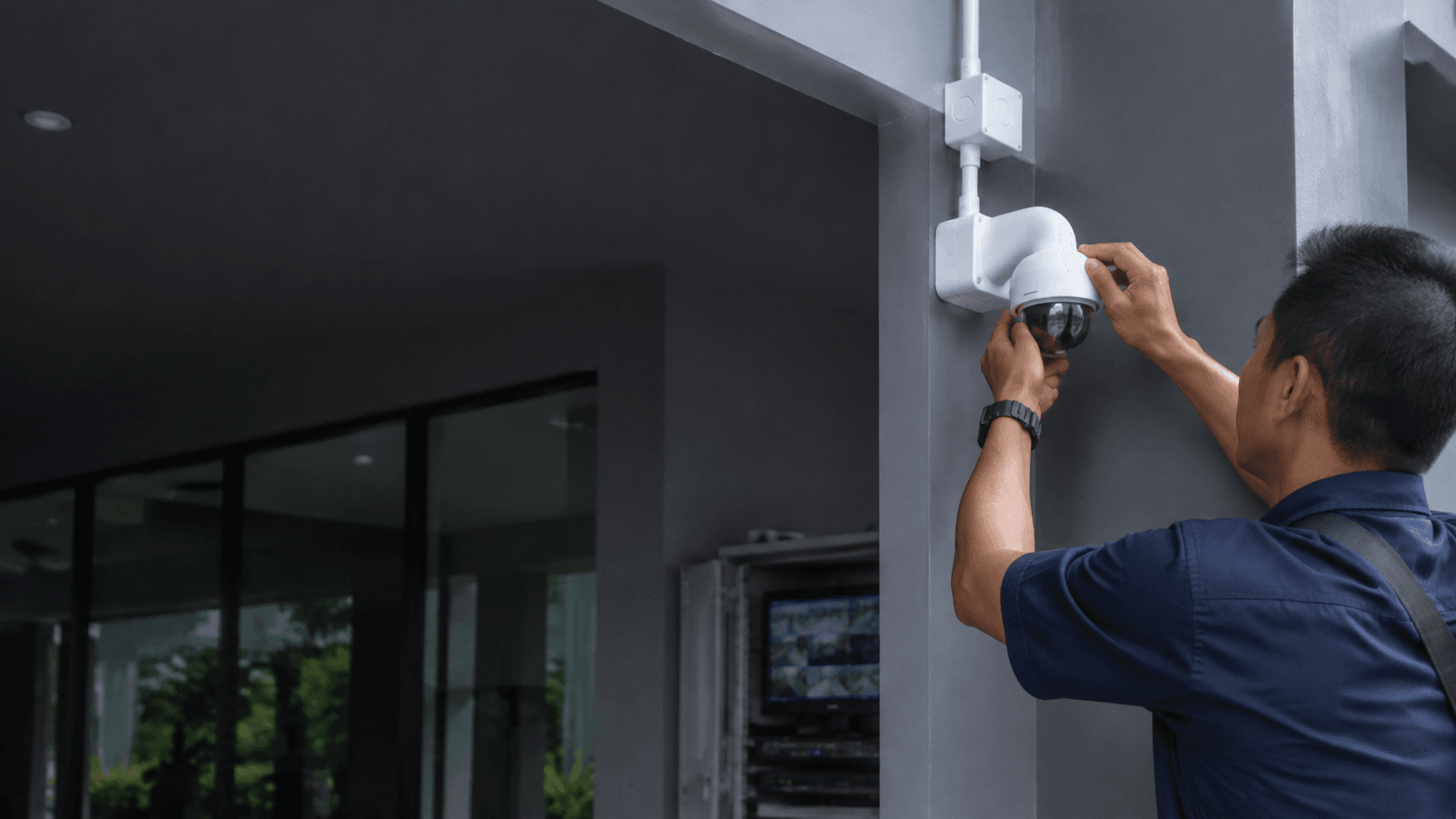
Buyers in Malaysia researching a Kasa Outdoor Camera are usually weighing a simple plug-in Wi-Fi camera against a full wired CCTV system. The two paths differ in cabling, recording, storage and who handles support after handover. This guide covers what the camera is built for, what to check on site before installation, how power and storage decisions shape daily use, and how a single outdoor camera fits a wider setup.
Kasa Outdoor Camera. What Buyers in Malaysia Should Confirm
Most of the risk in buying a Kasa Outdoor Camera sits in four areas: whether the model is still sold and supported, whether the mounting point has power and Wi-Fi signal, where recordings are stored, and who handles faults. None of those are settled by the product listing alone.
Availability is the first check. Kasa Smart has published product pages for outdoor models, and at least one TP-Link page describes a Kasa Cam Outdoor model as an end-of-life product. That status matters in Malaysia because a discontinued model can still be bought from remaining retail stock while receiving no further firmware or app support. Confirming the exact model number and its current support status before payment avoids buying into a dead end.
Warranty and distributor support are the second check. A camera bought through a local retailer or distributor normally carries a claim path inside Malaysia, while a unit imported personally may not. The practical question is who is contacted when the camera stops connecting to the app.
Installation support is the third. Eyonic's CCTV installation process runs through site survey, system proposal, installation and handover, and the same sequence applies to any outdoor camera decision. A site survey confirms where the camera can actually be mounted, how it is powered, and whether the Wi-Fi signal reaches that point.
What the Kasa Outdoor Camera Is Built For
Kasa positions its outdoor cameras for home and small-premises monitoring rather than large multi-camera sites. Published Kasa and TP-Link pages describe features such as weatherproofing, night vision, motion and sound detection, two-way audio, activity zones, local microSD storage and optional cloud storage. Those are the manufacturer's stated capabilities for its own models, not verified specifications for every unit sold in Malaysia.
The design intent is a camera that a household can mount and run without a recorder. Video goes to a microSD card in the camera, and live view and alerts go to a phone app. That suits a single gate, a back lane, a small shop front or a parking spot where running cable back to a recorder is awkward or expensive.
The trade-off is scale. A Wi-Fi camera with on-board storage is a per-camera decision, so adding a fourth or fifth viewpoint means managing separate cards, separate app entries and separate failure points. A wired system with a recorder centralises all of that. Neither is automatically better; the deciding factor is how many viewpoints the property needs and whether anyone will check the recordings.
Where a single outdoor camera makes sense
A single Kasa Outdoor Camera fits a landed property with one exposed approach, a small shop watching its entrance, or a rented premises where drilling and cabling are restricted. It also fits a household that wants phone alerts and live view more than it wants weeks of archived footage.
It fits less well where the requirement is continuous multi-camera recording, long retention, or evidence handling for a business. Those needs point toward a recorder-based system with defined storage and a documented handover.
Placement and Lighting Checks Before Installation
Placement decides whether a camera is useful. A camera aimed at a blank wall records nothing of value, and one aimed into a bright street light records glare. Eyonic recommends checking actual lighting conditions before confirming placement for ColorVu-style cameras, and the same discipline applies to any outdoor camera, including a Kasa Outdoor Camera.
Complete these checks before ordering:
- Walk the property at night and note which areas are lit, which are dark, and where a light source would sit in the camera's field of view.
- Identify the exact mounting height and angle, then confirm the view covers the approach, gate or doorway rather than open sky or a neighbouring wall.
- Confirm power reaches the mounting point, since outdoor Kasa models are described as wired rather than battery-powered.
- Test Wi-Fi signal strength at the mounting point, not inside the house, because walls and distance reduce it.
- Check whether the camera can be reached for card removal, cleaning and reset without a ladder and a second person.
- Confirm the mounting surface can take screws and that the cable route is protected from rain and casual tampering.
Two placement constraints are easy to miss. First, a camera mounted under a deep eaves may stay dry but lose night-time visibility because the structure blocks the view. Second, a camera pointed at a public road or a neighbour's property raises privacy considerations that are better resolved before installation than after.
Night recording expectations
Night performance depends on the light available at the scene, not on the camera alone. A position with some ambient light from a porch lamp or shop signage generally produces a more usable image than a completely unlit corner. Where the scene is genuinely dark, the practical options are adding a light source, choosing a camera with a stronger low-light capability, or accepting that night footage will be limited.
Power, Storage, and Recording Choices
Power and storage are the two decisions that most often surprise buyers after installation. Outdoor Kasa models are described in manufacturer material as wired, which means a power source must exist at the mounting point. An indoor socket feeding a cable through a window is a temporary arrangement, not an installation.
Storage splits into local and cloud. Local microSD storage keeps recordings on the card inside the camera, with no ongoing subscription, but capacity is limited by card size and the card can be removed if someone reaches the camera. Cloud storage keeps recordings off-site and survives theft of the unit, but it is a recurring cost and depends on the internet connection staying up.
Recording mode is the third variable. Continuous recording fills storage quickly and captures everything, including nothing happening. Event-based recording triggered by motion or sound uses far less space but depends on detection working reliably and on activity zones being set so passing traffic does not generate constant alerts.
Retention is worth calculating before buying. A card that holds a few days of event clips is enough for reviewing an incident reported the next morning. It is not enough for a business that needs a month of history. Where retention matters, a recorder-based system with a defined hard drive capacity is the more predictable route.
How a Fits a Wider CCTV Setup
A Kasa Outdoor Camera is a standalone device, not a component of a recorder-based CCTV system. It does not become part of an NVR channel list the way a wired IP camera does. That distinction shapes how it fits an existing setup.
Where a property already runs a wired system, adding a Wi-Fi camera creates a second place to look for footage. That is workable for a supplementary viewpoint, but it means two apps, two storage locations and two retention periods. Where the property has no system at all, a single Wi-Fi camera is often the simplest starting point, and a wired system can be added later for the areas that need continuous coverage.
Eyonic's own work follows a survey-first pattern. The Kuching Immigration Office project focused on arrival flow, staff areas, visitor movement and dependable daily operation, and the KTA Sarawak Sdn Bhd project covered staff movement, visitor handling, tidy cabling and clearer daily site control. Both illustrate the same point. camera choice follows from what the site needs to see, not the other way round.
For a mixed setup, the practical split is to use Wi-Fi cameras where cabling is impractical and a recorder-based system where coverage, retention and central review matter. Deciding that split during the site survey avoids buying hardware twice.
Questions to Settle Before Ordering a
These are the points worth resolving before payment, because each one changes what should be ordered.
Is the specific model still supported? Check the model number against the manufacturer's current product and support pages. A model listed as end-of-life may still work but will not receive updates.
Does the mounting point have power and Wi-Fi? Both need to be confirmed on site. A camera that cannot connect reliably produces gaps in recording rather than a clean failure.
Where will recordings live, and for how long? Local card, cloud subscription, or a recorder. Each has a different cost pattern and a different retention limit.
Who installs it, and who supports it afterwards? A self-installed camera means self-support. A supplied and installed camera means a defined point of contact for faults.
Is one camera enough? If the property has more than one exposed approach, plan the full set of viewpoints before buying the first unit.
Eyonic Sdn Bhd is a security system supplier in Sarawak that plans, supplies and installs CCTV and ELV systems for homes, offices, shops and industrial sites, with published packages starting at RM 1,599 for a Hikvision CCTV package, an alarm system or an autogate package. Eric Yong, the founder, has worked in the industry for more than ten years, with a focus on technical installation of digital security solutions for commercial businesses in Sarawak.
Share your location, property type and required system with Eyonic on WhatsApp at +60 11-5111 7959 for the next practical step.