
Buyers searching for a dahua 5mp camera price usually want one of two things: a rough figure to budget against, or a way to tell whether a quoted model is the right one for the site. Those are different questions, and the second one decides the first. A 5MP fisheye, a 5MP bullet and a 5MP indoor pan-and-tilt camera do not sit in the same price band, and the gap between them is driven by lens, housing, night-imaging method and analytics rather than by the megapixel count alone.
Dahua 5mp Camera Price: What Matters Before You Choose
Price tracks the model family, not the resolution. Two cameras can both be 5MP and differ substantially in cost because one is a fixed indoor unit and the other is a weather-rated outdoor model with motorised zoom or dual-light illumination.
Work through the decision in this order, because each step narrows the models that remain relevant:
- Fix the location and mounting height, since indoor ceiling, outdoor wall and high-ceiling positions rule out different housings.
- Choose the form factor — dome, bullet, turret, fisheye or pan-and-tilt — based on the field of view the position actually needs.
- Confirm the light available at night, because low-light performance is one of the largest cost drivers in any 5MP range.
- Decide whether analytics such as people counting or heat mapping are required, as these appear only on higher tiers.
- Match the recorder, since a 5MP camera needs an NVR or DVR that supports the resolution and the codec in use.
- Price the installation separately from the hardware, including cabling, mounting and configuration.
Steps five and six are the ones most often left out of a hardware-only comparison, and they are the ones that change the total project figure most.
Why the same resolution carries different prices
Dahua's 5MP HDCVI Starlight fixed bullet datasheet describes a 1/2.7-in. sensor and 2592 × 1944 output, which is the resolution shared across much of the 5MP line. The datasheet is a specification document, not a price list, so it establishes what the resolution means rather than what any model costs. What it does show is that resolution is a common baseline across the range, which is why price differences between 5MP models come from everything else.
Housing and ingress protection are a clear example. A model rated for outdoor use carries sealing, connector protection and a different body, and that shows up in the price. An indoor unit does not need any of it.
Where a 5MP camera earns its cost
The practical argument for 5MP over 2MP or 4MP is vertical coverage. A 2592 × 1944 frame is a 4:3 shape, which captures more height in the same scene than a 16:9 frame of similar width. That matters in warehouse aisles, on retail floors, at loading docks and in any space where the camera looks down a tall or deep area rather than across a flat one.
If the scene is a wide, flat perimeter, the extra vertical pixels do less work and a lower resolution may cover it adequately. That is a genuine trade-off, not a sales position.
Choosing the Right Dahua 5mp Camera
Form factor is the fastest way to narrow the field. Each shape solves a specific viewing problem, and choosing the wrong one costs more than choosing the wrong resolution.
| Form factor | Typical fit | Main constraint |
|---|---|---|
| Fisheye / panoramic | One camera covering a whole room, including overhead views | Detail at the edges of the frame is lower than a directional lens |
| Bullet | Longer outdoor runs along walls, fences and perimeters | Visible and directional, so it covers one line of sight |
| Turret / dome | General indoor and outdoor coverage where a compact body suits the surface | Dome glazing can affect image quality if it is dirty or scratched |
| Pan and tilt | Indoor rooms where one unit must cover several angles | It can only look in one direction at a time |
A fisheye model such as the Dahua N55CT5 is a 5MP 360° panoramic indoor unit, which places it in a different role from a fixed bullet. The N55CT5 is listed by a reseller as discontinued, so availability for that specific model is a real constraint rather than a detail. Anyone pricing a fisheye today should confirm current stock before building a design around it.
What is dahua 5mp camera?
A Dahua 5MP camera is a surveillance camera from Dahua's range that captures roughly five million pixels per frame, most commonly at 2592 × 1944. The 5MP figure describes the sensor output, not the lens, the housing or the analytics. Two cameras can both be 5MP and behave very differently at night or in a wide scene.
Dahua's 5MP line spans IP network cameras and HDCVI analogue models, which matters because the two connect to different recorders. An IP 5MP camera runs over network cabling and typically PoE, while an HDCVI 5MP camera runs over coax to a compatible DVR. Confirming which side of that split a quoted model sits on prevents a mismatch at installation.
Dahua 5MP IP Cameras Price - Router-switch.com
Router-switch.com is one of the sources that appears in search results for this query, and it is worth understanding what a listing page of that kind does and does not tell a buyer.
A reseller listing gives a model number, a specification set and a listed figure at a point in time. It does not give the landed cost in Malaysia, the installation cost, or the recorder needed to make the camera work. Those three items are usually larger than the difference between two competing listings of the same model.
Listings also carry availability status. The N55CT5 example shows a reseller page marked discontinued, which means the listed figure is historical rather than purchasable. Treating a discontinued listing as a current price is one of the most common budgeting errors in this category.
How to read a price listing properly
Check four things on any listing before using the figure: whether the model is current, whether the price includes tax and shipping, whether the recorder and storage are included, and whether the warranty is stated. A listing that answers all four is usable for budgeting. One that answers none of them is a starting point only.
For a Malaysian buyer, the currency and shipping route on an overseas listing usually mean the displayed figure is not the figure paid. Import charges and freight sit on top.
Practical Considerations for
Three constraints decide whether a 5MP camera performs as expected after installation, and none of them appear on a price list.
Lighting. Night performance depends on the illumination method the model uses. Checking the actual lighting conditions at the site before confirming placement is the step that prevents a camera being installed where it cannot see. A position that looks adequate in daylight can be unusable after dark.
Bandwidth and storage. A 5MP stream carries more data than a 2MP or 4MP stream at the same frame rate. H.265 and H.265+ compression reduce that load, but the recorder, the storage calculation and the network still have to be sized for 5MP rather than assumed from an older 2MP design.
Lens and mounting height. The lens determines the field of view, and the mounting height determines what that field of view actually contains. A wide lens mounted too high produces a frame full of floor. A narrow lens mounted too low misses the area behind it.
Installation is part of the price
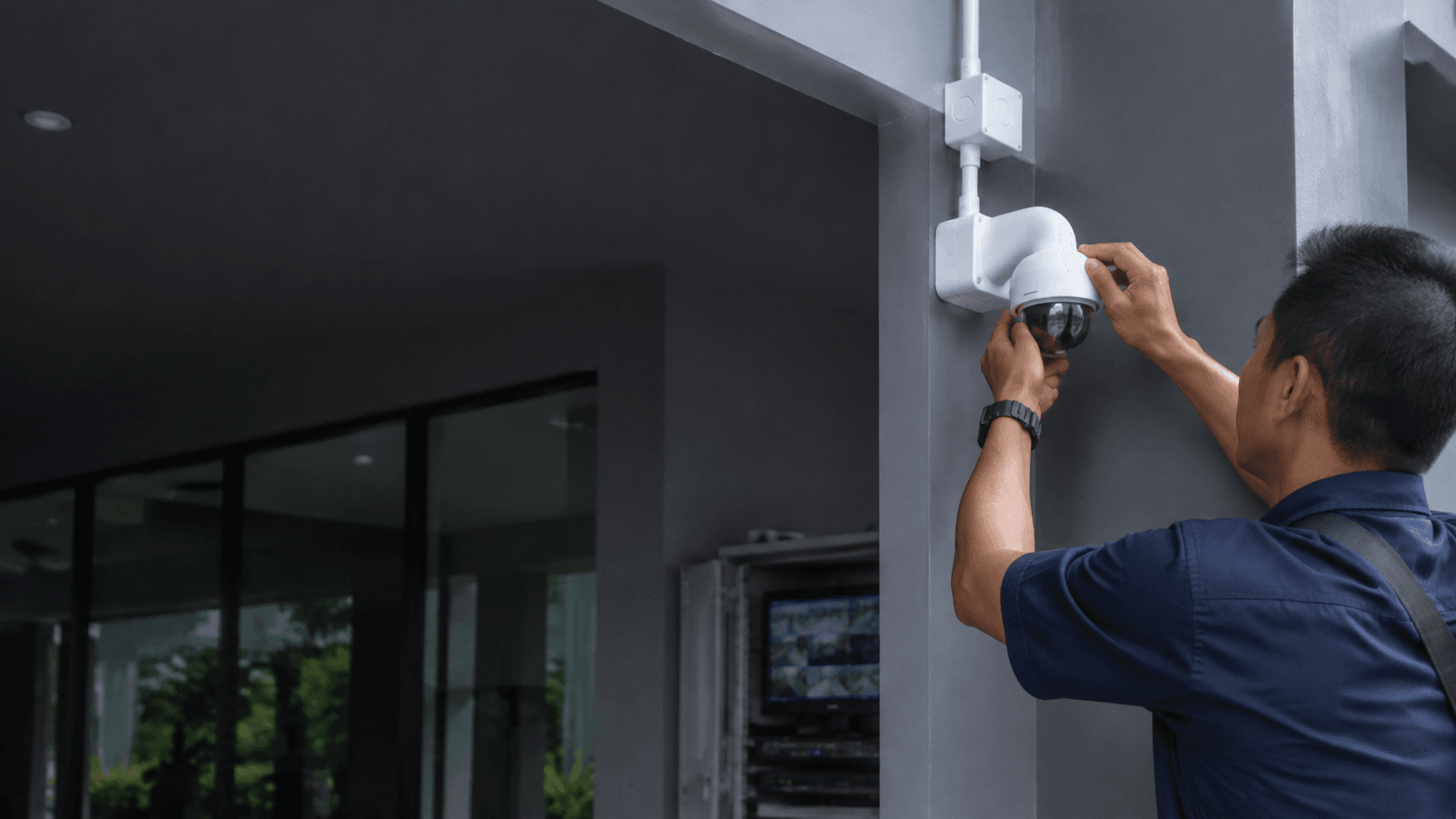
Hardware cost and installed cost are separate figures. A practical installation sequence runs through a site survey, a system proposal, installation, and handover, and each stage carries work that a hardware listing does not include. Camera placement, NVR setup and remote viewing configuration are all part of delivering a working system rather than a box of cameras.
For a public office in Kuching, the work focused on arrival flow, staff areas, visitor movement and dependable daily operation. That is a useful illustration of how the requirement shapes the design: the camera positions followed the movement pattern of the building, not a standard template. A comparable office project in Kuching for an engineering consultancy needed a practical setup supporting staff movement, visitor handling, tidy cabling and clearer daily site control.
Those examples show why a per-camera figure is a weak basis for a budget on its own. The number of cameras, their positions and the cabling route are decided by the building.
Making an Informed Choice About
The useful output of this research is not a single number. It is a shortlist of models that fit the site, with a hardware figure and an installation figure kept apart.
Start with the location and the light, choose the form factor that matches the field of view, confirm the model is current, then price the recorder and the installation alongside the camera. A 5MP camera that is correctly placed and correctly lit will outperform a higher-specified model in the wrong position, and the price difference between the two is often smaller than the cost of moving one after the fact.
Where the site has mixed requirements — an outdoor perimeter plus an indoor room, for example — the design usually combines form factors rather than standardising on one model. That is normal, and it is the point at which a per-camera price stops being a meaningful unit of comparison.
Share the location, property type and required system with Eyonic on WhatsApp at +60 11-5111 7959 for the next practical step.