
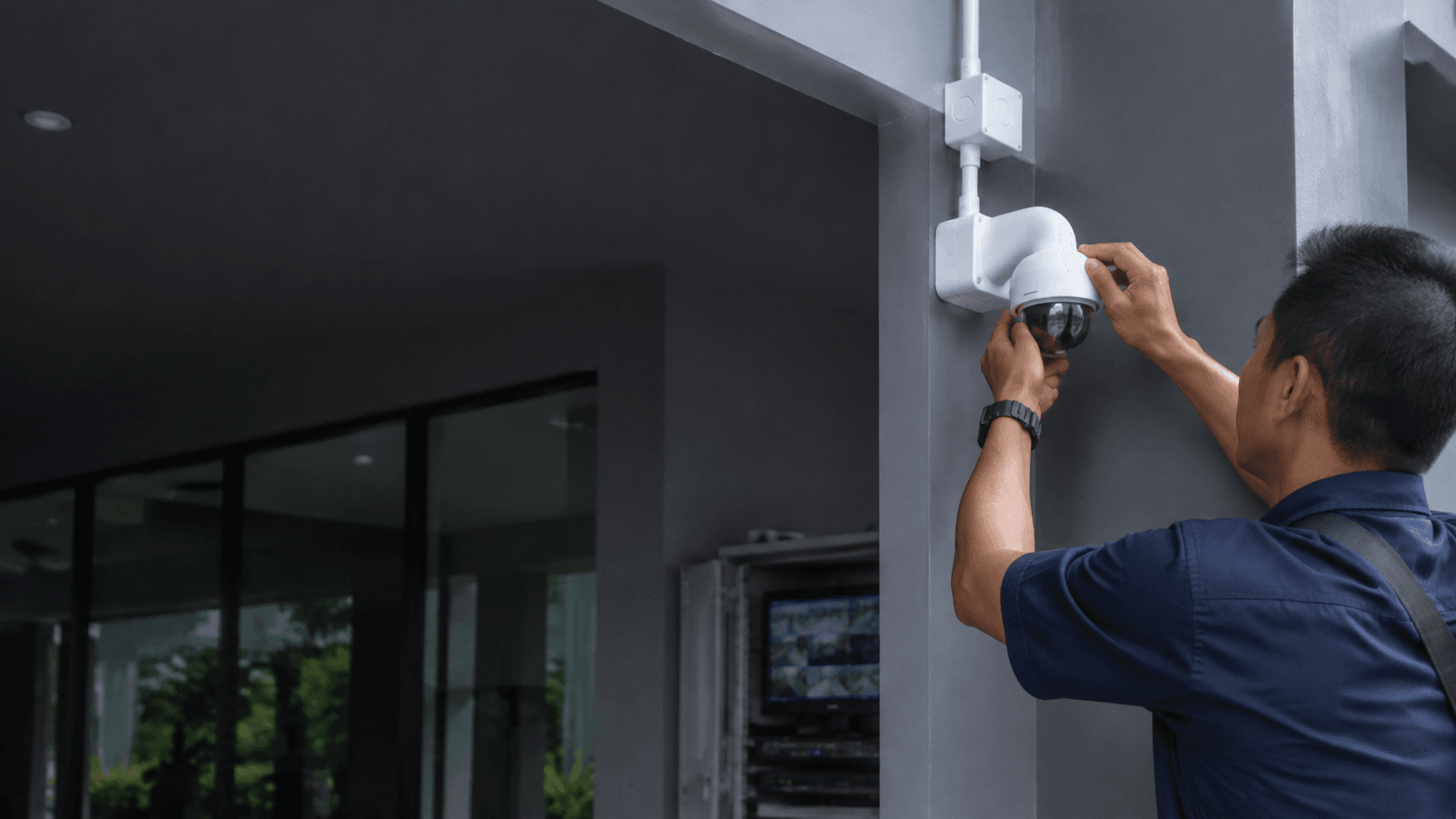
The exact-match query wireless security cameras for small business describes a practical buying decision, not a single product. A small business needs coverage of the areas that matter, a recording method that survives a power cut, and a way to check footage without standing at a desk. Eyonic Sdn Bhd, a security system supplier in Sarawak, Malaysia, plans, supplies, and installs monitoring systems with camera placement, recording, and remote viewing for homes, offices, shops, and industrial sites.
This guide covers what to decide before buying, how wireless differs from wired in real buildings, what the 2026 comparison pages actually measure, and where a small operation in Malaysia should focus its budget.
Wireless Security Cameras For Small Business: What Matters Before You Choose
Most buying guides open with a brand list. That order is backwards for a small site. The physical layout decides more than the camera model does, because a camera pointed at the wrong spot records nothing useful regardless of resolution.
Work through these decisions in order. Each one constrains the next, so skipping ahead usually means re-buying equipment later.
- Map the areas that need coverage: entry and exit points, cash or stock areas, staff-only doors, and any outdoor perimeter.
- Check the lighting at each spot during the hours that matter, including after dark, before confirming placement.
- Confirm the Wi-Fi signal strength at each camera position, not just at the router.
- Decide how long footage must be kept and whether recording continues during a power outage.
- Choose between local recording on a recorder and cloud storage, or a combination of both.
- Confirm who will view footage, from which devices, and whether permissions differ by role.
- Plan the installation route for power and cabling before any camera is mounted.
Eyonic's own installation process follows a similar sequence: site survey, system proposal, installation, and handover. The survey stage exists because lighting and signal conditions vary between buildings, and a proposal built without them tends to need revision after the first camera goes up.
What is wireless security cameras for small business?
The term covers cameras that send video over a wireless network rather than through a video cable back to a recorder. Power still has to reach each camera, either from a nearby outlet, a battery, or a solar panel, so "wireless" describes the data path and not the power path. That distinction matters during planning, because a position with good sightlines but no power source is not automatically usable.
For a small business, the practical appeal is installation flexibility. Cameras can be placed where coverage is needed without running video cable through walls or ceilings, which shortens installation time and reduces disruption to daily operations. The trade-off is dependence on network stability and, for battery models, a maintenance routine for charging or replacement.
Choosing the Right Wireless Security Cameras For Small Business
Selection comes down to matching camera capability to the conditions at each position. Four factors do most of the work.
Resolution and detail. Higher resolution helps when footage needs to identify a person or read a plate, but it also increases storage and bandwidth demand. A small shop with a short retention window can often accept higher resolution than a site that must keep footage for weeks.
Low-light performance. This is where many installations disappoint. A camera rated for colour night vision still depends on available light, and Eyonic recommends checking actual lighting conditions before confirming placement for ColorVu-style cameras. A position that looks bright during a site visit at midday may be nearly dark at 2am.
Field of view. A wide lens covers more area with fewer cameras but stretches detail at the edges. Narrower lenses give clearer identification over a shorter distance. Entrances usually benefit from the narrower option; open yards usually need the wider one.
Storage and retention. Local recording on a network video recorder keeps footage on site and avoids recurring subscription costs. Cloud storage survives theft or damage to the recorder but adds a monthly fee and depends on upload bandwidth. Many small sites run local recording as the primary method and treat cloud as a secondary copy for the most important cameras.
Best Security Cameras For Businesses In 2026
Published comparison pages in 2026 converge on a similar set of evaluation criteria rather than a single winner. SafeHome.org scores business camera systems across customer service, value, equipment, features and technology, and ease of use. Security.org weights professional monitoring, storage options, resolution, and smart platform compatibility, and separates recommendations for large businesses from those for small ones. The Reel Shot frames the small-business decision around video quality, connectivity, power options, storage, and intelligent detection.
Those criteria are useful as a checklist. They are not a ranking that transfers directly to a Malaysian small business, because availability, pricing, and support arrangements differ by market. A camera that scores well on a US review site may have no local installer, no spare parts, and no warranty pathway in Sarawak.
What the comparison pages do establish is the feature set worth confirming before purchase: resolution, night performance, storage method, remote access, and detection quality. Any system under consideration should be checked against all five.
Practical Considerations for Wireless Security Cameras For Small Business
Wireless systems fail in predictable ways. Planning around these failure modes is more valuable than comparing spec sheets.
Network dependence. Every wireless camera competes for bandwidth with point-of-sale terminals, card machines, and staff devices. A network that performs well with ten connected devices may struggle with ten devices plus eight cameras streaming continuously. Separating camera traffic onto its own network segment is a common fix.
Power continuity. A camera without power records nothing, and a recorder without power stores nothing. For sites where after-hours incidents matter most, backup power for the recorder and network equipment is often a higher priority than adding another camera.
Physical vulnerability. Cameras mounted within easy reach can be disabled. Higher mounting positions and tamper-resistant housings reduce the risk, though they can complicate maintenance access.
Coverage gaps. Blind spots are usually created by obstructions added after installation, such as new shelving, signage, or stock. A coverage review after any layout change catches these before they matter.
Retention versus cost. Longer retention requires more storage. A site that only needs to review the last few days can run smaller storage than one that must retain footage for a month.
What a Sarawak installation involves
Eyonic's completed projects show how the planning stage translates into a working system. For the Kuching Immigration Office, the work focused on arrival flow, staff areas, visitor movement, and dependable daily operation. For KTA Sarawak Sdn Bhd, an engineering consultancy, the requirement was a practical office setup in Kuching supporting staff movement, visitor handling, tidy cabling, and clearer daily site control.
Both cases share a pattern. the camera positions followed the movement of people through the building, not a standard template. That is the main argument for a site survey before purchase. The approximate budget range for the Kuching Immigration Office type of work was RM 12,000 to RM 28,000, and for the KTA Sarawak office setup, RM 8,000 to RM 18,000. Smaller single-site installations sit well below those figures.
Eyonic's published packages start at RM 1,599 for a Hikvision CCTV package covering camera supply and setup, basic recording configuration, and mobile viewing handover. An alarm system package and an autogate package are listed at the same price. These are entry points rather than ceilings, since multi-camera commercial coverage with longer retention costs more.
Making an Informed Choice About
The decision usually comes down to three trade-offs.
Wireless versus wired. Wireless wins on installation speed and flexibility, particularly in older buildings where running cable is disruptive or impractical. Wired wins on reliability and sustained bandwidth, and suits sites where cameras run continuously at high resolution. A mixed approach is common. wireless where cable routes are difficult, wired where the run is straightforward.
DIY versus installed. Self-installed systems cost less upfront but place the burden of placement, configuration, and troubleshooting on the business owner. An installed system includes a survey and a proposal, which reduces the risk of cameras pointing at the wrong area. The right choice depends on whether someone on site has the time and technical comfort to manage the setup.
Subscription versus local storage. Cloud subscriptions add predictable monthly cost and off-site protection. Local storage has no recurring fee but keeps footage on the premises. Sites with tight ongoing budgets often prefer local recording with cloud reserved for a small number of critical cameras.
Two constraints are worth stating plainly. First, wireless cameras still need power, so battery life or outlet access shapes placement as much as sightlines do. Second, no camera system prevents an incident; it records one and supports a response. Businesses that need active deterrence should consider alarms, lighting, and access control alongside cameras rather than expecting cameras alone to cover it.
For a small business in Sarawak, the practical next step is a site survey that establishes lighting conditions, network coverage, and the areas that genuinely need monitoring. That survey produces a proposal grounded in the actual building rather than a generic package. Eyonic can be reached on WhatsApp at +60 11-5111 7959 with the location, property type, and required system.