
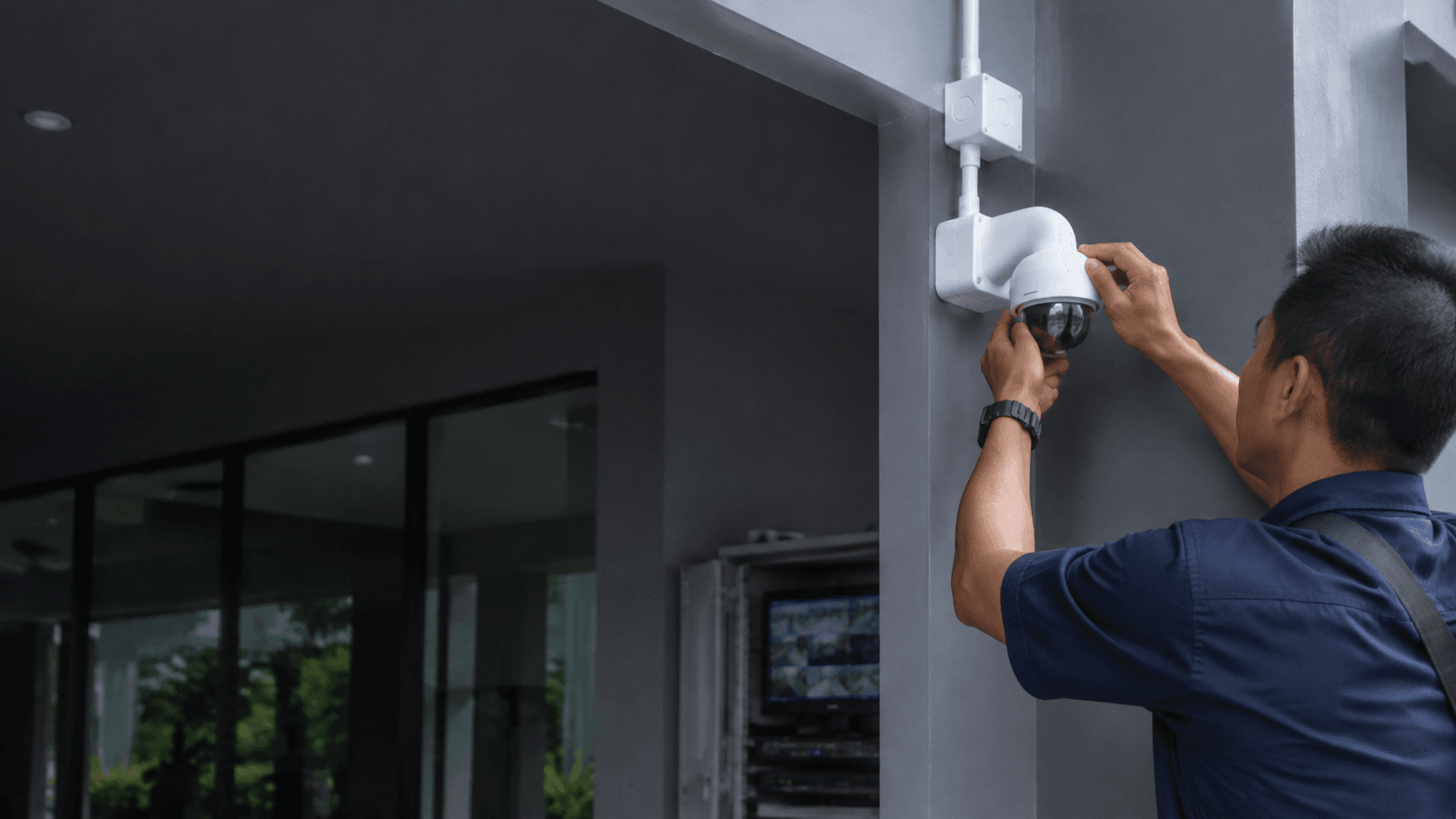
The exact-match query adt surveillance cameras describes a product family rather than a single device. ADT does not manufacture one universal camera; the lineup splits by platform, and the split determines who installs the hardware, how video is stored, and what the monthly bill looks like. Understanding that division is the fastest way to judge whether the system fits a given property.
Adt Surveillance Cameras. What Matters Before You Choose
Three variables decide most of the outcome: platform, installation model, and storage. Platform determines which cameras are available. Installation determines who mounts them and how long setup takes. Storage determines whether footage lives in the cloud, on a local recorder, or both.
ADT Pro Install pairs ADT monitoring with Google Nest hardware. ADT Blu uses ADT-branded 2K cameras and supports a do-it-yourself path. The two platforms do not share a single camera catalog, so a buyer comparing models across them is comparing different product lines, not tiers of one line.
- Confirm which ADT platform applies, because Pro Install and ADT Blu carry different cameras and different installation models.
- Decide between professional installation and self-installation, since that choice affects labor cost and setup time.
- Check whether footage needs cloud storage, local storage, or both, because ADT has been reported as lacking local storage on some configurations.
- Verify the internet connection at each camera position, since wireless cameras depend on stable Wi-Fi at the mounting point.
- Review contract terms and monitoring plan length before committing, because ADT agreements carry obligations that outlast the hardware.
Choosing the Right Adt Surveillance Cameras
Camera choice follows from the coverage problem, not from the spec sheet. A front gate, a shop counter, and a warehouse loading bay each need different fields of view and different lighting tolerance.
Indoor cameras suit entry halls, reception areas, and stockrooms where lighting is controlled. Outdoor cameras need weather resistance and must handle night conditions, headlights, and moving shadows. A doorbell camera covers the approach path and captures faces at close range, which a wide-angle camera mounted high on a wall often cannot do.
Placement matters more than resolution in most real installations. A 2K camera aimed at a blank corridor produces less useful footage than a 1080p camera aimed at the point where people actually pass. Lighting conditions should be checked at the actual position before a camera is confirmed for that spot, because a location that looks bright during a daytime survey can behave very differently after dark.
What is adt surveillance cameras?
ADT surveillance cameras are the camera products ADT sells as part of its home and business security offering. They fall into two groups. Google Nest cameras supplied through ADT Pro Install, and ADT-branded 2K cameras supplied through ADT Blu. Both groups integrate with ADT monitoring and the ADT+ app.
This is a product family, not a single model. Buyers who search for one specific ADT camera usually find that availability depends on which platform serves their address and which monitoring plan they select.
Outdoor Security Cameras | ADT Security
Outdoor coverage is where most surveillance decisions are actually made. ADT Pro HD Outdoor Security Cameras are positioned to keep an eye on what matters outside a property, and the ADT app supports two-way conversation through an outdoor camera so someone at the door can be spoken to remotely.
Outdoor installation introduces constraints that indoor work does not. Cable runs must be protected, mounting heights must balance coverage against tampering risk, and power must reach the camera position. Wireless models remove the cable run but add a battery or power-management routine and depend on signal strength at the mounting point.
Night performance separates usable outdoor systems from disappointing ones. Infrared illumination produces black-and-white footage in darkness. Color-capable night cameras need some ambient light to work as intended, which is why the actual lighting at a position should be verified before that position is confirmed.
Indoor and outdoor coverage compared
| Consideration | Indoor camera | Outdoor camera |
|---|---|---|
| Primary use | Entry halls, reception, stockrooms | Gates, driveways, perimeter, loading areas |
| Lighting | Usually controlled and predictable | Variable, with night and glare conditions |
| Weather exposure | None | Rain, heat, and dust resistance required |
| Installation constraint | Interior cable routing | Protected cable runs or battery power |
| Coverage risk | Privacy-sensitive areas | Mounting height versus identification distance |
Practical Considerations for Adt Surveillance Cameras
Cost structure is the most common source of surprise. ADT camera pricing has been reported as starting from $99.99 for Google Nest cameras through ADT Pro Install and from $69.99 for ADT-branded 2K cameras through ADT Blu, with monthly costs differing between the two platforms. Hardware cost and monitoring cost are separate line items, and the monthly figure continues after the hardware is paid for.
Storage is the second consideration. Cloud storage keeps footage accessible from the app but depends on a subscription and an internet connection. Local storage keeps recording on site and continues during an internet outage, but ADT has been reported as lacking local storage, which is a real limitation for sites that need footage to survive a connectivity failure.
Contracts are the third. ADT agreements carry obligations that extend beyond the equipment, and cancellation terms should be read before signing rather than after. For a rented property or a business that may relocate, that matters.
For readers in Malaysia, ADT's own installation and monitoring footprint is the practical constraint. A buyer comparing ADT surveillance cameras against locally supplied and locally installed systems is weighing brand ecosystem and monitoring integration against local service response, local warranty handling, and hardware that can be serviced on site. In Sarawak, for example, Eyonic Sdn Bhd plans, supplies, and installs CCTV systems with camera placement, recording, and remote viewing for homes, offices, shops, and industrial sites, and its installation process runs through site survey, system proposal, installation, and handover. That sequence exists because camera placement decisions made on site tend to hold up better than placement decided from a floor plan.
Public-sector and commercial work shows the same pattern. A Kuching Immigration Office project focused on arrival flow, staff areas, visitor movement, and dependable daily operation, with an approximate budget of RM 12,000 to RM 28,000 for that type of work. A separate engineering consultancy office setup in Kuching addressed staff movement, visitor handling, tidy cabling, and clearer daily site control, with an approximate budget of RM 8,000 to RM 18,000. Neither project was solved by camera resolution alone; both were solved by deciding what needed to be seen and where.
Making an Informed Choice About
The decision usually comes down to ecosystem versus local control. ADT surveillance cameras make sense when the priority is one integrated system with professional monitoring, a single app, and a national brand behind the service. A locally specified and installed system makes sense when the priority is on-site survey, service response in the same region, and hardware that a local technician can replace without a national support queue.
Neither answer is universal. A property inside ADT's service footprint with a preference for monitored integration has a clear case for the ADT route. A property outside that footprint, or one where a failed camera needs same-week attention, has a clear case for local supply and installation.
For a local installation in Sarawak, Eyonic can be reached on WhatsApp at +60 11-5111 7959 with the property location, property type, and required system. Eyonic's founder, Eric Yong, has worked in digital security installation for more than ten years, with a focus on commercial businesses in Sarawak.
Whichever route is chosen, the sequence that produces a working system is consistent: survey the site, decide what must be seen, confirm lighting and connectivity at each position, agree on storage and retention, then install and hand over with the mobile viewing tested before the installer leaves.