
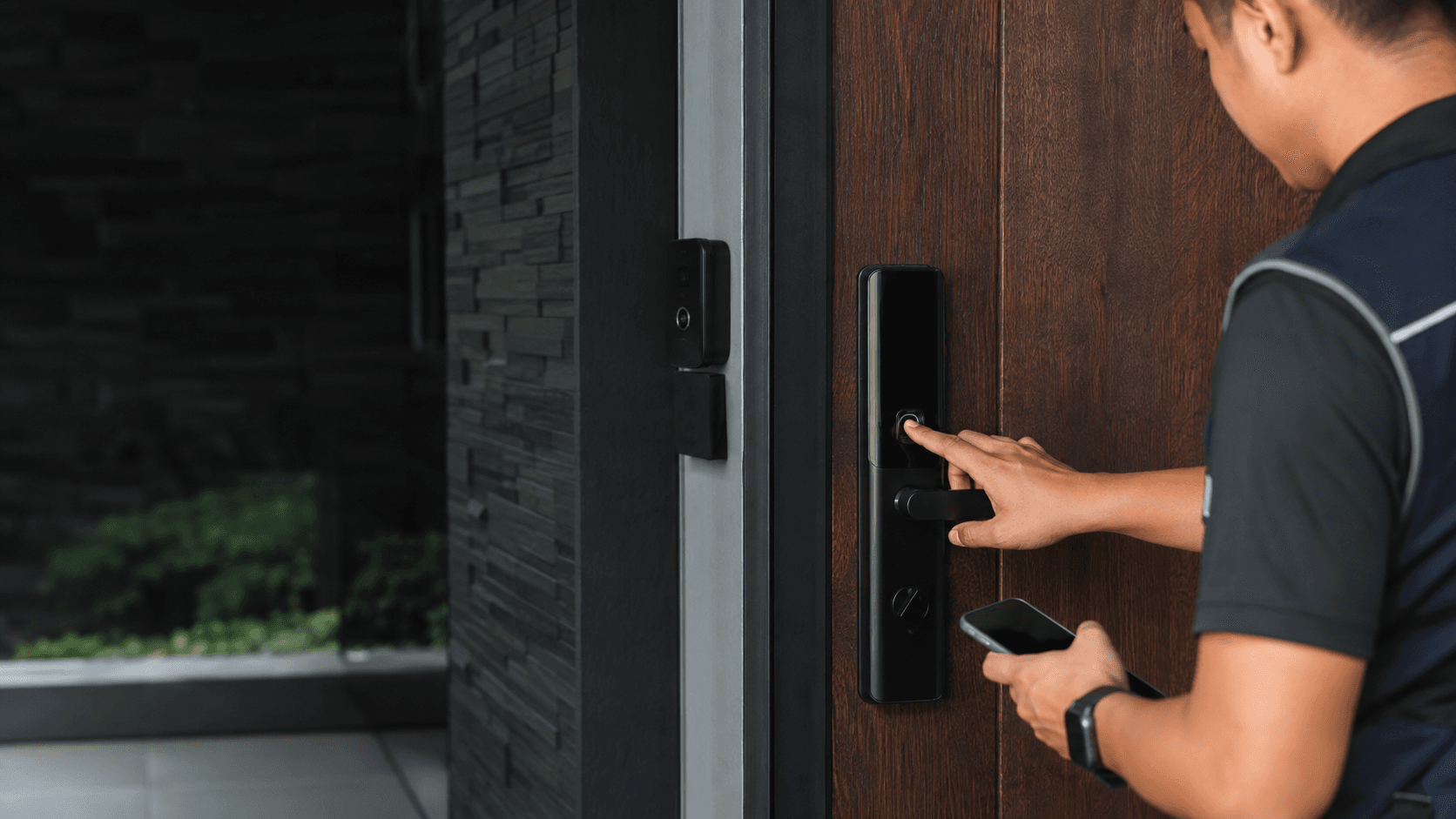
The phrase best smart lock for front door hides a practical question: which lock suits this specific door, this specific household or office, and this specific backup plan. Eyonic Sdn Bhd, a security system supplier in Sarawak, Malaysia, reviews smart locks alongside CCTV, alarm, autogate and intercom work, so the lock decision sits inside a wider access plan rather than standing alone.
Best Smart Lock For Front Door. What Matters Before Choosing
Most buying guides rank locks by brand or price. The more useful sequence starts with the door itself, because a lock that fits one door may not fit the next. Eyonic's own product review notes that smart locks work best when the door condition, user roles and backup method are reviewed before installation.
- Check the door and frame condition, including whether an existing deadbolt or handle can accept a replacement or retrofit.
- List who needs entry. household members, staff, tenants, cleaners, contractors or visitors.
- Decide how each person gets in — code, fingerprint, card, app or physical key.
- Confirm a backup entry method for power loss, app failure or a forgotten credential.
- Match the lock to the wider system, such as CCTV, alarm or intercom coverage at the same entrance.
- Confirm installation, handover and user testing before the lock becomes the only way in.
That sequence matters because a smart lock for front door use is an access-control decision, not just a hardware purchase. A lock that works perfectly for a two-person household can fail badly at a shop counter where staff change weekly and deliveries arrive at the door.
Choosing the Right Smart Lock For Front Door
The right choice depends on three variables: the door, the users and the backup plan. Eyonic's review guidance separates standalone smart locks from access-control panels, and that split is the single most useful filter for anyone comparing options.
Door condition decides the hardware type
A full deadbolt replacement suits a door with a standard deadbolt cutout and enough thickness to hold the lock body. A retrofit or adapter-style lock keeps the existing deadbolt and adds smart control on the inside, which suits rented property or doors where the exterior hardware should stay unchanged. A lever or handle replacement suits doors that use a handle rather than a separate deadbolt.
Door alignment, frame gaps and strike-plate condition all affect whether a motorised lock engages cleanly. A door that already sticks in humid weather will keep sticking after a smart lock is fitted, and the motor will work harder every time.
User roles decide the access method
A household of two or three people can rely on app control, a keypad code or a fingerprint. A shop, office or rental unit with rotating users needs a way to add and remove access without rekeying hardware. That is where the standalone-versus-panel question becomes practical: a single lock with app-managed codes may be enough for a small office, while a site with multiple doors and staff groups usually needs a panel that manages permissions centrally.
Backup entry decides how much risk is acceptable
Every smart lock needs a fallback. Options include a physical key override, a mechanical key cylinder, an external power point for emergency charging, or a second entrance that stays on a conventional lock. Eyonic's guidance is explicit that smart locks work best when the backup method is reviewed before installation, not after the first lockout.
What Is a Smart Lock For Front Door?
A smart lock for front door use is an electronic locking device fitted to the main entrance that can be opened by code, fingerprint, card, app or voice command instead of a key alone. It usually keeps a mechanical or electronic backup, and it may connect to a wider security system.
The category covers several hardware types, and the differences matter more than the label:
- Deadbolt replacement locks swap the existing deadbolt for a smart unit with a keypad, app or fingerprint reader.
- Retrofit or adapter locks keep the existing deadbolt and motorise it from the inside.
- Lever and handle locks replace the door handle rather than a separate deadbolt, which suits doors without a deadbolt cutout.
- Access-control panels manage multiple doors and user groups, and are usually the better fit for commercial premises.
Connectivity is a separate layer. Some locks connect directly over Wi-Fi, some use Bluetooth with a bridge, and some rely on a hub or panel. The choice affects remote access, notification speed and how easily codes can be issued to a visitor who is already at the door.
Practical Considerations for Use in Malaysia
Malaysian conditions add a few constraints that generic buying guides rarely mention. Humidity, direct sun and heavy rain exposure affect exterior hardware over time. Condominium and apartment entrances may be shared or managed, which limits what can be changed without building approval. Rental units may require landlord consent before any hardware is replaced.
Power reliability is another factor. A lock that depends on mains power or a charged battery needs a plan for outages, and that plan should be tested rather than assumed. For businesses, the lock also has to fit the daily flow of staff, visitors and deliveries — the same operational thinking Eyonic applied at the Kuching Immigration Office project, which focused on arrival flow, staff areas, visitor movement and dependable daily operation.
Integration is the last consideration. A front door lock that reports entry events is more useful when CCTV covers the same entrance, and an intercom or alarm system can add a second layer of verification before the door is opened remotely. Eyonic's installation process for security systems follows site survey, system proposal, installation and handover, and the same order applies to a lock that has to work every day.
Making an Informed Choice About Hardware
The best smart lock for front door use is the one that fits the door, matches the people who use it, and keeps a working backup. Brand rankings help narrow the field, but they cannot confirm whether a specific lock body fits a specific door or whether a code-based system suits a site with rotating staff.
For a home, the decision usually comes down to convenience and backup: how easily family members get in, and what happens when a battery runs flat. For a business, the decision is closer to access control: who can enter, when, and how that access is recorded and revoked. Eyonic's review guidance draws the same line, checking whether a standalone smart lock or an access-control panel is more appropriate for business use.
Where the lock sits alongside CCTV, alarm, autogate or intercom work, planning them together avoids duplicated hardware and mismatched access rules. Eyonic's published packages for Hikvision CCTV, alarm systems and autogate are each listed at RM 1,599, which gives a reference point for how a single entrance device compares with a broader system spend.
Share your location, property type and required system with Eyonic on WhatsApp at +60 11-5111 7959 for the next practical step.