
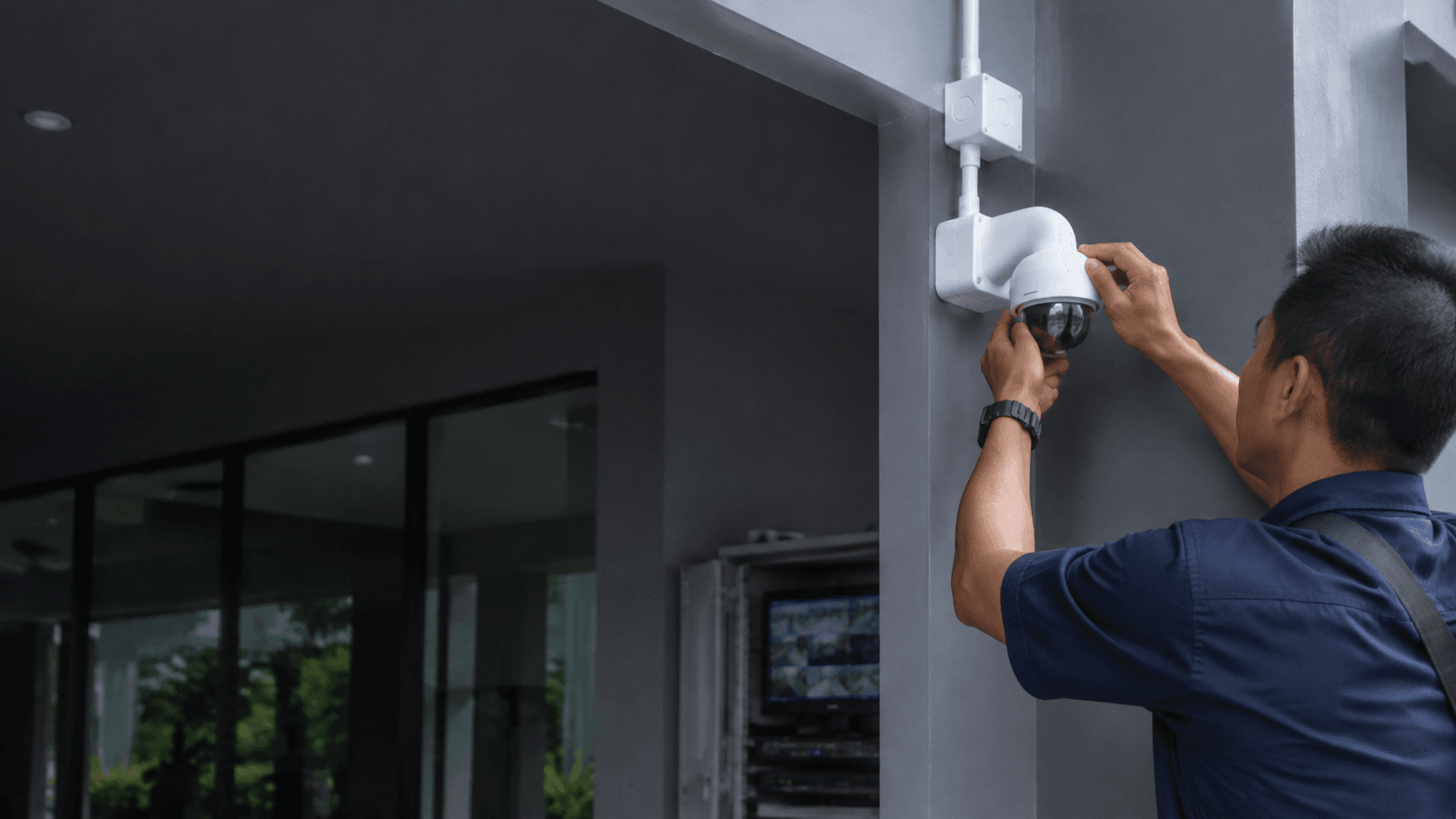
The phrase cctv panasonic points to a specific family of surveillance products rather than a generic camera category. Panasonic builds bullet, dome, turret, PTZ, ANPR, fisheye, and thermal cameras, plus network video recorders and the Panasonic VMS software layer that ties them together. The Panasonic CCTV App extends that same system to a phone, which is why the query attracts both buyers comparing hardware and users trying to operate equipment already installed.
Two things shape how this topic is usually approached. The first is that Panasonic's surveillance line sits alongside i-PRO, a separate brand identity that carries much of the same professional video security heritage. The second is that Panasonic's own regional pages are organised around product range, software downloads, and firmware tools rather than around installation advice. That gap matters for anyone in Malaysia trying to move from "which camera" to "who fits it and how does it get maintained."
Cctv Panasonic. What Matters Before Choosing
Panasonic's Middle East surveillance page describes its CCTV security solutions as reliable video surveillance for a wide range of environments, and lists bullet, dome, turret, PTZ, ANPR, fisheye, and thermal cameras alongside network video recorders. The same page names Panasonic VMS, the Panasonic CCTV App, firmware updates, and an IP Manager Tool.
That list is a useful map of what a working system actually contains. Cameras capture. Recorders store. Software manages. Firmware and IP tools keep the estate addressable and current. A buyer who only compares camera models tends to underestimate the last two layers, which are the ones that determine whether a system stays usable after the first year.
The i-PRO product page frames the same professional market around intelligent edge devices, AI-powered analytics, edge AI, cyber security, and cloud video. Its customer stories span banking, healthcare, corrections, oil, universities, retail, and municipal surveillance across Asia and Australia. That spread indicates the hardware class is built for continuous commercial operation rather than occasional home use.
What is cctv panasonic?
Cctv Panasonic is the combination of Panasonic surveillance hardware, recording equipment, and management software used to watch and record a site. The hardware side includes fixed and moving camera types for different fields of view. The software side includes a video management system for central control and a mobile app for remote viewing. Firmware and IP management tools sit underneath both, handling updates and network addressing.
Panasonic's downloads page groups these into one place: Panasonic VMS, the Panasonic CCTV App, firmware updates, the IP Manager Tool, plus manuals, data sheets, catalogues, and documentation. For an existing site, that page is often the practical starting point, because a system that cannot be updated or re-addressed becomes a liability rather than an asset.
Choosing the Right Cctv Panasonic Setup
A decision sequence helps more than a product list, because camera type follows from the site, not the other way round.
- Define what needs to be seen. entrances, arrival flow, staff areas, visitor movement, perimeter, or vehicle plates.
- Match camera type to that need — dome and turret for general coverage, bullet for longer outdoor runs, PTZ for wide areas needing zoom, ANPR for plate capture, thermal for detection in poor visibility.
- Check the real lighting at each position before confirming placement, including night conditions and any change in light across the day.
- Size recording and storage against how long footage must be retained and how many cameras run continuously.
- Confirm the network path, addressing, and firmware update route so the system can be maintained.
- Agree who handles installation, handover, and later support.
Step three is the one most often skipped. A camera chosen for its low-light behaviour can still disappoint if the actual position is lit differently from the assumption. Checking conditions on site before fixing placement is cheaper than relocating hardware afterwards.
Panasonic Surveillance Solutions and the i-PRO Question
Panasonic surveillance solutions and i-PRO products overlap in origin but not in presentation. Panasonic's regional security pages present the range, software, and downloads under the Panasonic name. The i-PRO site presents a professional video security business with its own product lines, edge computing tiers, and case studies.
For a buyer, the practical question is which brand identity the specific model belongs to, because that determines where firmware, documentation, and support actually live. A model listed on a Panasonic regional page and a model listed on the i-PRO site may sit in different support structures even when the underlying technology lineage is shared.
Practical Considerations for Cctv Panasonic
Availability is the constraint that shapes most real decisions. Panasonic's consumer-facing camera products have included items marked as discontinued, and retail listings mix current surveillance models with older network cameras and professional PTZ units built for broadcast rather than security. A model number that appears in a search result is not automatically a model that can still be supplied, installed, and supported.
That makes verification part of the buying process rather than an afterthought. Confirming that a specific camera, recorder, and software version are all still current avoids a system that works on day one and cannot be expanded or repaired later.
Integration is the second consideration. Panasonic VMS and the Panasonic CCTV App form the native management path. Sites that already run another platform may prefer to keep one interface rather than operate two, which can push the decision toward cameras that integrate with the existing recorder instead of a full brand change.
Support geography is the third. Panasonic's published surveillance and download pages are organised by region, and the app listing is published by Panasonic Marketing Middle East & Africa FZE. A buyer in Malaysia should confirm which regional channel covers supply, warranty handling, and technical questions before committing to a model.
Where a Local Integrator Fits
Hardware selection is only part of a working installation. Eyonic Sdn Bhd, a security system supplier in Sarawak, Malaysia, plans, supplies, and installs monitoring systems with camera placement, recording, and remote viewing for homes, offices, shops, and industrial sites. Its founder, Eric Yong, has worked in technical installation of digital security solutions for commercial businesses in Sarawak for more than 10 years.
Eyonic's installation process runs through site survey, system proposal, installation, and handover. That sequence matters for Panasonic-style systems because camera placement, recorder configuration, and remote viewing access all need to be settled before hardware is fixed in position.
Two completed projects show the pattern. For the Kuching Immigration Office, the work focused on arrival flow, staff areas, visitor movement, and dependable daily operation, with an approximate budget range of RM 12,000 to RM 28,000 for that type of work. For KTA Sarawak Sdn Bhd, an engineering consultancy, the requirement was a practical office setup in Kuching supporting staff movement, visitor handling, tidy cabling, and clearer daily site control, with an approximate budget range of RM 8,000 to RM 18,000.
Those figures describe completed project scopes, not Panasonic equipment pricing. They are useful as a sense of scale for commercial office work in Sarawak rather than as a quotation for any specific brand.
Cost and Package Context
Eyonic publishes three packages at RM 1,599 each: a Hikvision CCTV package covering camera supply and setup, basic recording configuration, and mobile viewing handover; a Hikvision alarm system covering control panel and sensors, siren and zone setup, and user testing and handover; and an autogate package covering motor recommendation, remote-control setup, and safety testing and handover.
These are Hikvision-based packages, not Panasonic packages, and they are listed here because they show what a defined entry-level scope includes in this market. A Panasonic system would be specified separately, and the camera, recorder, and software combination would determine the figure.
Making an Informed Choice About
The decision usually comes down to three trade-offs.
Brand continuity against integration. Staying within Panasonic hardware, VMS, and app keeps one management path and one update route. Mixing brands can suit a site that already has a recorder and wants to add coverage without replacing the platform.
Capability against complexity. Thermal, ANPR, and multi-sensor cameras solve specific problems but add configuration and cost. A site with clear lighting and defined entry points may get more value from well-placed dome and turret cameras than from advanced models used without a matching requirement.
Supply certainty against specification. The most capable model is the wrong choice if it cannot be sourced, installed, and supported locally. Confirming current availability and the regional support channel protects the investment more than any single specification.
For a site in Malaysia, the practical path is to define what needs to be seen, verify lighting and network conditions on site, confirm which Panasonic or i-PRO models are currently available through the relevant regional channel, and settle who handles installation and handover. Sharing the location, property type, and required system with Eyonic on WhatsApp at +60 11-5111 7959 is one way to move from comparison to a defined scope.