
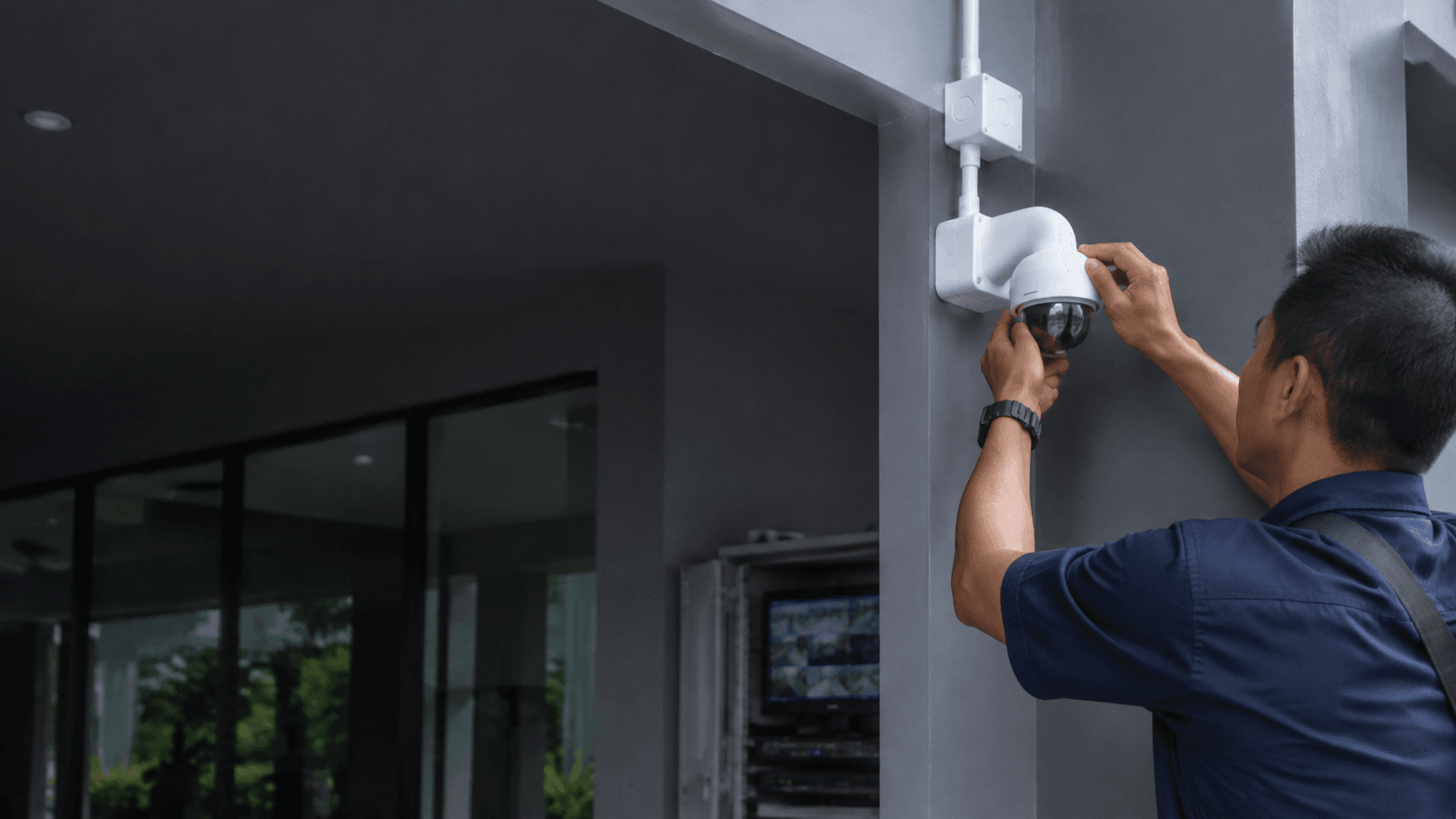
The term is used loosely in Malaysia. It can describe an internet-connected camera setup, a recorder-based system, or simply any modern kit sold after analog tape machines disappeared from shop shelves. What matters for a property owner is not the label but what the system does on site: where cameras point, how footage is stored, and who can view it.
Eyonic Sdn Bhd is a security system supplier based in Sarawak that handles planning, supply and installation, with founder Eric Yong working in technical installation of digital security solutions for commercial businesses in Sarawak for more than 10 years.
How digital cctv differs from older analog setups
Older analog systems pushed a video signal down coaxial cable to a recorder that stored footage on tape or an early hard-drive unit. Digital cctv systems convert the image to data at or near the camera, then move that data over network cable or wirelessly to a recorder or storage device.
The practical differences show up in three places. Playback is easier to search because footage is indexed by time and motion rather than by tape position. Remote viewing is built into the recorder rather than bolted on. And adding a camera later depends on whether spare network ports and recorder channels exist, not on whether a spare coax run was left behind.
Analog equipment still works and still gets installed where existing cabling should be reused. The trade-off is that hybrid arrangements mix old and new hardware, which can complicate troubleshooting when something fails. A property with working coax may not need a full replacement, while a new build usually has no reason to start with analog.
What the label does not tell you
Marketing language around digital cctv often implies features that depend on the specific camera and recorder chosen, not on the word "digital." Resolution, night-time image quality, storage duration and remote access all vary between models. None of those figures should be assumed from the category name alone.
What a digital cctv installation involves
Eyonic's CCTV installation process follows four stages, and the sequence matters because each stage depends on the one before it.
- Site survey. The property is assessed for camera positions, cable routes, power availability and lighting conditions at different times of day.
- System proposal. A configuration is put together covering camera selection, recorder capacity and viewing access, based on what the survey found.
- Installation. Cameras, cabling and the recorder are fitted and configured on site.
- Handover. Recording, playback and mobile viewing are demonstrated so the people running the property can use the system without support.
The survey stage is where most problems are prevented. A camera position that looks correct on a floor plan can fail in practice if a wall blocks the view, if a light source sits directly in frame, or if the cable run is longer than the chosen cable type supports reliably.
Why lighting checks come before placement
Eyonic recommends checking actual lighting conditions before confirming placement for ColorVu-style cameras. These cameras are designed to produce usable colour images in low light, but that depends on what light is genuinely present at night. A position that performs well at 3pm may behave differently at 3am. Confirming placement against real conditions avoids a camera that only works during daylight hours.
Where digital cctv fits different properties
A home with a single entrance and a small perimeter usually needs fewer cameras than a shop with a counter, a stockroom and a back door. An office needs coverage of entry points and shared areas. An industrial site often needs wider coverage across yards and loading areas, where cable distance and weather exposure become the deciding factors.
The constraint that catches people out is not camera count but recorder capacity and storage. More cameras at higher resolution fill storage faster, which shortens how far back footage can be reviewed. That trade-off should be settled during the proposal stage rather than discovered months later.
Digital cctv in real projects. the Kuching Immigration Office
Eyonic completed a project for the Kuching Immigration Office, focused on arrival flow, staff areas, visitor movement and dependable daily operation. The requirement was practical support for a public office rather than a showcase installation.
That project illustrates what a public-facing site needs from a camera system. Arrival flow and visitor movement mean cameras must cover entrances and waiting areas clearly enough to be useful after an incident. Staff areas need coverage without creating blind spots in the areas that matter most. Dependable daily operation means the system has to keep recording without someone checking it every morning.
The approximate budget for that type of work is RM 12,000 to RM 28,000. A separate project for KTA Sarawak Sdn Bhd, an engineering consultancy office in Kuching, covered staff movement, visitor handling, tidy cabling and clearer daily site control, with an approximate budget of RM 8,000 to RM 18,000.
Those two figures show how much scope affects cost. An office fit-out and a public facility with heavier foot traffic land in different ranges even when both use similar equipment categories.
What to check before confirming camera placement
Placement decisions are hard to reverse once cable is run and walls are patched. A few checks before confirming positions prevent most rework.
Walk the site at the times of day the property is busiest and quietest. Note where light comes from and whether it changes. Check what a camera would actually see from each proposed point, including whether a pillar, signboard or tree sits in the way. Confirm that each position has a realistic path back to the recorder, because cable routing often decides placement more than the view does.
For outdoor positions, consider weather exposure and whether the housing suits the location. For indoor positions in shops and offices, consider whether staff or customers will be able to reach and tamper with the camera.
It also helps to decide in advance who will review footage and how often. A system nobody checks provides less value than one with a clear routine, and that routine is easier to set up during handover than afterwards.
Questions that come up during planning
Whether a digital cctv system needs an internet connection depends on what the system is expected to do. Local recording and on-site viewing work without one. Remote viewing from a phone generally requires connectivity, and the supplied evidence does not establish a single rule that applies to every configuration, so this should be confirmed against the specific setup being proposed.
Storage duration is another common question. It depends on camera count, resolution, recording schedule and recorder capacity, none of which can be stated as a fixed figure without knowing the site.
Practical next steps for a system
The most useful starting point is a clear description of the property: its type, its location, and what the system needs to cover. That information lets a site survey be planned properly rather than guessed at.
Eyonic's published packages start at RM 1,599 for a Hikvision CCTV package covering camera supply and setup, basic recording configuration and mobile viewing handover. Comparable packages exist for alarm systems and autogates. Larger or more complex sites fall outside a package scope and are quoted from the survey and proposal instead.
Share your location, property type and required system with Eyonic on WhatsApp at +60 11-5111 7959 for the next practical step.